
Short answer
How much area does 1 kg of wall putty cover? No Indian Standard fixes it. Manufacturers state about 10 to 15 sq ft per kg for two coats in one brand's sheet, and about 18 to 25 sq ft per kg in others. It depends on the product and on how rough the wall is. Buy by the figure on your own product's data sheet, and add a margin.
On this page (9)
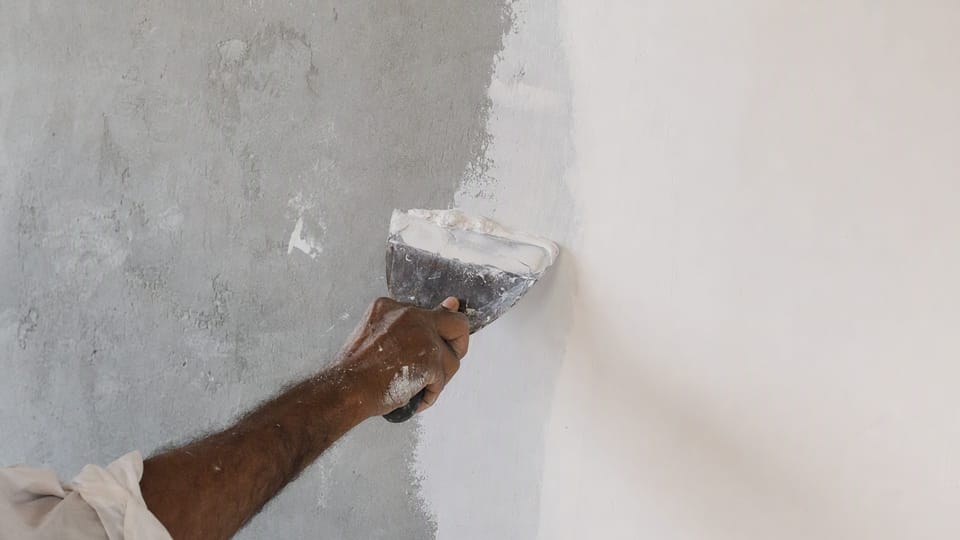
Wall putty is a thin white skim coat that goes on plaster before primer and paint. It gives a smooth wall. This page tells you how much to buy, how many coats to expect, and why putty cracks. It gives no prices and no brand ranking.
How much area does 1 kg of wall putty cover?
There is no Indian Standard value for coverage. IS 17545:2021 is the BIS standard for white cement based polymeric putty, but we could not read its text, and no standard we could read gives a coverage per kg. So the numbers come from manufacturers’ data sheets. They differ by product.
| Product (data sheet) | Stated coverage for two coats |
|---|---|
| Asian Paints wall putty sheets | 10 to 15 sq ft per kg, up to 1.5 mm thickness |
| Dr. Fixit waterproof wall putty | 18 to 20 sq ft per kg, up to 1.5 mm thickness |
| Nerolac cement putty | 1.85 to 2.32 sq m per kg, which is about 19.9 to 25.0 sq ft per kg |
Each manufacturer says the real figure depends on how the putty is applied and on how rough and porous the wall is. Use the sheet for the product you will buy. The figures above are examples, not a rule.
How do I work out how many kg I need?
Divide the wall area by the coverage figure. Always add a margin for waste and rough patches.
Worked example. Assumptions: 1,000 sq ft of wall area to be puttied, two coats, and the three coverage ranges in the table.
| Coverage used | Putty needed |
|---|---|
| 10 to 15 sq ft per kg | about 67 to 100 kg |
| 18 to 20 sq ft per kg | about 50 to 56 kg |
| 19.9 to 25.0 sq ft per kg | about 40 to 50 kg |
The gap is large. A rough wall uses more. Ask your painter which product and how many kg they expect, then check it against the sheet.
How many coats of putty are needed?
The data sheets we read say to apply two coats. Asian Paints and Dr. Fixit then describe a primer or sealer, followed by the paint coats. Recoat time and the water to add differ by product, so read the bag. For example, the sheets give different water percentages, and different waiting times between coats.
How long should I wait after plastering?
Manufacturers do not agree. One says 28 days for new plaster, another says at least 12 weeks, and a third says to let the plaster cure completely without giving days. So follow the sheet of the product you buy and ask your engineer.
IS 2395, the Indian code for painting plaster and masonry, explains why waiting matters. It says that lime and cement plaster are highly alkaline in the early stages and hold a lot of water. It can take a long time to dry. A paint system must take that moisture and alkalinity into account. The standard gives no waiting time in days for putty.
Why does wall putty crack or peel?
These causes are common in practice. They are not taken from a standard.
- Plaster not dry or not cured. Trapped moisture pushes the putty off.
- Coat too thick. The data sheets we read stop at about 1.5 mm for two coats. Thick coats shrink and crack.
- Putty used to fill cracks. The Asian Paints and Dr. Fixit sheets say not to. Putty is a skim coat, not a crack filler.
- Cracks in the plaster underneath. They show through. See our guide to hairline cracks in plaster.
- Wrong mixing. Too much water weakens the putty. Follow the water ratio on the bag.
- No primer. The sheets say primer goes on after the putty.
- Hard sanding. Asian Paints says not to sand vigorously, because it weakens the putty.
Do I need to wet the wall first?
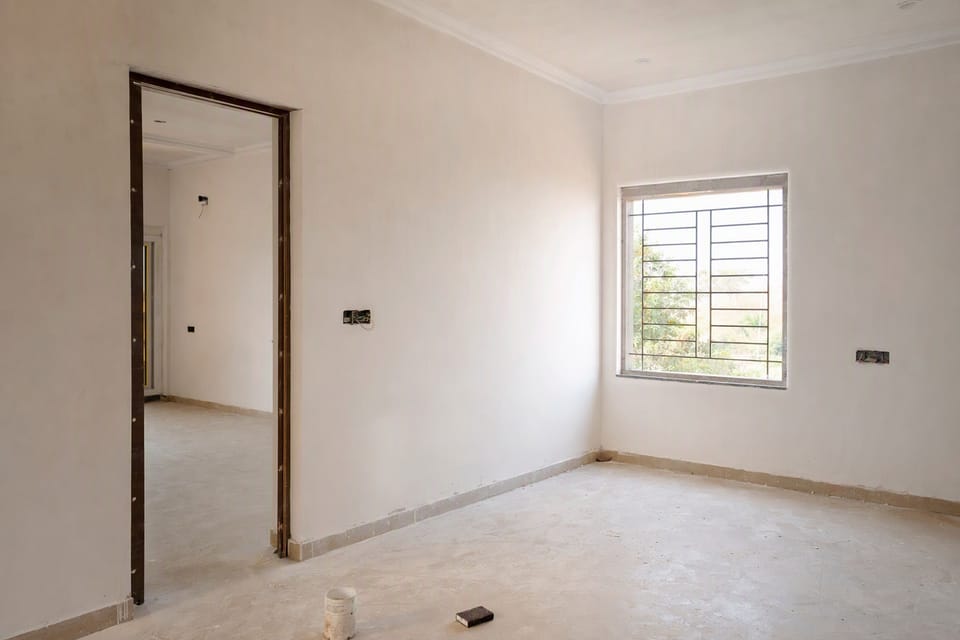
Yes, according to the Asian Paints and Dr. Fixit sheets: they say to wet the surface before the first coat. This is not the same as putting putty over a wall that is damp from a leak. If a wall stays damp, find the cause first.
Frequently asked questions
Is wall putty the same as white cement?
No. Wall putty is a product made to a recipe, usually white cement based, with polymers and other additives. IS 17545 is the BIS standard for white cement based polymeric putty. Plain white cement is only one ingredient.
Can I skip putty?
Putty gives a smooth base for paint. Whether to use it on your walls is a choice for you and your painter. It is not a structural item.
How thick should putty be?
The data sheets we read give up to about 1.5 mm for two coats. Follow the sheet for your product.
Does putty fix cracks?
No. The sheets say not to use it to fill cracks. Treat the cracks first.
Related guides
- Hairline cracks in plaster: causes and what to do
- Plaster quantity: cement and sand per sq ft
- Terrace leakage and waterproofing: methods, slope and ponding test
This guide is general information. Read the disclaimer. Product coverage and waiting times are set by the manufacturer’s data sheet for the product you buy.
Sources
- Asian Paints, Asian Wall Putty product information sheet (coverage, coats, curing, sanding)
- Asian Paints, TruCare Wall Putty product information sheet
- Nerolac, Cement Putty technical data sheet
- Dr. Fixit, Waterproof Wall Putty technical data
- IS 2395 (Part 1):1994, Painting of concrete, masonry and plaster surfaces: Code of practice (foreword on alkalinity and moisture of new plaster)
- BIS record for IS 17545:2021, White cement based polymeric putty
General information only. It is not a structural design or professional advice. Ask a licensed structural engineer or architect to check your plans and site.