
Short answer
Are hairline cracks in plaster serious? Most fine hairline cracks in plaster come from shrinkage, quick drying or movement where brick meets concrete, and they are cosmetic. Cracks that widen, run diagonally, appear in beams or columns, or come with leakage or sticking doors need a structural engineer. Mark a crack with a dated pencil line to see whether it grows.
On this page (9)
A new plastered wall with a few fine cracks worries most owners. Most of these cracks are harmless and come from the way plaster dries. A few are signs of movement in the building. This page explains the common causes, how to tell the two apart, and what to do about each.
What is a hairline crack in plaster?
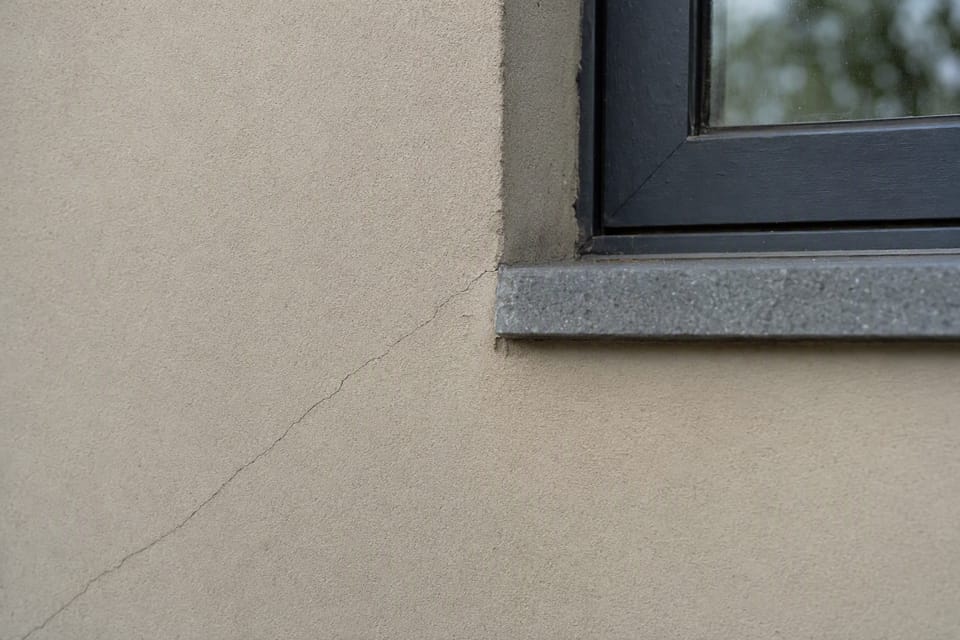
A hairline crack is a very fine crack in the plaster surface, often a web of fine lines or a single thin line. It is usually on the plaster only and does not go through the wall. It shows up more after paint, because paint highlights it.
What causes hairline cracks in plaster?
- Shrinkage. Plaster shrinks as it dries. A mix with too much cement, too much water or fine sand with a lot of silt shrinks more and cracks more.
- Drying too fast. Plaster that dries in sun or wind before it has set, or that is not kept damp (cured), cracks. See How many days to cure a concrete slab? for how curing works for concrete, and the same idea applies to plaster.
- Where brick meets concrete. Brick and concrete expand and shrink by different amounts, so cracks often run along the line where a wall meets a beam or column.
- A coat that is too thick. Thick coats put on in one go shrink and crack.
- A dry wall. A very dry brick wall pulls water from the plaster. Wetting the wall before plastering helps.
- Heat and cold. The wall expands and contracts with the weather.
Which cracks are harmless, and which need an engineer?
Fine cracks on the plaster surface, in random web patterns, or along the line between brick and concrete, are usually cosmetic. Call a structural engineer if you see any of these:
- cracks that widen, or grow longer, over weeks or months;
- diagonal or stair-step cracks running through the brickwork;
- cracks in beams, columns or slabs themselves;
- cracks with leakage, or with doors and windows that start to stick;
- a wall that bulges or leans.
How do I check whether a crack is growing?
Draw a pencil line across the crack at each end and write the date next to it. Check again after a few weeks and after the rains. If the crack passes the pencil mark or lengthens, tell your engineer. This costs nothing and gives you real information.
How do I repair hairline cracks?
For fine, stable cracks, wait until the plaster has dried and cured fully, open the crack slightly with a thin blade, clean out the dust, and fill it with a crack filler or polymer-modified putty. Fix any cracks before painting, and ask your painter about a flexible primer or paint where cracks keep returning. Where cracks run along the joint between brick and concrete, ask your contractor to fix a strip of mesh over the joint before plastering. Do not fill cracks that are still moving. Ask your engineer first.
How do I prevent hairline cracks?
- Use clean sand and the mix ratio your engineer specifies, and do not make the mix richer than needed. A very rich mix shrinks more.
- Wet the wall before plastering and keep the new plaster damp for the days your engineer specifies.
- Put plaster on in coats of the thickness the specification gives, with time between coats.
- Put a mesh strip over the joints where brick meets concrete.
- Avoid plastering in strong sun or wind without shade and curing.
Plaster application is covered by IS 1661.
Frequently asked questions
Are hairline cracks in plaster dangerous?
Usually not. Fine, stable cracks on the surface are cosmetic. Cracks that grow, run diagonally or appear in beams and columns need an engineer.
Why do cracks appear where the wall meets the beam?
Brick and concrete move differently with heat and moisture, so a crack forms at the joint. A strip of mesh over the joint before plastering reduces this.
Can I paint over hairline cracks?
Fill them first. Paint alone does not close a crack, and the crack may show through.
How long should plaster be cured?
For as many days as your engineer or specification says. Keeping it damp stops it drying too fast.
Related guides
- How many days to cure a concrete slab?
- Mortar ratio for brick walls: 1:4, 1:5 or 1:6?
- Which walls can be 4.5 inch? Load-bearing and partition walls
This guide is general information, not a diagnosis of your building. Read the disclaimer. If a crack worries you, ask a structural engineer to look at it.
Sources
- IS 1661:1972, Code of Practice for Application of Cement and Cement-Lime Plaster Finishes
- IS 456:2000, Plain and Reinforced Concrete - Code of Practice
General information only. It is not a structural design or professional advice. Ask a licensed structural engineer or architect to check your plans and site.