
Short answer
How many days should a slab be cured? Keep a slab continuously wet for at least 7 days with ordinary Portland cement and at least 10 days with a blended cement such as PPC, as IS 456 asks, and not less than 10 days in dry, hot weather. Your engineer sets the final period. Curing is not the same as removing the shuttering.
On this page (11)
- How long should a slab be cured?
- Does the cement type change the days?
- How do I cure a slab?
- What do I do in hot or windy weather?
- When should curing start after the pour?
- Is curing the same as removing the shuttering?
- A checklist for the mason
- What mistakes cut curing short?
- Frequently asked questions
- Related guides
- Sources
Concrete does not gain strength by drying. It gains strength by a chemical reaction between cement and water, and that reaction needs water to carry on. Curing means keeping the concrete wet, and cool enough, for long enough that the reaction can finish what it started. A slab that is cured well is stronger, tighter and less likely to crack than the same slab left to dry.
How long should a slab be cured?
IS 456, the Indian code for concrete, asks for the exposed surfaces to be kept continuously damp or wet for at least 7 days from placing when ordinary Portland cement is used, and at least 10 days when blended cements such as PPC are used. These are minimums. For concrete exposed to dry and hot weather the code asks for not less than 10 days, and for blended cements it recommends extending the minimum periods to 14 days. Hot, dry or windy weather dries a slab faster, so your structural engineer decides the final period for your slab.
The days count from the day the concrete is placed, and the surface must stay wet the whole time. A slab watered three times a day is not cured if it dries out in between.
Does the cement type change the days?
Yes. Blended cements such as PPC and PSC gain strength more slowly at the start, so they need longer curing than ordinary Portland cement. That is why the minimum is 10 days for blended cement against 7 for OPC. If you are not sure what cement your slab uses, ask your contractor, and see OPC vs PPC vs PSC cement: which one for your house? for how the cements differ.
How do I cure a slab?
There are three common methods.
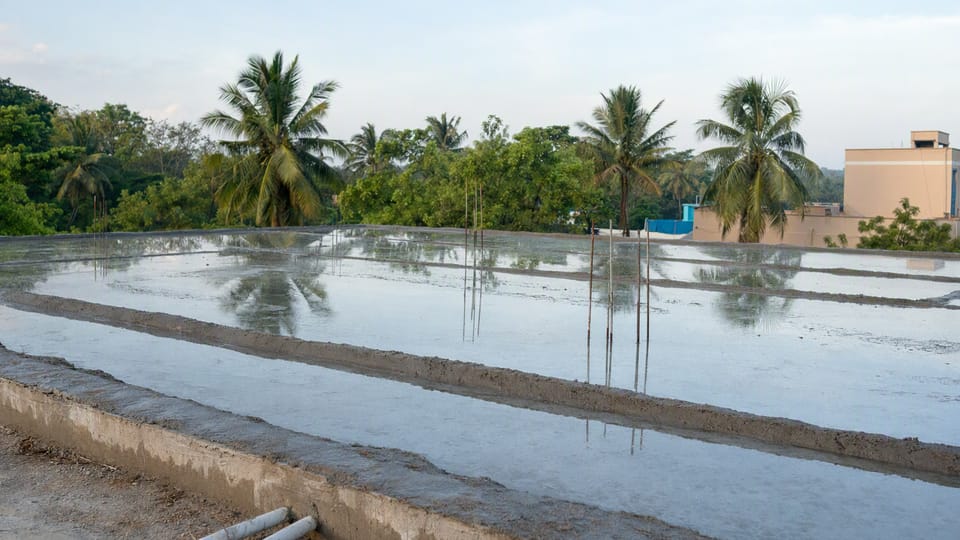
- Ponding. Low bunds of mud, sand or cement are built around the slab or around sections of it, and shallow water is held on the surface. It is the most reliable method for a flat roof slab because the surface cannot dry out while water stays. Keep the bunds sound, keep the water shallow and top it up.
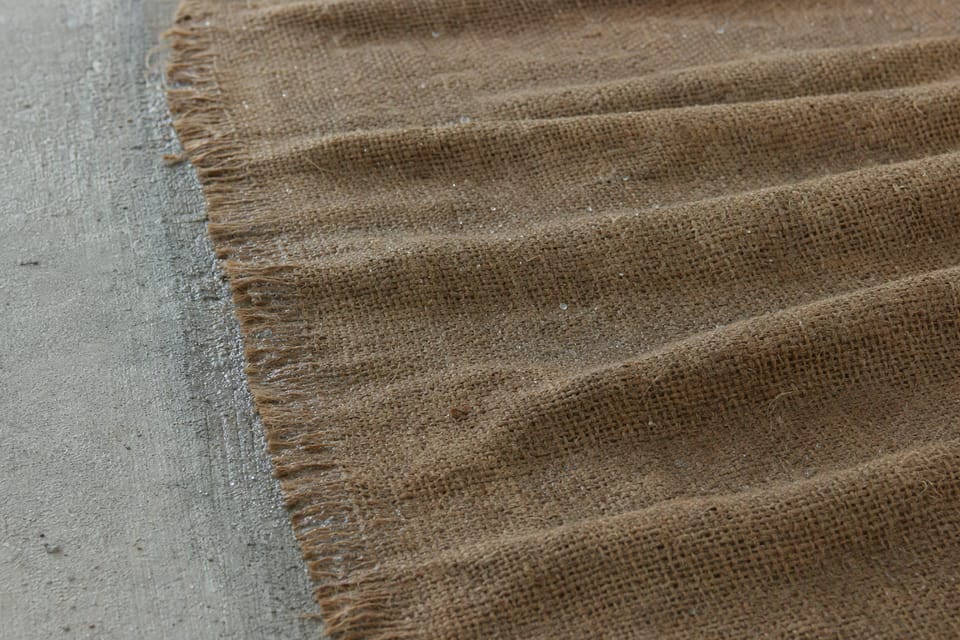
- Wet cover. Hessian (jute) cloth, gunny bags or sand are laid on the surface and kept wet. The cover must never be allowed to dry, because a dry cover pulls water out of the concrete.
- Sprinkling. Water is sprayed over the surface repeatedly. It works only if the surface stays continuously wet, which is hard to do in the sun.
A curing compound sprayed on the surface is another method. Use one only if your engineer approves it for your job.
What do I do in hot or windy weather?
Heat, sun and wind dry the surface quickly and can cause cracks. Start curing as soon as the surface is hard enough not to be damaged, shade the slab if you can, keep the cover wet and top up the water more often. IS 456 asks for not less than 10 days in dry, hot weather, and your engineer may ask for more. IS 7861 Part 1 covers hot weather concreting.
When should curing start after the pour?
As soon as the surface is firm enough to take water or cloth without being marked. Start early and never let the surface dry between the finishing of the slab and the first watering. If you cannot cure for a stretch, for example on a festival day, arrange for someone to do it.
Is curing the same as removing the shuttering?
No. Curing keeps the concrete wet. Removing the shuttering, also called stripping or de-shuttering, is a structural decision. The right time depends on the cement, the weather, the span and the load. IS 456 (cl. 11.3) gives only indicative minimum periods for ordinary Portland cement in normal weather and says they must be changed for other cements and for cold weather, so the decision is the engineer’s. Do not remove the props and the formwork on your own judgement or on a fixed number of days given by someone else. Ask your engineer for the go-ahead in writing.
A checklist for the mason
- What is the cement type used on this slab, OPC or blended?
- On which date was the concrete placed, and when does the minimum period end?
- Are the bunds or covers in place, and is the surface wet right now?
- Who waters the slab on holidays and on days the team is not on site?
- Is the sun or wind drying the surface faster than the watering keeps up?
- Has the engineer given the written go-ahead for removing the shuttering?
What mistakes cut curing short?
- Stopping the water after 3 days because the surface looks hard.
- Letting the bunds leak and the slab dry out overnight.
- Watering once a day in hot weather.
- Letting the hessian dry in the sun.
- Counting days from the day the shuttering came off, or leaving the underside uncovered when it is exposed.
- Putting heavy loads on the slab, such as stacks of bricks, before the engineer allows it.
Frequently asked questions
Can I stop watering after 3 days?
No. The minimum is 7 days for OPC in normal weather, and 10 days for blended cement or in dry, hot weather. For blended cement the code recommends extending this to 14 days.
Do I need to cure on day 1?
Yes. Start as soon as the surface can take water or cloth without damage.
Is ponding better than wet gunny bags?
Ponding keeps the surface continuously wet and is a reliable method for flat slabs. Wet gunny bags or hessian work if they never dry. Choose one your engineer approves and do it without gaps.
Does PPC need more curing?
Yes. IS 456 asks for at least 10 days with blended cements such as PPC, against 7 days for OPC, and recommends extending the minimum periods to 14 days for blended cements.
Who tells me when to remove the shuttering?
Your structural or site engineer, in writing.
Related guides
- Cement, sand and aggregate per cubic metre: M5 to M20
- Cement bags for a 1000 sq ft slab: a worked M20 example
This guide is general information, and the curing period for your slab is set by your engineer. Read the disclaimer.
Sources
- IS 456:2000, Plain and Reinforced Concrete - Code of Practice (cl. 13.5 curing, cl. 11.3 stripping time)
- IS 7861 (Part 1), Code of Practice for Extreme Weather Concreting - Recommended practice for hot weather concreting
General information only. It is not a structural design or professional advice. Ask a licensed structural engineer or architect to check your plans and site.