
Short answer
Which cement is best for a house? For most houses, PPC suits foundations, plaster and brickwork, 43 or 53 grade OPC suits slabs and beams that need early strength, and PSC suits foundations and exposed or coastal work. Your structural engineer makes the final call for structural concrete.
On this page (9)
Need quantities? Cement, sand and aggregate calculator
The three most common cements for house building in India are OPC, PPC and PSC. They are all grey Portland-type cements, and each is made to its own Indian Standard. The differences are small on paper but they change how fast concrete gains strength, how it behaves in the ground, and how it finishes on a wall.
What is the difference between OPC, PPC and PSC?
OPC is Ordinary Portland Cement made mostly from cement clinker. PPC, Portland Pozzolana Cement, replaces part of the clinker with fly ash, and PSC, Portland Slag Cement, replaces part of it with blast furnace slag. IS 1489 (Part 1) allows 15 to 35 percent fly ash in PPC, and IS 455 allows 25 to 70 percent slag in PSC.
OPC is sold in three grades, 33, 43 and 53, named for the compressive strength in megapascals it must reach at 28 days. Most houses use 43 or 53 grade OPC, or PPC.
Which cement gains strength faster?
OPC gains strength fastest in the first days, and 53 grade is the quickest. PPC and PSC gain strength more slowly at the start because fly ash and slag react later, but they keep gaining strength for longer. By 28 days the standards require PPC and PSC to reach at least 33 MPa.
OPC reaches useful strength sooner, which can suit a tight schedule. When shuttering can be removed and when a slab can be loaded are set by your structural engineer (IS 456, cl. 11.3), and blended cements and cold weather need longer. Never strip shuttering on your own judgement.
Which cement is better for foundations and slabs?
For foundations and structure, the choice depends on the soil, the design and the schedule, so it is your structural engineer’s decision. As general information, PPC and PSC produce less heat while setting and generally resist attack from sulphates and chlorides in soil and water better, which is why they are often used below ground. For severely sulphate-bearing soil your engineer may specify sulphate-resisting cement (IS 456, Table 4). OPC suits work that needs early strength.
IS 456, the code for concrete, allows all three. Do not switch cement type between the plan and the site without asking your engineer.
Which cement is better for plaster and brickwork?
For plaster and brickwork, PPC is commonly preferred. Fly ash makes a smoother, more cohesive mortar that is easier to apply and finish, and good workability and curing reduce cracking in plaster. OPC works too, and either cement needs proper curing to reach full strength.
IS 456 (cl. 13.5.1) asks for at least 7 days of curing for OPC concrete and at least 10 days where blended cements are used, so plan for water and time on the wall.
How do the three cements compare?
The table below summarises the general differences. It does not replace the specification for the cement you buy.
| Feature | OPC | PPC | PSC |
|---|---|---|---|
| Made with | Clinker and gypsum | Clinker and fly ash | Clinker and slag |
| Early strength | Highest | Slower | Slower |
| Heat while setting | Highest | Lower | Lower |
| Sulphate and chloride resistance | Lower | Better | Better |
| Common use in houses | Slabs and beams needing early strength | Foundations, plaster, brickwork | Foundations and exposed or coastal work |
| Curing | Needed | Needed for longer | Needed for longer |
How do I check cement on site?
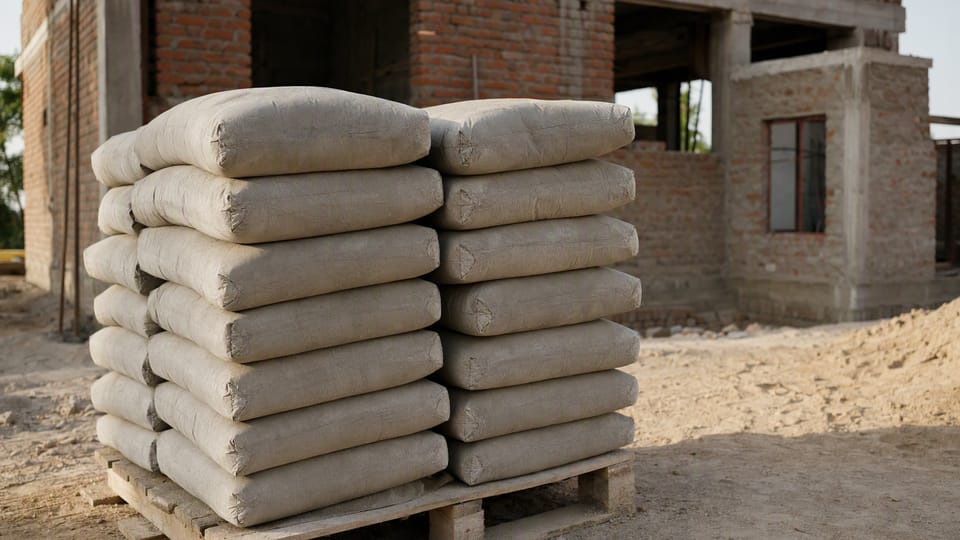
Check cement when it arrives: read the packing date on the bag, look for the ISI mark with the IS number and the licence (CM/L) number, check the cement type, and refuse bags that are torn or wet. Cement loses strength with time and moisture, so use stock within about three months of packing, use the freshest first, and keep bags off the ground and away from walls.
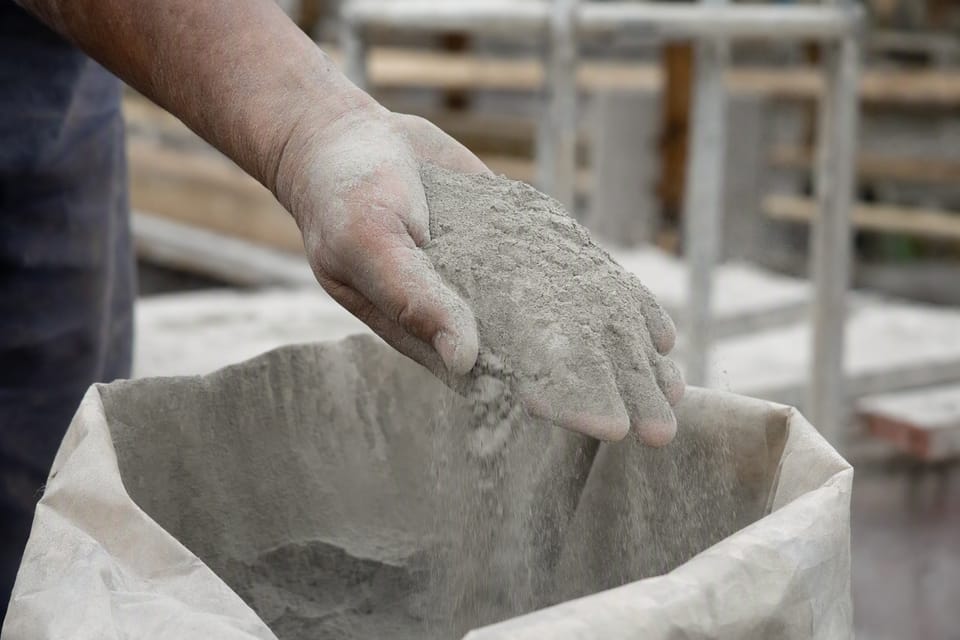
Break a handful: it should flow as a fine powder. Hard lumps that will not crush between your fingers mean the cement has absorbed moisture and should not go into structural concrete.
Related guides
- How many days to cure a concrete slab?
- Cement, sand and aggregate per cubic metre: M5 to M20
- Cement bags for a 1000 sq ft slab: a worked M20 example
This guide is general information. Read the disclaimer and ask a licensed structural engineer which cement your building needs.
Work out your quantities
- Cement, sand and aggregate calculator: Estimate cement bags, sand and aggregate for a nominal-mix concrete slab, footing or beam from its size and mix grade.
- Brick and mortar quantity calculator: Estimate the number of bricks and the cement and sand for mortar for a wall, from its length, height and thickness.
Sources
- IS 269:2015, Ordinary Portland Cement - Specification
- IS 1489 (Part 1):2015, Portland Pozzolana Cement - Specification (fly ash based)
- IS 455:2015, Portland Slag Cement - Specification
- IS 456:2000, Plain and Reinforced Concrete - Code of Practice (cl. 5.1 cement, cl. 11.3 stripping time, cl. 13.5.1 curing)
Change log
- : Added a Related guides list linking to three new articles. No other text changed. Approved by the reviewing engineer.
General information only. It is not a structural design or professional advice. Ask a licensed structural engineer or architect to check your plans and site.