
Short answer
Do I need a soil test before building a house? A soil test, called a soil investigation, tells your engineer what the ground under the plot is made of and where the water is. IS 1892 says a detailed investigation is essential before a design is finalised. The engineer decides how much testing your plot needs and designs the foundation from the result.
On this page (13)
- What is a soil test?
- Why is it done before the foundation is designed?
- Can I use my neighbour’s report?
- What does the report tell you?
- What is bearing capacity?
- Which tests may be used?
- Why does ground water matter?
- What is special about black cotton soil?
- What should I tell the investigator and the engineer?
- What mistakes should I avoid?
- Frequently asked questions
- Related guides
- Sources
Many owners hear “get a soil test done” from the contractor and wonder if it is really needed. This page explains what the test is, what it tells your engineer, and what you should ask for. It gives no prices, no bearing values and no depths. Those depend on your plot and are decided by your engineer.
What is a soil test?
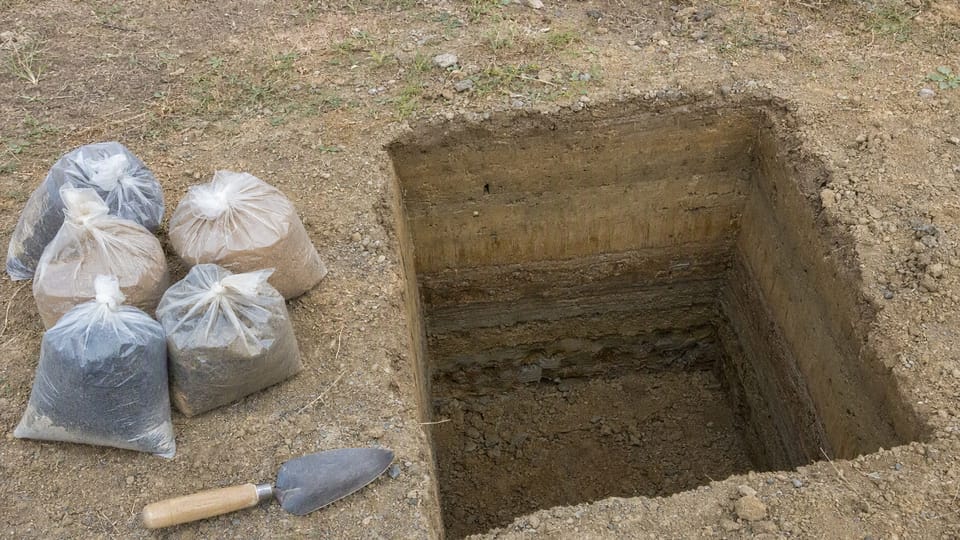
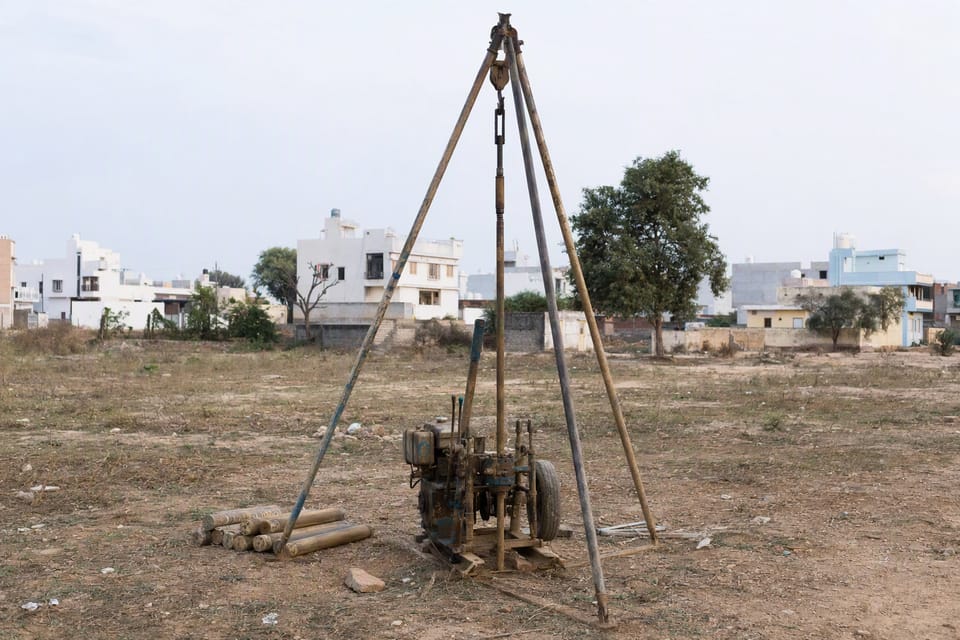
A soil test is a soil investigation. People dig trial pits or drill borings on the plot, take samples, and test them in a lab or on site. The aim is to find out what the ground is made of, layer by layer, and where the water is.
IS 1892, the Indian Standard for investigating the ground for foundations, says what it finds out:
- the order and extent of each layer of soil and rock;
- the nature and strength properties of each layer that affect the design;
- where the ground water is;
- whether the soil or the water can attack foundation materials.
Why is it done before the foundation is designed?
IS 1892 says: “A detailed investigation for site is essential before a design can be finalized.” IS 1904, the code for foundations, also calls site investigation an essential first step. The foundation must sit on ground that can carry the building safely. You cannot know that by looking at the surface.
Your engineer uses the result to choose the type of foundation and to design it. Read our guide on footing and foundation if these terms are new.
Can I use my neighbour’s report?
A neighbour’s records can help, but they do not replace a test on your plot. IS 1892 allows existing local records and the behaviour of nearby buildings to be used. The investigation may then be limited to checking that the soil is as expected from the neighbourhood. If the information is not enough, or is unclear, the standard asks for a detailed investigation of the site.
Ground can change within a short distance. IS 1892 says the test spots should show any major change in layer thickness, depth or properties over the area of the building. How many spots, and how deep, is the engineer’s decision.
What does the report tell you?
The standard does not fix one report format. In practice, a soil report usually shows:
- where on the plot each test was done;
- the layers found, with the soil type of each;
- the ground water level;
- the test results;
- the engineer’s recommendation for the foundation.
Ask your engineer to explain each point in plain words. Do not accept a report you cannot follow.
What is bearing capacity?
IS 2809 defines safe bearing capacity as the most load per unit area that the soil can safely carry, with a factor of safety against the soil failing in shear. IS 1904 says it should be worked out from soil test data, following IS 6403. Only where there is no test data, and only for a first design, may local values serve as guidelines.
So the number comes from the test. Do not copy a number from a table or a blog.
Which tests may be used?
The standards name several tests. Your engineer chooses which ones suit your plot:
- trial pits, where soil layers can be seen in their undisturbed state;
- borings, which take samples from deeper down;
- the standard penetration test (IS 2131);
- the load test on soil (IS 1888);
- lab tests on the samples.
IS 1892 says no one method of exploration is best for every site. The choice depends on the soil and on the purpose of the work.
Why does ground water matter?
IS 1892 says water-logged ground is undesirable for most buildings because its bearing capacity is low. The level can change with the seasons, and the standard asks for this to be noted. IS 1904 also asks for attention to underground water courses, old drains, pits, wells and old foundations.
Sulphates in the soil or water can attack concrete. IS 1892 says a chemical analysis of the soil may be needed to decide on special precautions.
What is special about black cotton soil?
IS 2809 describes black cotton soil as a clay that swells and shrinks a lot. It is black or blackish grey and is common in parts of India. IS 1904 says soils that shrink and swell must be studied carefully before the foundation is designed. It also says trees and shrubs near the building can increase shrinkage.
If your plot has this kind of soil, the foundation design needs extra care. This is a job for your engineer, and a soil test confirms whether it applies to you.
What should I tell the investigator and the engineer?
- Where the house will stand on the plot, and how many floors you plan.
- Whether the plot is filled ground, low-lying, or was used earlier for something else, such as a pit, a quarry or a brick field.
- Whether there are trees close by, or old wells, drains or foundations.
IS 1892 also says proper supervision of the boring work is essential, so that the data you pay for is the data you need.
What mistakes should I avoid?
- Using a neighbour’s report as if it were yours.
- Testing one spot on a large plot.
- Not telling the investigator what you plan to build.
- Ignoring the ground water level.
- Starting the foundation work before the report is read and explained.
Frequently asked questions
Is a soil test compulsory?
IS 1892 and IS 1904 treat it as essential before design. Whether your local authority asks for it with the plan is a question for them. Your engineer decides how much testing your plot needs.
Who does a soil test?
It is done by a soil investigation agency, and your structural engineer reads the result and designs the foundation.
What is safe bearing capacity?
The load the soil can carry safely, worked out from test data. See the section above.
Can I build without a soil test on a small plot?
IS 1892 is written mainly for larger buildings. For light, less important buildings, IS 1888 says that looking at the soil in trial pits can be adequate under normal conditions. It also says tests are essential for unusual soil types and for heavy or important buildings. It never says to skip the investigation. Your engineer decides what your plot needs.
What if the report shows weak soil?
The engineer changes the foundation design to suit it. Weak soil is a design problem to solve, and it is better to learn about it before building.
Related guides
- Footing vs foundation: what is the difference?
- What is a plinth beam?
- Stages of house construction in India: checklist and inspection points
This guide is general information. Read the disclaimer. The investigation, the bearing capacity and the foundation for your plot are decided by your engineer.
Sources
- IS 1892:1979, Code of practice for subsurface investigation for foundations (clauses 0.2, 0.3, 1.1, 2.1, 2.2, 2.3, 2.4, 2.5, 3.9). The 1979 edition was read; a newer edition may exist.
- IS 1904:1986, Code of practice for design and construction of foundations in soils: general requirements (clauses 5.1, 5.2, 5.3.3, 7.5, 18)
- IS 2809:1972, Glossary of terms and symbols relating to soil engineering (black cotton soil, bearing capacity)
- IS 2131:1981 (standard penetration test) and IS 1888:1982 (method of load test on soils; foreword 0.2)
General information only. It is not a structural design or professional advice. Ask a licensed structural engineer or architect to check your plans and site.