
Short answer
What are the types of pointing in brickwork, and how is pointing different from plastering? Pointing is finishing the joints of brickwork after the masonry is complete. IS 2212 shows the finishes flush, weathered, keyed, tucked and ruled. Plastering covers the wall surface, and in practice the joints are raked for plastering when the wall is to be plastered. The mortar mix is for the specification, and the raking depth is set in the standard and not repeated here.
On this page (9)
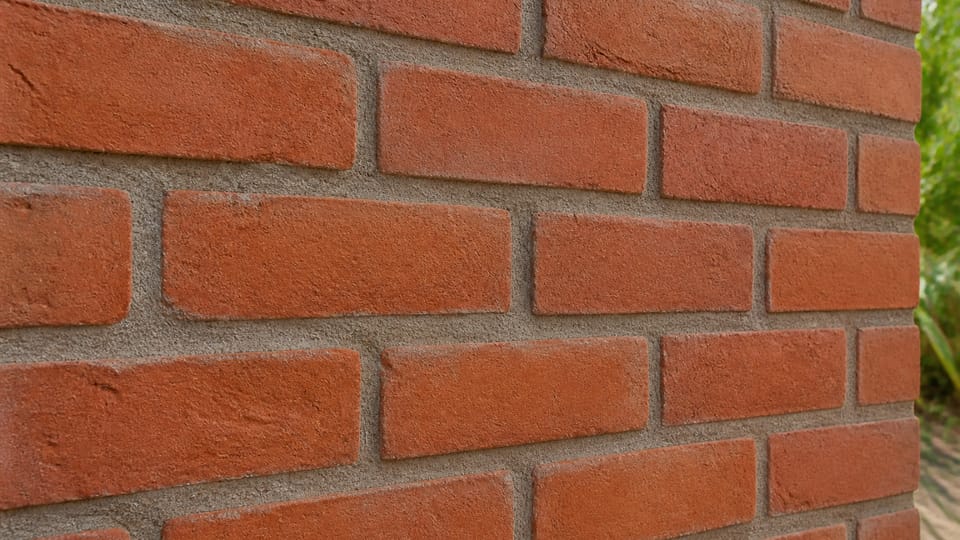
Brickwork is held together by mortar, and the mortar at the surface of the joint is what the weather meets first. The finish given to that mortar is called pointing. It affects how the wall looks, and it affects how well the wall keeps out rain. This page explains what pointing is, how it differs from jointing and plastering, and the finishes that IS 2212 shows.
The page gives no mortar ratio, no joint depth and no product. Those are in the specification and the mason’s work, and the engineer or the architect decides them for the house.
What is pointing?
IS 2212 defines pointing as the operation of finishing joints after the masonry is complete (terminology). It is a different step from jointing, where the joints are finished while the mortar is still green (clause 6.5.2).
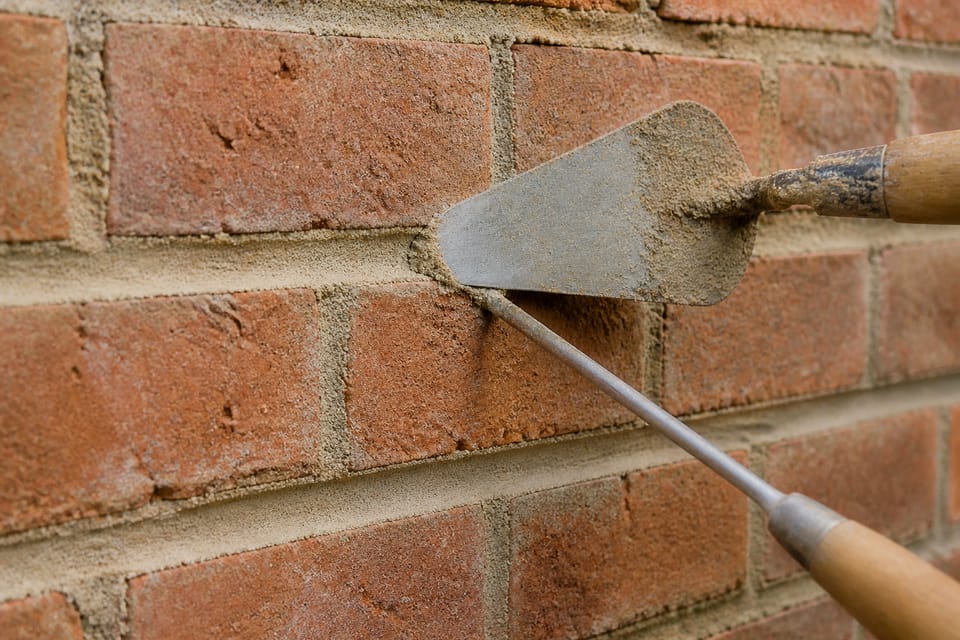
The standard says that in pointing the joints are raked out while the mortar is still green, brushed clean and wetted, and then refilled with mortar to give the finish required (clause 6.5.3). The refilled joint is what is seen.
How is pointing different from plastering?
Pointing finishes the joints of brickwork. Plastering covers the surface of the wall. IS 2212 says that joints can be raked out for subsequent plastering (clause 6.5.2). IS 2212 lets face joints be finished by jointing or by pointing (clause 6.5.1). Raking for plaster is one option under jointing (clause 6.5.2).
In practice, a wall that is to be plastered does not need a finished pointed face, and a wall that is left as exposed brick does. The owner should know which one is planned before the mason starts.
What are the finishes?
IS 2212 shows the following finishes in Fig. 10, and clause 6.5.3 gives the flush, weathered, tucked and ruled finishes by name, with others.
| Finish | What it looks like, from Fig. 10 | Named in |
|---|---|---|
| Flush | The mortar is level with the face of the brick | Fig. 10; clause 6.5.3 |
| Weathered | The joint slopes back from the top of the brick, as drawn in Fig. 10 | Fig. 10; clause 6.5.3 |
| Keyed | The joint is shaped as drawn in Fig. 10; the figure is the only source in the text for its shape | Fig. 10 |
| Tucked | A narrow line is pressed into the joint, as drawn in Fig. 10 | Fig. 10; clause 6.5.3 |
| Ruled | A straight line is marked into the joint, as drawn in Fig. 10 | Fig. 10; clause 6.5.3 |
Source: IS 2212:1991, Fig. 10 and clause 6.5.3, as listed. Clause 6.5.3 gives ‘some such finishes’ as flush, weathered, tucked and ruled, followed by ‘etc’, and refers to Fig. 10, so the table is not a full list.
Inline image
What does an owner check?
These checks are practice, not steps in the standard:
- Ask which finish is planned. The drawing or the specification should name it, and a sample panel helps.
- Check the joints are fully filled. A joint that is not filled lets in water, whatever the finish.
- Check the joints are brushed and wetted. The standard requires the raked joints to be brushed to remove dust and loose particles (clause 6.5.3).
- Ask for a sample panel of the finish, on the wall, before the whole house is done.
- Ask about the mortar in the joint. The mix should be the one the specification gives; the mason should not change it on site.
What mistakes should I avoid?
These are practice points:
- Pointing a wall that is to be plastered. The joints are raked for the plaster instead.
- Leaving a joint half filled. It lets in water.
- Choosing the finish by look alone. A weathered joint is generally held to shed water better than a flush one. IS 2212 does not rank the finishes, so ask the engineer or the architect.
- Changing the mortar on site without a check. The joint is part of the wall.
Frequently asked questions
Is flush pointing the same as flush joints?
Flush pointing is the finish; a flush joint is the joint with its face level with the brick. Fig. 10 shows the finish.
Does IS 2212 say how deep to rake the joints?
The standard gives a depth in clause 6.5.3. This page does not repeat it. The mason and the specification follow the standard.
Does pointing make a wall waterproof?
Clause 6.6.2 of IS 2212 says rain passes through cracks, the bricks and the mortar, and that unrendered walls should not be relied on to keep out rain except under sheltered or moderate conditions. The clause does not discuss pointing. Clause 11.1.1 says moisture penetration takes place mainly through joints, so the joints must be properly filled.
Related guides
This guide is general information. Read the disclaimer. Your mason, your engineer and your architect decide the finish and the mortar for your wall.
Sources
General information only. It is not a structural design or professional advice. Ask a licensed structural engineer or architect to check your plans and site.