
Short answer
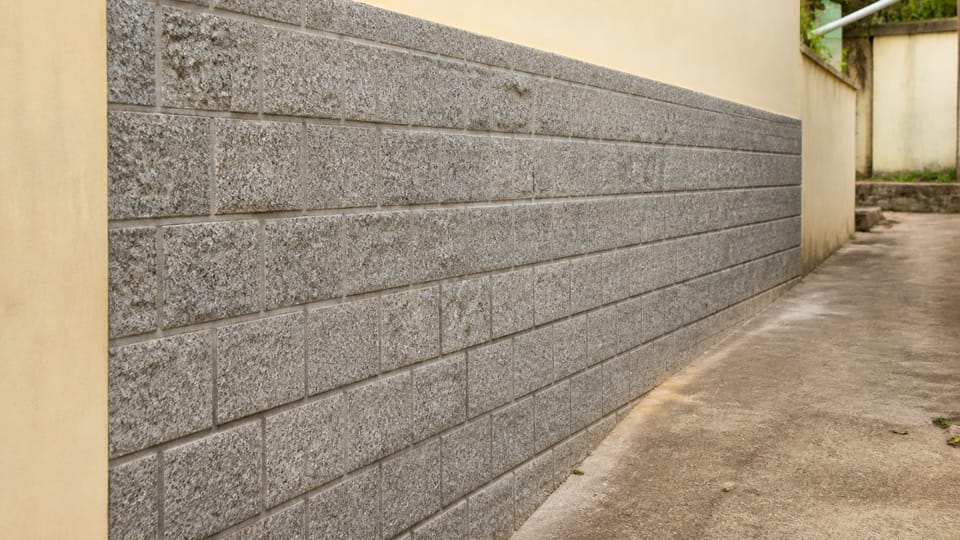
What is ashlar masonry? Ashlar masonry is stone walling built from dressed square blocks laid in courses, with fine joints. Rubble masonry uses irregular or roughly squared stones with thicker joints. IS 1597 Part 2 covers ashlar, and Part 1 covers rubble. Ashlar is often used as a facing over a backing wall. Ask your engineer which stone and which type the wall needs.
On this page (11)
Two stone walls can look alike from the road and be built in very different ways. One is ashlar. The other is rubble. The difference is in the stone and in how it is laid. This page explains what each term means in the Indian standards, the six types of ashlar, and what a homeowner can check. It gives no stone sizes, joint thicknesses, strengths or prices. Those are in the standard and in the engineer’s design.
What is ashlar masonry?
CPWD Specifications 2019 defines ashlar as “stone masonry using dressed square stone blocks of given dimensions having faces perpendicular to each other and laid in courses” (sub head 7.0). The standard IS 1597 Part 1 uses the same idea, with “dressed square stone blocks to given dimension and laid in courses” (cl 3.1).
IS 1597 Part 2 is the standard for ashlar. Its clause 1.1 says it covers the design and construction of ashlar stone masonry. Clause 1.2 says it covers only the construction practices generally met with in India.
What is rubble masonry?
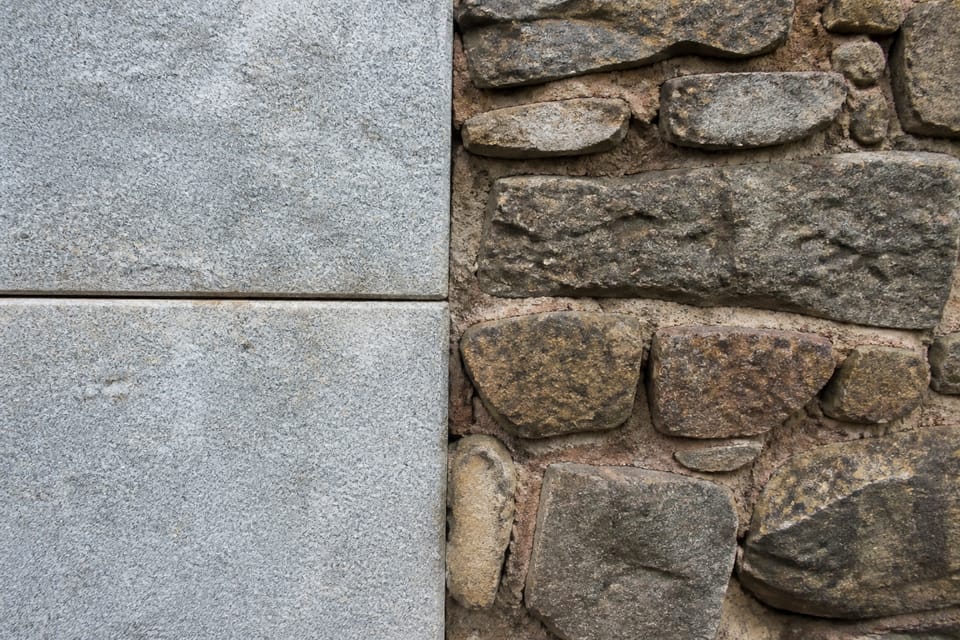
Rubble walling is built of stones that are “irregular in shape as quarried or squared and only hammer dressed”, with comparatively thick joints (IS 1597 Part 1, cl 3.29). CPWD gives the same idea in its own words and adds that the stones should be angular as far as possible (sub head 7.0). IS 1597 Part 1 is the rubble standard.
How do they differ?
| Point | Ashlar (IS 1597 Part 2) | Rubble (IS 1597 Part 1) |
|---|---|---|
| Stone form | Dressed square blocks of given dimensions | Stones as quarried, or roughly squared and hammer dressed |
| Faces | Dressed flat, with the faces at right angles | Rough and irregular |
| Joints | Thin, fine joints | Comparatively thick joints |
| Layout | Laid in courses | Random or coursed, depending on the type (CPWD sub heads 7.1 to 7.3) |
| Where used | Important buildings where strength and life are the criterion, and for facing | Common general stone walling |
The table names the general differences in the standards. The numbers for joints and stones are in the standards, and this page does not repeat them.
What are the six types of ashlar?
IS 1597 Part 2 clause 7.1 lists these types.
- Plain ashlar. Each stone is fine tooled on all beds, joints and faces.
- Sunk or moulded. The exposed faces are gauged, cut, grooved, rebated, sunk or moulded.
- Rock (quarry) faced. The exposed faces have a chisel draft around the edges, and the body of the face is left rough as it comes from the quarry.
- Chamfered (cl 7.1.3.1). The edges are bevelled around the exposed face. It is a sub-type of rock faced.
- Rough tooled or punched. The exposed faces have a fine chisel draft at the edges, and are rough tooled between the drafts.
- Block-in-course. Hammer-faced or pitch-faced regular coursed masonry in large blocks. The standard describes it as a superior type of coursed rubble masonry.
Is ashlar a veneer?
No. IS 1597 Part 1 clause 1.3 and Part 2 clause 1.3 both say the standards do not cover stone facing and veneering work. Stone veneer is a thin treatment, and CPWD treats stone lining up to a set thickness as veneering work, and thicker lining as plain ashlar masonry (sub head 8.8). So the same stone can be a veneer or ashlar depending on how thick the lining is. Ask your engineer which one the drawing shows.
What is a facing?
IS 1597 Part 2’s foreword says ashlar is generally used in important buildings where strength and the life of the structure is the criterion, and that it is also used in facing of stone masonry. CPWD clause 7.4.5 says ashlar can be built without brick or coursed rubble backing, or as facing over such a backing, with the face and bond-stone courses kept throughout. So on a house, ashlar is often a face over a backing wall. Ask the engineer whether the wall carries load or is a facing.
What should I check on site?
These are checks derived from the standards. They are not a checklist the standard gives.
- A dressed sample. CPWD clause 7.4.3 says a sample of the dressed stone is prepared for the Engineer-in-Charge’s approval and is kept on site after approval. Ask the mason to show the sample before work starts.
- Bond stones. Bond stones, the long stones that tie the faces together, should be marked as CPWD clause 7.1.7 says for random rubble, and run from face to back (clause 7.1.8). Ask where they are.
- No chips on the face. CPWD clause 7.4.5 says plain ashlar is laid without chips or under-pinning. For coursed rubble of the first sort, clause 7.2.5 says no pinning is allowed on the face. Look for loose stone chips pushed into the face joints.
- The stone itself. CPWD says ashlar stone should be hard, sound and durable, and that the Engineer-in-Charge approves before work starts. This page gives no strength or absorption figures.
What mistakes should I avoid?
These are practice points, not standard clauses.
- Calling any stone wall ashlar. Rubble and ashlar are different, and the joints and stones differ.
- Treating a thin stone lining as load-bearing stone. A lining is a veneer or a facing. Check the drawing.
- Accepting a sample that is not the stone used. Check the sample against the delivered stone.
- Assuming the thickness of stone. The engineer’s drawing sets the wall.
Frequently asked questions
Is ashlar stronger than rubble?
The standards give the uses and the construction rules, not a strength comparison on this page. Ask the engineer which masonry the design assumes.
Is ashlar more expensive than rubble?
This page gives no costs. Labour and stone choice affect the price, so ask for written quotes for each option.
Can I use ashlar for a house wall?
IS 1597 Part 2 covers its design and construction, and says it is used in important buildings and for facing. Whether a house wall uses it is for the engineer.
Related guides
- Stone masonry for plinths and walls: random rubble vs coursed rubble
- [Types of masonry: brick, stone, block and composite walls]((/walls/types-of-masonry-brick-stone-concrete-block-aac-and-composite-what-the-codes-name/)
- Stone cladding on an outside wall: how it is fixed so it stays on
This guide is general information. Read the disclaimer. A qualified engineer decides the stone masonry for your house.
Sources
- IS 1597 (Part 1):1992, Construction of Stone Masonry, Code of Practice, Part 1 Rubble Stone Masonry (first revision), cl 1.3 and 3.29. Read from an archive copy; the copy's OCR is partly garbled.
- IS 1597 (Part 2):1992, Construction of Stone Masonry, Code of Practice, Part 2 Ashlar Masonry (first revision), cl 1.1 to 1.3, 7.1 and the foreword. Read from an archive copy.
- CPWD Specifications 2019, Vol 1, sub head 7.0 (terminology), cl 7.1.7, 7.1.8, 7.2.5, 7.4.3, 7.4.5, 7.4.6 and 8.8.
General information only. It is not a structural design or professional advice. Ask a licensed structural engineer or architect to check your plans and site.