
Short answer
Can I leave a brick wall without plaster in India? You can, but the Indian brickwork code says an unrendered wall does not reliably keep out rain except in sheltered or moderate conditions. A rendered wall suits severe conditions better. If the wall stays bare, the joints must be well pointed and the top of the wall must shed water. Ask your engineer or architect for the exposure of your site before you decide.
On this page (8)
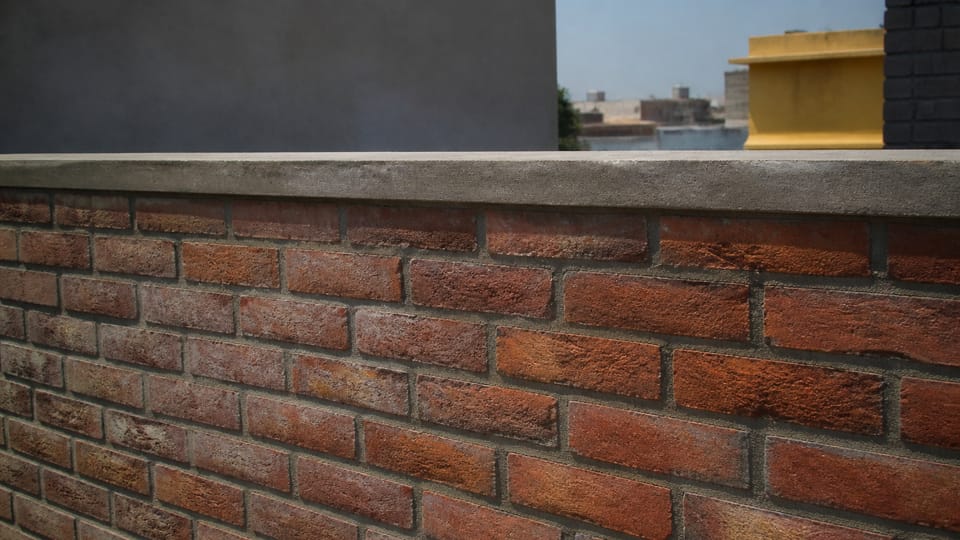
Many houses in India show red brick on the outside, with no plaster. It can look good. But bare brick takes in more rain than a rendered wall does. This guide explains what the Indian brickwork code says about rain on bare walls, how the joints should be pointed, and how the top of the wall should be finished. It gives no mortar ratios, prices or brands. Those depend on the bricks, the site and the design.
Does bare brick keep out rain?
Not on its own, in every place. IS 2212 (the Indian code of practice for brickwork) says that “Unrendered walls permit more water to pass through than rendered walls, and therefore shall not be relied on to give protection from rain except under sheltered or moderate conditions” (clause 6.6.2.1).
The same code says that a rendered wall “prevents the access of water through the joints” and so suits severe conditions, provided the other requirements are met (clause 6.6.2.2). Its suitability table (Table 3) rates an unrendered solid one-brick wall as unsuitable in severe exposure. The table’s note says severe exposure is where brickwork is “exposed to a moderate gale accompanied by a persistent rain”, and that brickwork which “projects well above the surrounding buildings” will be especially exposed.
So bare brick is a choice for a sheltered or moderately exposed wall, and only with good pointing and a sound top. A house on an open plot, or a tall wall in a windy place, needs more protection. Ask your engineer to judge the exposure of your site.
How should the joints be pointed?
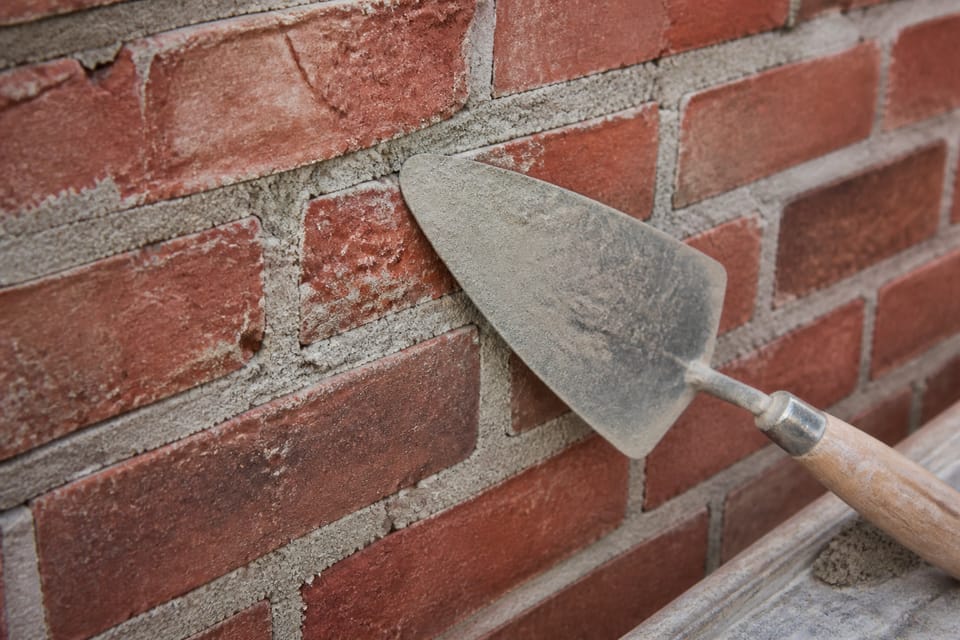
IS 2212 describes the work step by step. The joints are raked out “to a depth of 15 mm while the mortar is still green.” Then they are brushed, “well wetted,” and “completely refilled with mortar to give the required finish” (clause 6.5.3). The code names the finishes: flush, weathered, tucked, ruled and keyed.
Pointing is the usual route for water into bare brick. A joint that is under-filled, cracked or crumbling lets water in.
For the process after pointing, the code says that newly built work “shall be covered with gunny bags or tarpaulin” in inclement weather so that the mortar is not washed away (clause 11.9.2). In hot dry weather it asks that brickwork be kept “constantly wet for at least seven days” (clause 11.10).
How should the top of the wall be finished?
The top of a bare wall is where most water gets in. IS 2212 says that a parapet coping that is impervious, such as stone or dense concrete, may not need a damp-proof course across the wall. Where the coping is not impervious, it may be necessary to put in a flexible damp-proof course about 15 to 20 cm above the finished roof level, carried down the inside face (clause 6.8.6). The copings should be “throated” and sloped “so as to allow rain-water to drain off” (clause 6.12.2).
The code also says that parapet walls “shall not be sealed on both faces by impervious rendering” (clause 13). Sealing both faces keeps water inside the wall, which the code says can leave it in a wet condition. Ask the engineer what finish the parapet needs on each face.
What do I check on an exposed wall?
This section is practice, not a code rule.
- Hairline cracks, or joints that are under-filled, crumbling or flush and smooth where water can sit.
- A coping or cap on top of every exposed wall and parapet, sloped so that water runs off.
- White salt on the brick (efflorescence), or damp patches. These show that water is moving through the wall. The code says the salt is brushed off dry, and that cleaning with acids shall not be done, except in one narrow case described in a note. Ask an engineer before you use any acid.
- Water from the roof, a gutter or a pipe that runs onto the wall face.
What mistakes should I avoid?
This section is practice.
- Leaving bare brick on an open or windy site without asking about the exposure.
- Pointing over old, loose mortar rather than raking it out and refilling.
- Sealing the whole wall with a film that traps moisture behind the face. Ask the engineer before you seal any brick face.
- Leaving the top of a wall with no coping, so that rain soaks down through the top course.
- Pointing in heavy rain or in a dry, hot spell without the curing the code asks for.
Frequently asked questions
Can I paint exterior brick?
Ask the engineer first. A paint or sealing film can trap moisture in the wall. Painting is a finishing question, and our painting exterior walls guide explains the preparation.
Should I plaster a brick wall?
The code treats a rendered wall as better for severe conditions. Whether you need plaster depends on the exposure of your site. See how to plaster a wall.
Does brick need waterproofing?
This guide does not give a product. The code’s answer is the pointing, the coping, and the damp-proof course at the top. Ask your engineer what else the site needs.
Related guides
This guide is general information. Read the disclaimer. Your engineer and mason decide the wall, the joints and the finish for your house.
Sources
General information only. It is not a structural design or professional advice. Ask a licensed structural engineer or architect to check your plans and site.