
Short answer
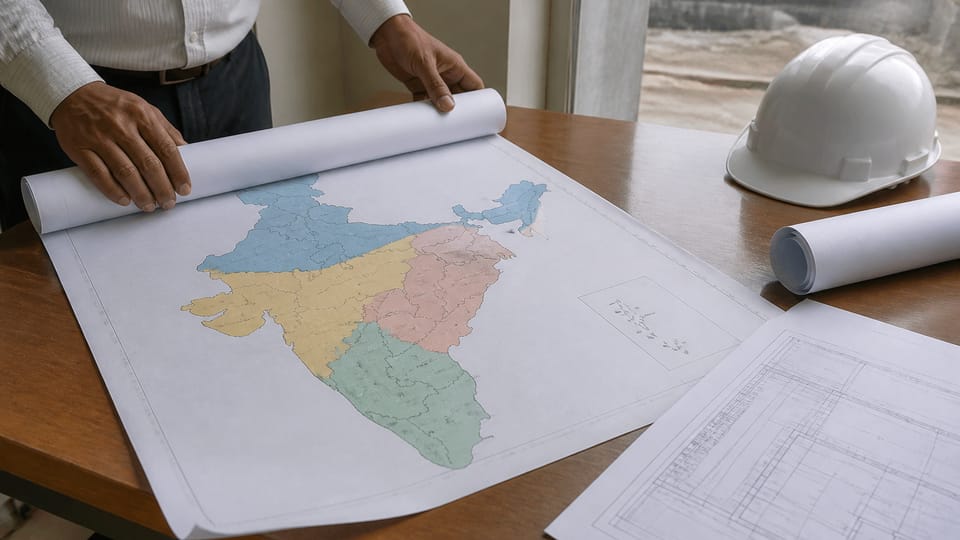
How many seismic zones are there in India, and how do I find mine? IS 1893 (Part 1):2016, the code that holds the map, divides India into four seismic zones, II to V, from lower to higher hazard. Find your zone on the map in the code, or in its list of larger towns, or ask your engineer. A town on a zone boundary is treated as being in the higher zone. The zone is an input to the engineer's design, not a rule you apply yourself.
On this page (9)
Owners ask “which seismic zone is my house in?” and get a different answer from every website. This page explains what the zones are, where the official map is, how to find your place on it, and what the zone does and does not change for a house. It gives no zone factors, no design forces and no member sizes. Those belong to the structural engineer.
What is a seismic zone?
A seismic zone is an area of the country that the Indian earthquake code treats as having the same level of earthquake hazard for design. The code is IS 1893 (Part 1), “Criteria for Earthquake Resistant Design of Structures”. Clause 6.4.1 says that “for the purpose of determining design seismic force, the country is classified into four seismic zones”. The zones are numbered II, III, IV and V. Zone V is the highest hazard of the four.
There is no Zone I. IS 4326, the companion code for building construction, says plainly that “zone I does not exist any more”.
The foreword explains the basis. The committee used a map based on the maximum intensities recorded in damage surveys after past earthquakes, taking in the known magnitudes and epicentres, and the tectonics and rock types of each region. A zone is therefore about expected shaking at a place. It is not a magnitude. A house in Zone V is not “a magnitude 8 house”.
Which edition of the map is current?
The map in IS 1893 (Part 1):2016 is the one in use. A revised IS 1893 (Part 1):2025 was published in November 2025. BIS records show it as withdrawn in March 2026. The Ministry of Earth Sciences told Parliament on 1 April 2026 that the 2016 map “remains the current standard, as the revised zonation has been withdrawn in March 2026”.
The 2016 code and the National Building Construction Standards (NBCS) 2026 agree on the direction. The NBCS says IS 1893 is under revision and that updated seismic zones were envisaged. It says it continues to refer to IS 1893 (Part 1):2016. We did not read the 2025 edition. News reports describe changes to the zones, but we have not checked them against a primary text, so this page does not repeat them. A revised map could come later, so ask your engineer which edition and which map they used.
How do I find my zone?
Use the code itself, then confirm with a person.
- Look at Fig. 1 in IS 1893 (Part 1):2016. It is a map of India showing zones II to V. It is a national map, so a plot near a zone line is hard to read from it.
- Check Annex E for larger towns. Annex E is titled “List of some towns with population more than 3 lakhs (as per Census 2011) and their seismic zone factor”. It is a partial list. A smaller town will not be in it.
- If the town is on a boundary, the note under Fig. 1 says a town on the line between two zones is considered to be in the higher zone.
- Ask your structural engineer or the local building authority which zone and edition apply to your plot. This is practice, not a clause. The standards we read do not name who must check it.
The BMTPC Vulnerability Atlas of India is a government publication that shows the seismic zones state by state. Its preface says the zones are based on shaking intensity and that a Bureau of Indian Standards committee prepared the zone map. We did not check which edition of the code it follows, so treat it as a guide and confirm with the code.
Third-party “zone checker” websites and lists on exam-prep pages are secondary. They often disagree on cities and mix editions.
What zone is my city in?
This table gives the zone listed in Annex E of IS 1893 (Part 1):2016 for some large cities. We read the zone for each town from the page images of the standard. A city can include areas near a zone line, so confirm your own plot.
| Town (as in Annex E) | Zone |
|---|---|
| Bengaluru | II |
| Hyderabad | II |
| Jaipur | II |
| Chennai | III |
| Mumbai | III |
| Kolkata | III |
| Ahmedabad | III |
| Pune | III |
| Lucknow | III |
| Delhi | IV |
| Patna | IV |
| Dehradun (Dehra Dun) | IV |
| Guwahati | V |
Annex E also prints a zone factor for each town. This page leaves it out. It is a design value for the engineer.
What does the zone change for my house?
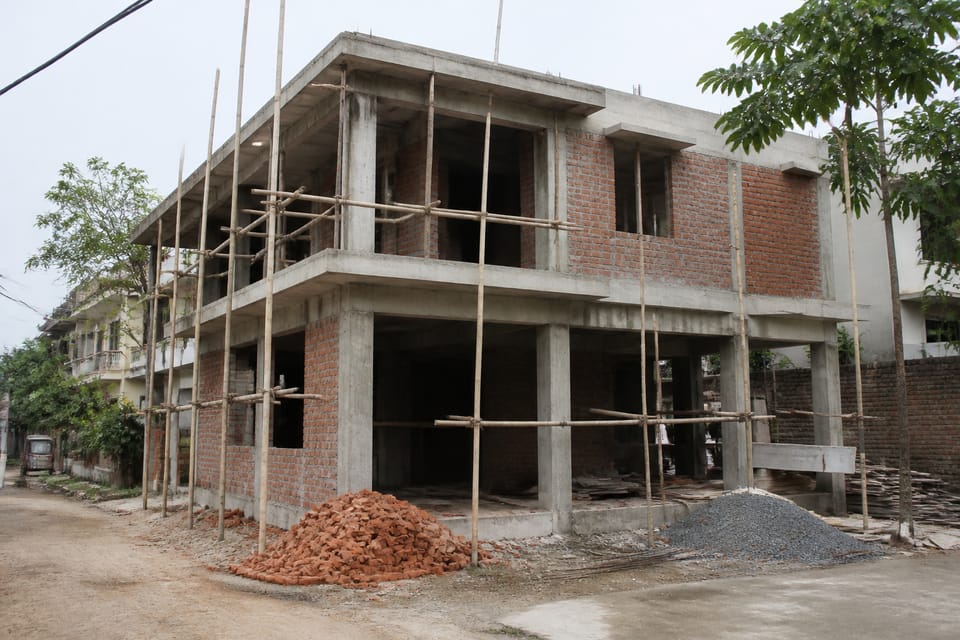
The zone changes the design, and the engineer works it out. This section is about what the standards say, not about numbers.
- The design input. IS 1893 uses the zone to set the earthquake effect for which a building is designed. IS 1893 clause 1.2 says all structures, including small ancillary structures, need to be designed for appropriate earthquake effects as per the standard. The standard names no professional. That the structural engineer carries this out is practice.
- Construction features. IS 1893 clause 1.4 says the standard “does not deal with construction features”. It points to other codes, including IS 4326 for buildings of conventional types and IS 13920 for ductile detailing.
- Masonry buildings. IS 4326 puts masonry and wooden buildings into categories B to E by seismic zone and by the importance of the building (Table 2), and the earthquake-resisting features it asks for are specified by category. For the same importance, a higher zone gives the same or a higher category. The NBCS 2026 says special features of construction for earthquake-resistant masonry buildings “in zones III and above” shall apply. Zone II still needs good practice: see the principles page below.
- No promise of no damage. The foreword of IS 1893 says structures designed as per the standard “are expected to sustain damage during strong earthquake ground shaking”. So the zone does not promise an undamaged house.
What mistakes should I avoid?
These are practice, not code rules.
- Taking a city list from a website instead of the code or your engineer.
- Reading the zone as a “safety score” for a plot, or comparing plots only by zone.
- Assuming a low zone means the engineer can skip a regular shape, ties between parts, or a soil check. The zone is separate from local soil: see the soil test guide.
- Asking a contractor to “add steel for Zone IV” without a design.
- Mixing up editions: 1984, 2002, 2016 and the withdrawn 2025 revision.
- Treating a municipal plan approval as proof that the earthquake design was checked.
Frequently asked questions
How many seismic zones are there in India?
Four: II, III, IV and V, under IS 1893 (Part 1):2016. There is no Zone I. A Zone VI that you may read about is not in the 2016 map, which is the one that remains current.
Which seismic zone is Bengaluru in?
Zone II, as listed in Annex E of IS 1893 (Part 1):2016. Confirm your own plot with your engineer.
Is Zone V the safest zone?
No. Zone V is the highest hazard of the four zones. Zone II is the lowest.
Does a low zone mean I need no earthquake design?
No. IS 1893 clause 1.2 says all structures need to be designed for earthquake effects as per the standard. How much strengthening is needed is the engineer’s decision.
What is the difference between zone and magnitude?
A zone is the code’s level of expected shaking for a place. Magnitude measures the energy released by one earthquake. They are not the same number.
Related guides
- Earthquake-resistant house in India: the principles your engineer uses
- Soil test before building a house
- Architect vs engineer vs contractor for a house
This guide is general information. Read the disclaimer. Your structural engineer decides the design for your house.
Sources
- IS 1893 (Part 1):2016, Criteria for Earthquake Resistant Design of Structures, Part 1 General Provisions and Buildings (foreword; clauses 1.2, 1.4, 6.4.1; Fig. 1 and its note; Annex E, read from the page images). BIS lists it as not withdrawn; the Ministry of Earth Sciences said in April 2026 that it remains the current standard.
- IS 4326:2013, Earthquake Resistant Design and Construction of Buildings: Code of Practice (clause 7.1, Table 2 and its note).
- SP 7:2026, National Building Construction Standards (NBCS) 2026: the note that IS 1893 is under revision, and the clause on special features of construction for masonry buildings in zones III and above. Unofficial archive.org copy of the text; the part and page were not identified.
- Press Information Bureau, Ministry of Earth Sciences, reply on the seismograph network, 1 April 2026: the 2016 seismic zoning map remains the current standard as the revised zonation was withdrawn in March 2026.
- BMTPC, Vulnerability Atlas of India (2019), preface. The atlas edition and its link to a particular IS 1893 edition were not checked.
General information only. It is not a structural design or professional advice. Ask a licensed structural engineer or architect to check your plans and site.