
Short answer
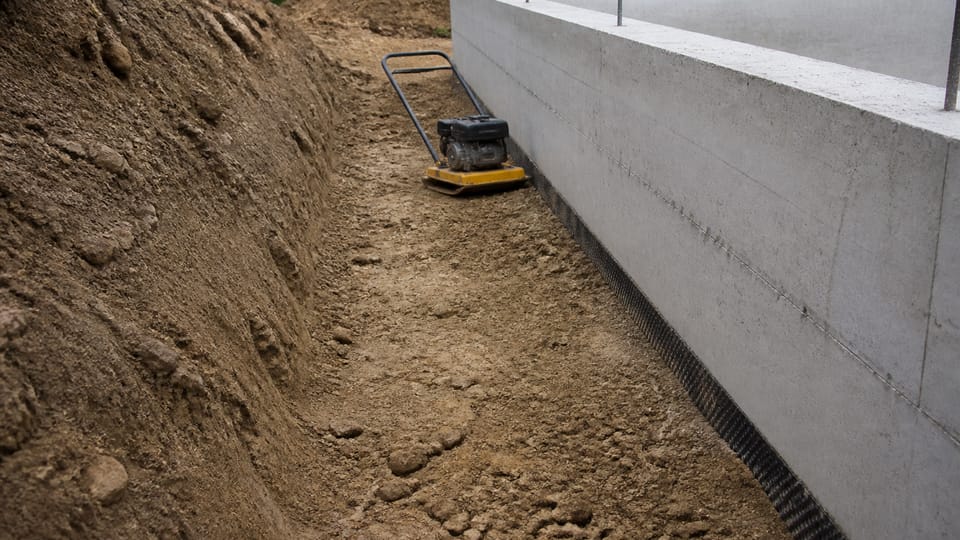
How is the trench backfilled around a house foundation? IS 1904:2021 clause 20.4 says backfilling is done with care so as not to disturb the constructed foundation, and is compacted in layers not exceeding 150 mm compacted thickness, with the minimum water needed for compaction. No standard we read names the soil, the waiting time or a test value, so the engineer decides those.
On this page (10)
- What does backfill mean?
- What do the standards say about backfilling?
- What does the termite code say about the backfill?
- What do the standards not say?
- What should the engineer and site supervisor decide? (practice)
- What should I check on site? (practice)
- What mistakes should I avoid? (practice)
- Frequently asked questions
- Related guides
- Sources
Backfilling is putting soil back into the trench around the foundation and plinth after the foundation work is done. It looks like the easiest job on the site, and it is also one that is hidden once finished: poor backfill shows up later as settlement, a wet wall or a termite path. The Indian standards say little about it, so this page gives the few clauses that exist, says plainly what no standard states, and leaves the rest to your engineer. It gives no waiting time, no density target and no price. Filling inside the plinth walls is a separate job, covered in the stages checklist: see stages of house construction in India: checklist and inspection points.
What does backfill mean?
NBCS 2026 Part C Section 2, clause 2.3.1, defines “Back Fill” as “materials used or reused to fill an excavation”. It can be the soil that came out of the trench or soil brought in. The soil investigation report is meant to say whether the soil is suitable: clause 3.6.3(f) lists “suitability of the soil for backfilling around foundations” among the items in a soil report. For the clay that swells and shrinks, see black cotton soil: why houses crack and what the engineer checks.
What do the standards say about backfilling?
| Clause | What it says |
|---|---|
| IS 1904:2021 clause 20.4 | The backfilling shall be done “with care so as not to disturb the constructed foundation, and shall be compacted in layers not exceeding 150 mm compacted thickness, with sprinkling of minimum quantity of water necessary for proper compaction” |
| NBCS 2026 clause 6.11.4 | Nearly the same words, with “150 mm thick” |
| IS 1904 clause 19.1 | Roads and drains should preferably be completed before the foundations; otherwise sufficient precautions shall be taken to protect the already constructed foundations during subsequent work |
| IS 1904 clause 19.2 | Holes left by digging, such as removed old foundations, uprooted trees or animal burrows, “shall be back-filled with soil and well compacted” |
| IS 1904 clause 19.3 | If surface water drains towards the structure, the land may be dressed or drains laid to divert it away |
| NBCS 2026 clause 7.2.2.1 | The depth factor correction in the bearing capacity calculation “is to be applied only when backfilling is done with proper compaction” |
| IS 6313 (Part 2):2022 clause 4.1.3 | Backfilling in place, and borrowed fill “free from organic debris” and “well compacted”; if not, supplementary treatment completes the barrier |
The 150 mm in the table is a thickness from the standard, not a rule for every soil, tool or contractor. CPWD’s own contract specification gives a different layer thickness, and it is not a BIS standard, so your engineer states what applies to your site.
What does the termite code say about the backfill?
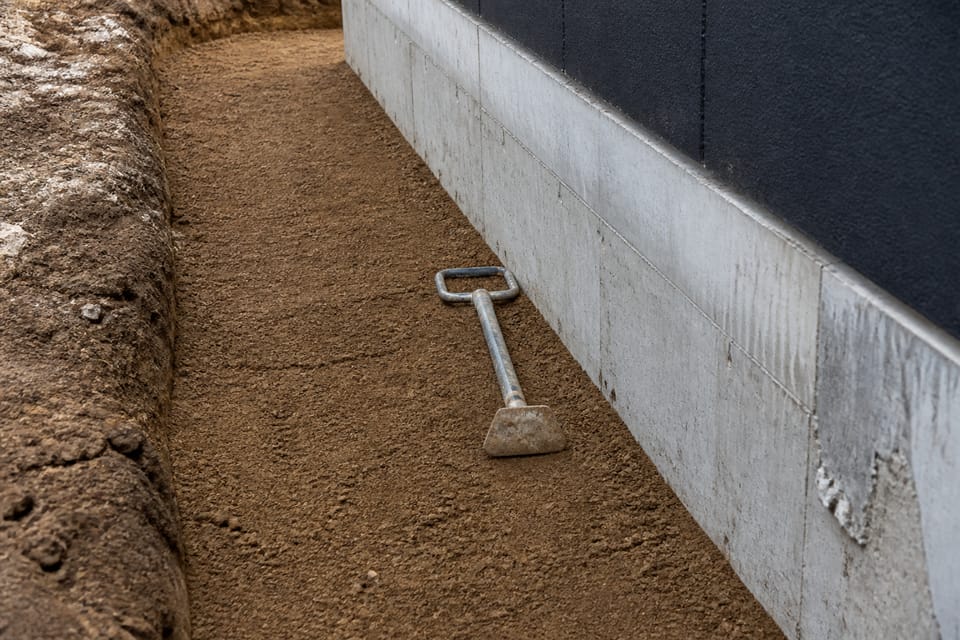
IS 6313 (Part 2) clause 7.2.2 treats the backfill soil in immediate contact with masonry foundations. It says the treatment is carried out as the earth is returned in layers, “in similar stages”, and directed at the masonry surfaces so that the soil in contact with them is well treated. Where water is used to ram the earth, the treatment is done after the ramming. The dose and the spacing of the treatment holes are for the pest control contractor and the product label, and are not printed here. Read anti-termite treatment before construction: the stages under IS 6313 for the full sequence.
What do the standards not say?
We read IS 1904, NBCS 2026 and IS 6313 for this page and found none of these:
- Which soil may be used. The codes ask for care and compaction, and the soil report states suitability; they do not give a soil-type rule.
- How long to wait after the foundation concrete or masonry before backfilling. IS 6313 only says “after the masonry foundations … come up”.
- A compaction density, a test value or a hold point for backfill.
- A rule for unequal fill heights on the two sides of a wall.
- In these three standards, a rule for backfill behind retaining or basement walls, apart from the termite clause. The hill-area retaining wall code IS 14458 has one, on the retaining wall page. See retaining wall vs boundary wall: what differs and who designs it.
These are the engineer’s decisions. This is practice, not a standard.
What should the engineer and site supervisor decide? (practice)
This is practice, apart from the clauses named.
- When: after the foundation and plinth work have gained the strength the engineer allows, after the DPC or waterproofing and the termite treatment are done and inspected.
- What goes back: soil the engineer accepts. Rubbish, roots, wood and organic matter stay out, as IS 6313 asks for borrowed fill. Large lumps are broken up.
- How: thin layers, each rammed or rolled before the next, brought up evenly on both sides of a wall so one side does not push it. Hand ramming close to the wall, with the machine kept away from the fresh wall.
- Moisture: controlled, as the clause says “minimum quantity of water necessary for proper compaction”. Flooding the trench to settle the soil is not what the clause describes.
- Water: no rainwater ponding in the trench or at the wall, and the finished ground sloping away from the building. See plinth protection: the sloping apron around your house.
What should I check on site? (practice)
- Is the trench clear of water, rubbish, timber and shuttering before the fill starts?
- Has the engineer cleared the work to be covered?
- Is the soil clean and accepted, with no roots or organic matter?
- Are the layers thin and each one compacted?
- Is the fill even on both sides of each wall?
- Was the termite treatment done in the layers?
- Is the ground sloping away from the walls?
- Do you have photos before and after?
What mistakes should I avoid? (practice)
- Backfilling too early, before the strength and the inspection.
- Tipping soil in one heap and flooding it with water.
- Rubbish, roots, timber or big clods in the fill.
- Filling one side of a wall much higher than the other.
- Skipping the termite treatment of the backfill layers (IS 6313 clause 7.2.2).
- Backfilling in the rain, or into a trench full of water.
- Dumping black cotton soil or clay against the footing without asking the engineer.
- Leaving the ground without a slope, so water stands at the plinth.
- Confusing backfill around the foundation with filling inside the plinth walls.
Frequently asked questions
What is backfilling a foundation?
Putting soil back into the excavation around the foundation and plinth, in layers and with care (IS 1904 clause 20.4).
How thick should each layer be?
IS 1904 clause 20.4 says not exceeding 150 mm compacted thickness. Your engineer confirms what applies to your soil and equipment.
Can I backfill straight after the foundation is poured?
No standard we read gives a waiting time. The engineer decides, from the strength gained and the inspections done. This is practice.
Can I use the same excavated soil?
Often yes. The standards call it “materials used or reused to fill an excavation”, and the soil report is meant to state suitability. The engineer accepts it. This is practice.
Is backfilling the same as plinth filling?
No. Backfilling is outside the foundation. Plinth filling is the soil inside the plinth walls under the floor.
Related guides
- Anti-termite treatment before construction: the stages under IS 6313
- Plinth protection: the sloping apron around your house
- Excavation for a house foundation: steps, safety and checks
- How excavation is measured: trench volume, working space, lead, lift
This guide is general information. Read the disclaimer. Your engineer decides the backfilling for your house.
Sources
- IS 1904:2021, Design and Construction of Foundations in Soils, General Requirements: clauses 19.1 to 19.3 and 20.4 (page image read for 20.4; text layer for the others). BIS lists it as in force, valid to 2031-03-31.
- SP 7:2026, National Building Construction Standards (NBCS) 2026, Part C Section 2, Soils and Foundations: clauses 2.3.1, 3.6.3(f), 6.11.2, 6.11.4 and 7.2.2.1 (page images read for 3.6.3(f), 6.11.2 and 6.11.4; text layer for 2.3.1 and 7.2.2.1). From an unofficial archive.org copy.
- IS 6313 (Part 2):2022, Anti-Termite Measures in Buildings, Pre-Constructional Chemical Treatment Measures: clauses 4.1.3 and 7.2.2 (page images read). BIS lists it as in force, valid to 2027-03-31.
Change log
- : Added Related guides link to newly published article(s): how-excavation-for-a-house-foundation-is-measured-trench-volume-working-space-lead-and-lift. No other text changed. Approved by the reviewing engineer.
General information only. It is not a structural design or professional advice. Ask a licensed structural engineer or architect to check your plans and site.