
Short answer
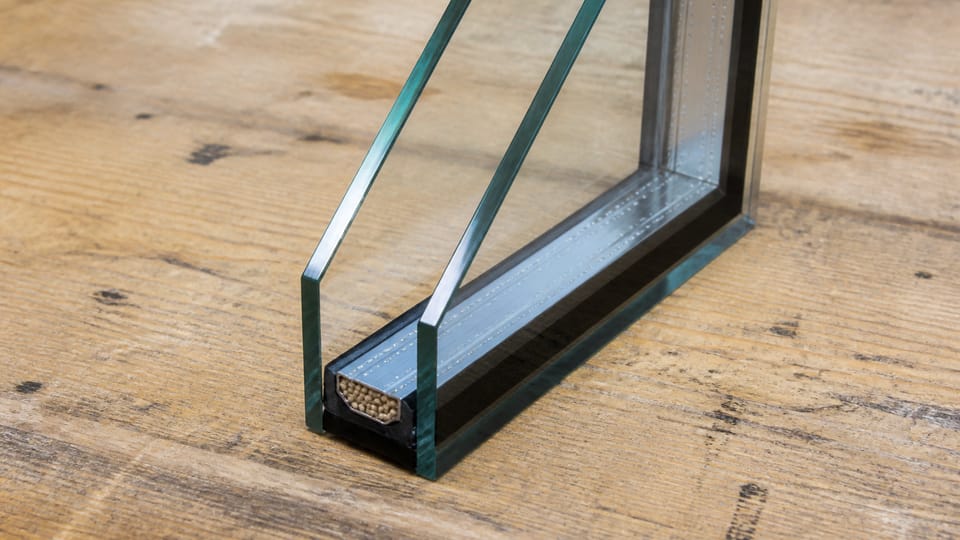
What is a double glazed window and what does IS 17346 cover? A double glazed window uses an insulating glazing unit: at least two parallel panes of glass, separated by a spacer and hermetically sealed along the edge. IS 17346:2020 is the Indian specification for the unit itself, covering its construction, tests and marking. It does not cover the window frame, the fixing or the whole window.
On this page (10)
- What is an insulating glazing unit?
- What is the unit made of?
- What does IS 17346 test and mark?
- What does IS 17346 not cover?
- Does double glazing keep a house cool or quiet?
- What should I ask for in a quote? (practice)
- What mistakes should I avoid? (practice)
- Frequently asked questions
- Related guides
- Sources
“Double glazed” is sold as one feature, but the thing doing the work is a factory-made sealed unit, not two sheets of glass in a frame. India has a specification for that unit. This page explains what it is made of, what IS 17346 asks of it, what the standard leaves out, and what to ask for when a quote says “double glazed”. It gives no energy-saving or noise figure, no price and no brand, because no standard we read promises a saving for a house. The frame and its joint with the wall are a separate matter: see windows leaking in rain: frame, sill and drip, and where to start.
What is an insulating glazing unit?
IS 17346:2020 is titled “Insulating Glazing Unit: Specification”. Clause 3.8 defines the unit as “an assembly consisting of at least two parallel panes of glass, separated by one or more spacers, hermetically sealed along the periphery, mechanically stable and durable”. Clause 4 describes it as two or more panels of glass spaced apart and sealed “to form a single unit with air or gas filled space between the panels”. NBCS 2026 (Part C Section 8, clause 4.2.7) gives the same description, with “inert gas” and an equivalent alternative spacer material allowed.
IS 16231 (Part 2) uses “double glazing” for the two-pane case, while an insulating glazing unit can have two or more panes. Its clause 4.2 says double glazing is “glazing formed by an assembly of two glass panes separated by a spacer”, the gap filled with air or inert gases and hermetically sealed along the edge “to improve thermal insulation”.
What is the unit made of?
| Part | What IS 17346 says |
|---|---|
| Panes | At least two. Clause 5.1: each pane “shall conform to the relevant product standards”, or as agreed between the purchaser and the manufacturer where there is no Indian Standard |
| Spacer | Clause 3.12: “a component used to separate the panes and control the width of the gap at the edge of the unit”. Clause 4: typically aluminium, mill-finished or painted or anodized. NBCS adds “or an equivalent alternative material” |
| Cavity | Clause 3.2: “the space(s) between the parallel panes”. Air, or gas in addition to air (clause 3.7: usually for improving thermal or sound insulation) |
| Desiccant | Clause 3.4: “a substance which is able to lower the partial pressure of water vapour inside the IGU”. Clause 4: filled inside the spacer framework to prevent condensation inside the unit |
| Primary sealant | Clause 4: “acts as a barrier to moisture and vapour penetration” |
| Secondary sealant | Clause 4: “provides structural integrity to the unit” |
| Edge seal | Clause 3.5: the processed edge, “designed to ensure that moisture and gas transmissions between the inside and outside of the unit are restricted” |
What does IS 17346 test and mark?
The standard “prescribes the requirements and the methods of sampling and test” for these units (clause 1). We can name what it tests without printing its laboratory values, which are the manufacturer’s and the testing laboratory’s concern, not something an owner can check on site:
- Dimensions and thickness: tolerances on size, squareness and overall thickness (clause 5.1).
- Dew or frost point of the cavity (clause 5.2.1): a check that the air inside is dry.
- Climate test and inert gas level test (clause 5.2.2 and 5.2.3): both optional in the standard. The gas test applies when the unit is described as gas-filled.
- Edge strength (clause 5.2.4), a type test of how well the sealed edge holds.
- Factory process controls on the sealants and the desiccant (clause 6).
NBCS 4.2.7 has a note to the same effect: moisture penetration and gas level tests “are typically carried out to determine the characteristic of IGUs”. UV appears only as an ageing step inside the edge-strength test (Annex A), and fogging is described in an informative annex with no requirement. The standard prints no sound-reduction figure.
Marking (clause 7.2): each unit is to carry the words “Insulating Glass”, and each pane is marked as toughened, heat strengthened or laminated safety where it is one of those, with the source of manufacture. Use of the BIS Standard Mark is permitted, not required.
What does IS 17346 not cover?
Read the scope. It covers the unit, “meant for use in architectural buildings, railway coaches and other applications”. It does not cover:
- The window frame, whether uPVC, aluminium or wood.
- Fixing the unit in the frame, or the frame in the wall.
- Whole-window air or water leakage and wind resistance.
- An energy-saving or noise-reduction figure for a house. The only energy sentence is in the foreword, which says the units can reduce the load on air conditioning and aid energy conservation: a statement of purpose, not a requirement.
- Which panes must be safety glass. The marking only tells you which panes are.
Does double glazing keep a house cool or quiet?
The standards give a careful answer. IS 16231 (Part 2) clause 5.3.1 says energy loss is measured by the thermal transmittance or U-value, and that to improve resistance to energy loss “insulating glass units or coupled glazing should be used, since the air cavities provide extra thermal resistance”. It adds that making the glass thicker “makes little difference to the U-value”. That is about heat conduction through the glass. How much sun heat comes in depends on the glass type: the same Part (clause 5.2.4.2(e)) says the second pane can be of any glass type, the main inner panes being clear or low-emissivity glass. NBCS 4.2.7 and IS 17346 give no noise figure, and IS 17346 clause 3.7 only says gas fill is “usually” for thermal or sound insulation.
This is practice, not a standard: a clear double glazed unit on an unshaded west window still lets the sun in. Shade, orientation and the glass type matter more than the word “double”. See how to make an RCC roof heat proof: insulation, paint and shade for the larger heat source on a top floor.
What should I ask for in a quote? (practice)
This is practice, apart from the clauses named.
- The make-up of the unit in writing: the glass type and thickness of each pane, the spacer, the sealant, and whether the cavity holds air or gas.
- Whether the unit is made and tested to IS 17346, and the supplier’s test certificate or report.
- The words “Insulating Glass” on each unit, and the pane marking where toughened or laminated glass is claimed (clause 7.2).
- The frame and its fixing as a separate item from the glass.
- The warranty on the seal, and who replaces a misted unit and how.
- Any claim of noise or energy saving in writing, with what it is based on. Treat a sales claim as a claim.
What mistakes should I avoid? (practice)
- Taking two loose sheets in a frame, or a single laminated pane, for a sealed unit.
- Fitting a good unit in a leaky frame, or an unsealed frame-to-wall joint.
- Blocking the frame’s drainage slots, so water sits on the glass edge and the seal ages sooner.
- Fitting the unit tight, with no clearance, so the frame flexing stresses the glass or the seal.
- A quote that says only “double glazed”, with no glass specification.
- Painting or scraping the edge sealant.
- Opening a misted unit to clean it: mist between the panes means the seal has let moisture in, and the usual remedy is a replacement unit.
- Expecting a unit to fix a west window with no shade.
Frequently asked questions
What does IS 17346 cover?
The insulating glazing unit: its construction, tests and marking. Not the frame, the fixing or the whole window.
Is argon-filled glass better?
IS 17346 treats gas fill as optional and tests the level where a unit is described as gas-filled. Gas helps only while the seal holds, and IS 16231 (Part 2) lists it as one of several ways to improve insulation. We do not rank it.
Why is there mist between the panes?
It means the edge seal has let moisture into the cavity, which the desiccant and the seals are there to prevent (IS 17346, clause 4). That is different from condensation on the room-side or outer glass surface (clause 3.6).
Can I put double glazing in an old frame?
The unit is thicker than a single pane, so the frame has to be made or checked for it. Ask the supplier and your engineer. This is practice.
Related guides
- Windows leaking in rain: frame, sill and drip, and where to start
- Cross ventilation in a house: how window placement moves air
- How to make an RCC roof heat proof: insulation, paint and shade
This guide is general information. Read the disclaimer. Your window supplier and engineer decide the glass specification for your house.
Sources
- IS 17346:2020, Insulating Glazing Unit, Specification: clauses 1, 3.2 to 3.12, 4, 5.1, 5.2 and 7.2 (page images read). BIS lists it as in force, valid to 2030-03-31.
- IS 16231 (Part 2):2019, Glazing in Buildings, Energy and Light: clauses 4.2, 5.2.4.2(e) and 5.3.1 (page images read). BIS lists it as not withdrawn, valid to 2029-01-31.
- SP 7:2026, National Building Construction Standards (NBCS) 2026, Part C Section 8, Glass and Glazing: clause 4.2.7 and its note (page image read). From an unofficial archive.org copy.
General information only. It is not a structural design or professional advice. Ask a licensed structural engineer or architect to check your plans and site.