
Short answer
How do I make a concrete roof less hot in an Indian house? Heat comes through the roof, so the fixes sit on it or under it. Insulation is the main fix, and a reflective coat helps only while it stays clean and sound. Shade is hard to get on a flat roof. Check the waterproofing and the cracks first, and ask your engineer before you add any layer or weight to the slab.
On this page (13)
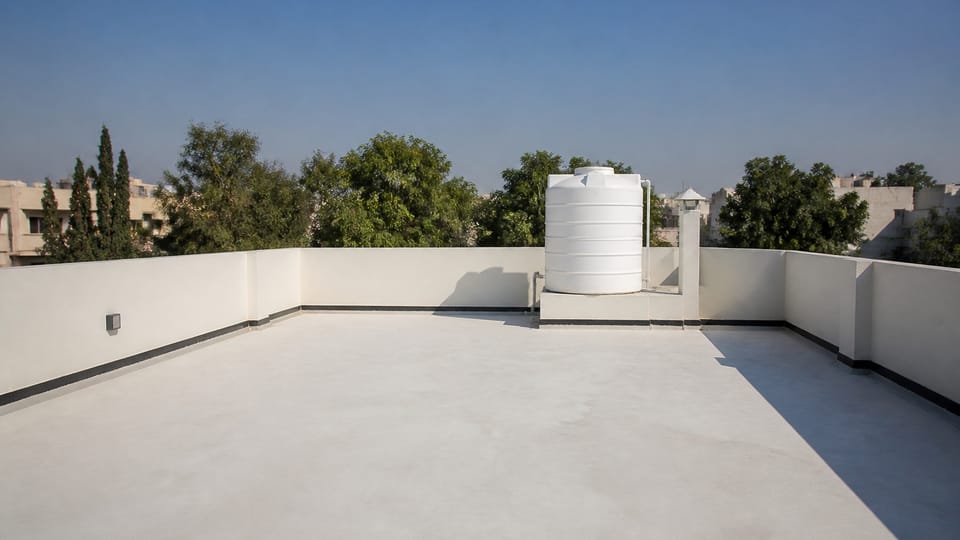
A concrete roof is a big part of a top-floor room. Sun heats the slab all day, and some of that heat passes into the rooms below. Many owners try a white paint first. This guide shows the fixes in the order most engineers would check them, and which claims are standard text and which are practice. It gives no prices, no product names and no temperature drops. The numbers that do exist in the codes are for designers, and your engineer must use them for your roof.
What should I check before any fix?
Start with the roof you have. Any layer you add is extra weight on the slab and extra water on the surface. So check these first:
- The waterproofing. Is it sound, with no cracks, bubbles or open joints?
- The fall and the outlets. Is water draining off, and are the outlets clear? The terrace article explains the waterproof layer and its tests.
- The load. Ask your engineer whether the slab can take the extra layer, especially if you want a heavy finish or a garden.
IS 3792 lists the methods a designer can use to cut roof heat. Each one sits on the roof, under the roof, or in the rooms below. None of them is a substitute for the waterproof layer (practice).
Which fix does what?
| Option | What the source says | Main caution |
|---|---|---|
| Insulation (IS 3792 cl 5.2(a)) | Laid below the waterproofing, on the underside, or as a false ceiling with an air gap | Keep it dry; in an unconditioned room heat can get trapped |
| Reflective or cool coat (IS 3792 cl 5.2(b); energy code annexure) | Not to be seen as an alternative to the roof’s thermal transmittance (Uroof) requirement; the code encourages it only over a roof that already meets that requirement | Dust and weather lower the effect; clean and repair first |
| Whitewash (IS 3792 cl 5.2(e)) | Before the onset of each summer | Fades with dust; repeat each year |
| Broken glazed tile finish (BEE manual) | Set in wet mortar, grouted with waterproofed mortar | Heavier; check the load and the waterproofing |
| Shade (IS 3792 cl 5.1.2) | Very difficult in practice at peak sun | A shade structure adds load; engineer decides |
| Wet roof (IS 3792 cl 5.2(c)) | Flooding is listed as a method | Adds weight and water; needs a sound waterproof layer |
insulation
Insulation is a standard method, and the Indian guide IS 3792 describes three places for it. Clause 5.2(a) of IS 3792:1978 says the insulating material may be:
- laid on the roof but below the waterproof course (over-deck, on the slab);
- fixed on the underside of the roof from inside the rooms; or
- used as a false ceiling below the roof, with air gaps in between.
The right place depends on your roof and your ceiling. Your engineer and a roofing specialist decide it. Practice points for any insulation:
- Keep it dry. Water trapped in the layers causes problems. Ask how the layer will be kept dry.
- Know what it does in a fan-cooled home. The BEE cool-roof manual says roof insulation is very effective for air-conditioned spaces. In an unconditioned room, heat from people, lights and appliances can very often get trapped under the insulation. Pair it with ventilation and fans, and check the result (see below).
- Do not treat foil as insulation by itself. Reflective foil needs an air gap to work. Practice, from a commercial guide; no Indian test was found.
a reflective or cool coat
IS 3792:1978 clause 5.2(b) says shining and reflecting material may be laid on the top of the roof. A light-coloured or reflective coat does this. The Eco-Niwas Samhita, the BEE energy code, adds an important limit: cool roofs are not to be seen as an alternative to the roof’s insulation requirement. It is encouraged to put a cool roof on a roof assembly that already meets the code. So a coat is not to be seen as a substitute for insulation.
The BEE cool-roof manual gives four points that matter for any coat:
- Clean the surface first. The surface must be swept and cleaned and prepared. Repair cracks and joints before coating. The manual says to reinforce them with caulk and polyester fabric strips.
- Dust and growth cut the effect. Roofs are exposed to weather and pollution, which may lower the reflectance of cool materials. IS 3792 says the reflective and whitewash methods are fully effective only if the surface is kept clean.
- Ask for a warranty in writing. The manual says the owner should require a warranty that the cool material stays in place and keeps a stated share of its reflectivity for several years. Ask the seller to show it.
- Apply to the maker’s rate. The coat should go on at the thickness or rate the maker specifies, by roller or airless spray.
whitewash before summer
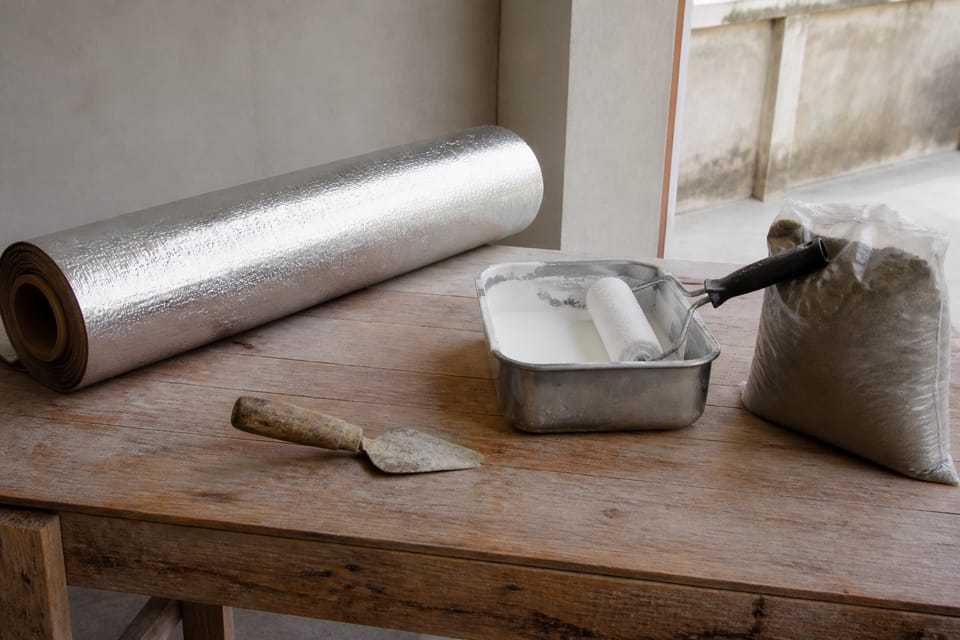
IS 3792:1978 clause 5.2(e) lists whitewashing the roof before the onset of each summer. Practice: it is cheap and easy to repeat each year. It needs the same cleaning as a coat, and it fades with dust, so it needs repeating.
a broken-tile finish
The BEE cool-roof manual describes a finish of broken pieces of glazed tile, preferably white, set in wet mortar. The joints are grouted with cement mortar mixed with a waterproofing material, and the result is a smooth surface that does not undulate. It is a heavier finish than a paint, so the load and the waterproofing check matter more. Ask your engineer before you choose it.
shade
IS 3792:1978 clause 5.1.2 says shading the roof brings down its surface temperature, but it is very difficult to achieve in practice. The sun is high at the peak heat hours, between 1100 h and 1500 h. Raising the parapet helps only when the sun is low, so it does little at those hours. A separate shade structure over the roof adds load and needs an engineer’s check. A flat roof with a shade structure on it is a design decision, not a DIY fix.
a wet roof
IS 3792 lists flooding the roof with water as one method. Practice points, labelled as practice:
- Water adds weight. The slab must carry it, and the water must not stand.
- Water on a roof can seep through any crack. Short summaries of studies on roof spraying and ponding did not report a reliable drop in indoor air temperature. We did not read the full studies.
- A wet roof needs a sound waterproof layer and clear outlets. The pre-monsoon checklist covers the clearing work.
What mistakes should I avoid?
- Painting a roof with cracks, damp patches or blocked outlets. The coat will not fix them.
- Adding an insulation layer or a heavy finish without asking the engineer about the slab.
- Forgetting to clean the coat. Dust cuts the reflective effect.
- Putting insulation under the waterproofing in a way that traps moisture. Ask how it will be dried and inspected.
- Expecting one coat to replace insulation on a top-floor room. The energy code says a cool roof is not to be seen as an alternative to the roof’s thermal transmittance requirement.
How do I know if it worked?
Use a simple check, labelled as practice, not a standard. Measure the room temperature with a thermometer at the same time of day, in the same season, before and after the work. Keep a note. A single warm afternoon can mislead, so compare several days.
Frequently asked questions
Is a white paint enough?
Not on its own for a top-floor room, and it needs cleaning every year. The energy code says a cool roof is not to be seen as an alternative to the roof’s thermal transmittance requirement. It is encouraged only over a roof that already meets that requirement.
Does insulation always make a room cooler?
Not always. In a room without air-conditioning, heat from people and appliances can get trapped under the insulation. Ventilation and a check after the work help.
Can I make a garden on the roof?
A garden adds a large load to the slab and needs waterproofing and drainage. Ask your engineer before you plan one.
Who decides the fix for my roof?
Your engineer and a roofing specialist decide the layers, the coat, the load and the waterproofing. This page explains the options, not the design.
Related guides
- Terrace leakage and waterproofing methods
- What is RCC construction?
- Painting exterior walls: preparation and primer coats
- Whitewash, colour wash and cement paint: what each is, how to apply
This guide is general information. Read the disclaimer. Your engineer decides the insulation, the coat, the load and the waterproofing for your roof.
Sources
- IS 3792:1978, Guide for Heat Insulation of Non-industrial Buildings (first revision, reaffirmed 2004; BIS listing shows it in force). Clauses 5.1.2 and 5.2 read.
- Eco-Niwas Samhita 2024 (BEE), Energy Conservation and Sustainable Building Code for residential buildings. Cool roof annexure read. The 2018 edition has the same cool-roof caveat.
- Bureau of Energy Efficiency and Shakti Foundation, Cool Roofs for Cool Delhi: Design Manual (roof insulation, reflectance, surface preparation and maintenance sections read).
Change log
- : Added Related guides link to newly published article(s): whitewash-colour-wash-and-cement-paint-what-each-is-and-how-it-is-applied. No other text changed. Approved by the reviewing engineer.
General information only. It is not a structural design or professional advice. Ask a licensed structural engineer or architect to check your plans and site.