
Short answer
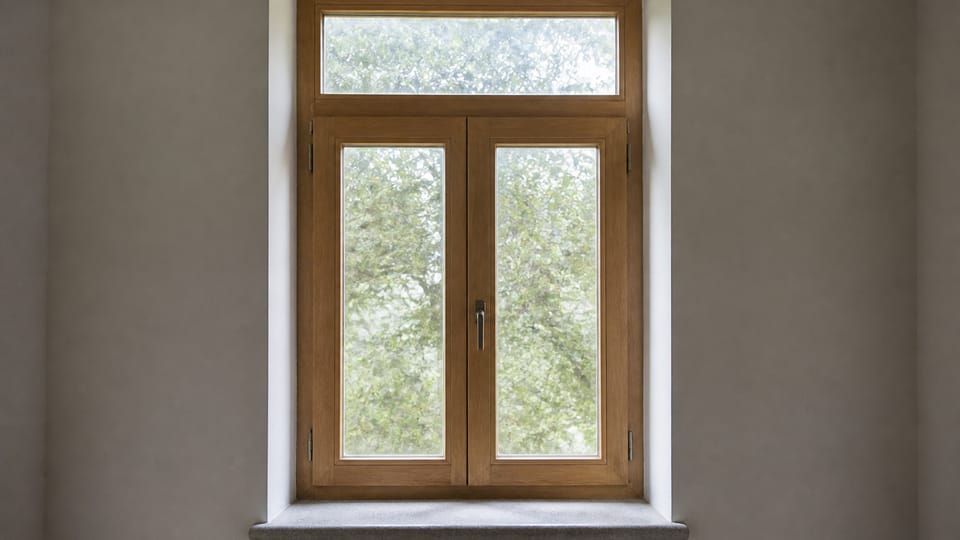
What are the parts of a window called? The frame is the fixed part set in the wall, with a head, vertical posts and a bottom sill. The shutter is the openable part; IS 4021 and IS 1003 use shutter, and sash is mostly everyday English. A transom is a horizontal cross member, a mullion a vertical divider, and a fanlight a small top light, fixed or openable. Standards define few of these in words.
On this page (9)
Two people can look at the same window and use five different words for it. “Frame”, “chaukhat”, “sash”, “shutter”, “pallā”, “casement”, “fanlight”, “ventilator”: a quote or drawing that uses them loosely gets argued over on site. This page gives the parts, what the Indian Standards call them, and where the terms differ. One honest point first: the standards we could read do not define most of these terms in words. IS 4021 and IS 1003 (Part 2) give a labelled figure and send the reader to a vocabulary standard, IS 10428:1983, which covers doors and has since been withdrawn; BIS lists a newer IS 10428:2022 for windows and pedestrian doors, but we could not read it. So the plain meanings below come from the figures, the clauses named and everyday usage, and each is marked. No sizes, no prices and no material verdict are given here.
What are the parts of a window?
| Part | What it is | Where the term comes from |
|---|---|---|
| Frame (chaukhat, chaukhata in Hindi, commonly used) | The fixed part set in the wall opening. In IS 4021 a timber window frame has a head, vertical members called posts, and a bottom sill | IS 4021 cl 4.1.1; Fig. 1C labels the head |
| Head | The top member of the frame | IS 4021 Fig. 1C (“head of frame”) |
| Post, stile | The vertical members. The frame’s uprights are called posts, the vertical members of a shutter are stiles | IS 4021 4.1.1 and Fig. 3 (post), Fig. 1C (stile); IS 1003 (Part 2) |
| Sill (of the frame) | The bottom member of the frame (“the bottom sill of the window”) | IS 4021 cl 4.1.1 |
| Shutter (pallā, commonly used) | The openable part. IS 1003 (Part 2) says window shutters are “usually double leaved” and “generally with glazing”, and that a window shutter hung on hinges at its sides is side-hung | IS 1003 (Part 2) 1.1 and 3.2 |
| Rails and stiles | The horizontal and vertical members that make up a shutter; the figure labels a “bottom rail” | IS 4021 Fig. 1C; IS 1003 (Part 2) |
| Glass panel | The glazing held in the shutter or in a fixed part | IS 4021 Fig. 1C |
| Transom | A horizontal cross member in a frame, which in IS 4021 Fig. 1C separates a small top glazed panel from the panels below. The standard’s figure spells it “transome” | IS 4021 Fig. 1C and 5.2.1.4 (“Transome shall be tenoned to the frame”); NBCS 2.94 |
| Mullion | A vertical divider between two lights in one frame. NBCS defines it for glazing, as a vertical framing member supporting the edge or surface of the glass | NBCS Part C Sec 8, 2.61; the timber standards do not use the word |
| Rebate | The stepped recess in the frame that houses the shutter | IS 4021 cl 5.1.3 |
| Horn | The extension of the head past the vertical member, used to build a frame into masonry | IS 4021 cl 5.2.1.2 |
| Holdfast | The metal anchor that fixes the frame to the wall | IS 4021 Fig. 1C |
| Fanlight, ventilator | A small light at the top of a window or door. See below | IS 364 (fanlight); IS 4021 and IS 1003 (ventilator); IS 1038 (sub-light) |
| Masonry sill | The slab or course under the window, which is not part of the frame | Practice |
IS 4021 also names a “sub-light” nowhere; the term comes from IS 1038, for steel: “a fixed-light above openable door or window”. IS 1038 also defines a fixed-light as “doors, windows and ventilators where there is no openable shutter”, and its foreword uses horizontal glazing bars for the horizontal members of a steel window.
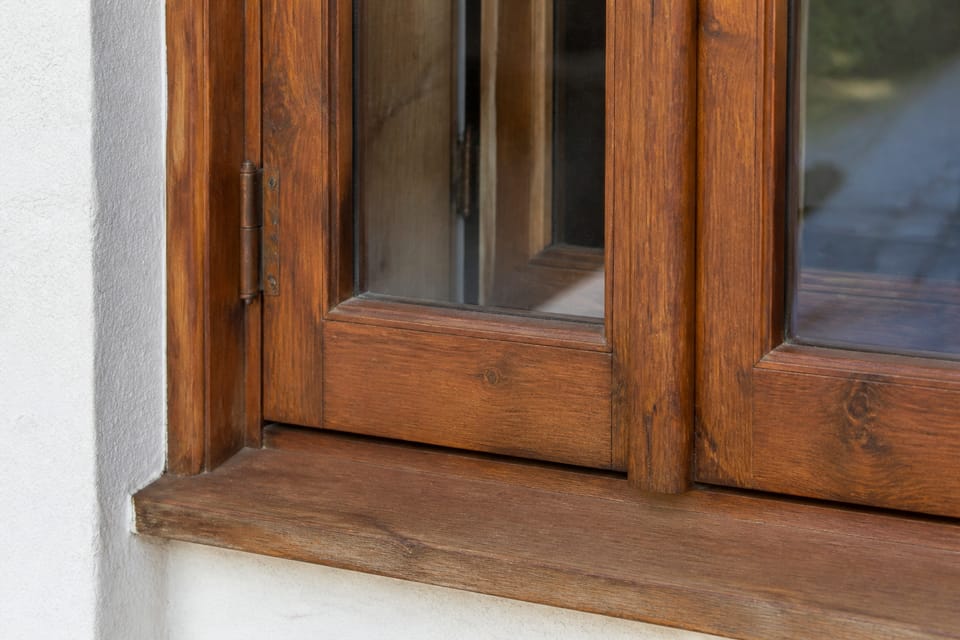
Frame, shutter, sash and casement: what is the difference?
- Frame is the fixed part. It carries the shutter and is fixed to the wall.
- Shutter is what IS 4021, IS 1003 (Part 2) and IS 1038 call the openable part, and IS 1003 describes window shutters as usually double leaved.
- Sash is everyday English, mostly UK and trade usage, for the moving glazed part. It does not appear in IS 4021 or IS 1003 (Part 2). NBCS 2026 uses “sash” in its window clauses, in the ordinary sense of the openable glazed part. The standards do not define it.
- Casement in everyday use is a side-hung hinged shutter. IS 1003 (Part 2) 3.2 says a window shutter hung on hinges at its sides is “side-hung”, and that ventilator shutters may be top hung, bottom hung or centre-hung.
So the safe words in a quote are frame and shutter, with the opening type written out, such as side-hung or top-hung. If a carpenter says “sash”, ask whether the shutter or the frame is meant.
What is a fanlight, and what is a ventilator?
IS 364:1993, the standard for the catch, names both as units the catch is used on: fanlight catches are “mainly used in ventilators, fanlights and such other units required to provide openings for ventilation”. It defines neither. IS 4021 and IS 1003 (Part 2) name ventilators as top-hung, bottom-hung or centre-hung units, so a ventilator opens; the window figure in IS 4021 labels the top panel above the transome only “glass panel”. IS 1038 calls a fixed light above an openable window a sub-light. In daily speech, a fanlight may therefore be a fixed top glass or an opening top unit: say which one you want in the quote.
Where do the terms disagree?
- Transom: IS 4021 shows it as a horizontal member of the timber frame. NBCS 2026 defines it as “a horizontal cross bar connecting two vertical members in a glazing frame”. The meaning is the same, a horizontal cross member.
- Frame: IS 4021 means the whole fixed timber frame. NBCS 2.33 defines a frame as an element supporting the full length of a glazed panel edge, which is a different level of detail.
- Vertical members: IS 4021 says post and stile, NBCS speaks of jamb and mullion, and the door vocabulary IS 10428:1983 uses jamb. IS 4021 gives the vertical divider between two shutters no name in its window figure.
- US words such as casing, rough opening and stool are not used in the Indian standards or on most Indian sites. Say “the opening in the wall” and “the frame”.
What should I write in the quote and check on site?
This is practice, apart from the terms named.
- Ask for a window schedule: one line for each window mark (W1, W2), with the opening size, the number of lights, the opening type of each shutter, the frame, the glazing, any grill or net, and the finish. Say whether a size is the opening, the frame or the shutter.
- Name the fanlight: fixed or openable, and which way it opens.
- Check the frame is plumb on both sides, level at the head and the sill, and has equal diagonals before it is fixed. We give no tolerance, since none was read.
- Check the frame is held at its fixing points and is not simply packed with plaster.
- Check that the shutters close without rubbing and that the hinges, stay and handle are where you agreed.
- Check the sill: which one is meant, its slope away from the glass and its drip. See windows leaking in rain: frame, sill and drip, and where to start.
- Check the glazing bead is fixed on the inside, so that a glass cannot be lifted out from outside.
What mistakes should I avoid?
These are practice.
- Using “sash” and “frame” for the same thing in a quote.
- Ordering a window of one stated width without saying whether it is the opening size, the frame size or the shutter size.
- Not writing the number of lights, so one window is priced as three or drawn as one.
- Leaving the fanlight undefined: fixed or opening.
- Taking the lintel above or the chajja as part of the window: see what is a chajja? Chajja, sunshade, lintel and balcony.
- Fixing a timber frame wet or out of plumb.
- Placing the window by looks and not by air movement: see cross ventilation in a house: how window placement moves air.
Frequently asked questions
What is the difference between a window frame and a sash?
The frame is the fixed part set in the wall. The sash, in everyday English, is the moving glazed part, which IS 4021 and IS 1003 (Part 2) call the shutter.
What is the difference between a mullion and a transom?
A mullion is a vertical divider and a transom is a horizontal cross member. IS 4021 shows the transom in its window figure; NBCS 2026 defines both, for glazing.
Is a casement the frame?
No. In everyday use it is a side-hung opening shutter.
What does chaukhat mean?
It is the Hindi word commonly used for the fixed frame, and pallā is commonly used for the openable shutter. They are everyday terms, not terms of an Indian Standard.
Is a sill part of the window?
The bottom member of a timber frame is called the sill in IS 4021. A stone or concrete slab below it is a separate masonry sill. Say which one you mean.
Related guides
- Windows leaking in rain: frame, sill and drip, and where to start
- Cross ventilation in a house: how window placement moves air
- What is a chajja? Chajja, sunshade, lintel and balcony
This guide is general information. Read the disclaimer. Your architect, engineer or carpenter decides the window design and the fixing for your house.
Sources
- IS 4021:1995, Timber Door, Window and Ventilator Frames, Specification (third revision): clauses 3, 4.1.1, 5.1.3, 5.2.1.2 to 5.2.1.4 and Fig. 1C (page images read, except 4.1.1 which was read from the text layer). BIS lists it as in force, valid to 2027-01-31. Its terminology clause refers to IS 10428:1983 and IS 707:1976.
- IS 1003 (Part 2):1994, Timber Panelled and Glazed Shutters: Window and Ventilator Shutters, Specification: clauses 1.1, 3.1, 3.2 and Fig. 1 (page images read). BIS lists it as in force.
- IS 1038:1983, Steel Doors, Windows and Ventilators, Specification: clauses 2.1.1 to 2.1.2.2 (page image read). BIS lists it as in force. It is about steel windows.
- SP 7:2026, National Building Construction Standards (NBCS) 2026, Part C Section 8, Glass and Glazing: definitions 2.28, 2.33, 2.61, 2.73 and 2.94 (text layer read; page images not checked). From an unofficial archive.org copy. IS 364:1993, Fanlight Catch: foreword and clause 1.1 (read). IS 10428:2022, Windows and Pedestrian Doors, Vocabulary, which would define window parts, is listed by BIS as in force and was not readable.
General information only. It is not a structural design or professional advice. Ask a licensed structural engineer or architect to check your plans and site.