
Short answer
What is earthing in a house and how is it different from neutral? Earthing connects the metal bodies of appliances and fittings to the ground through a separate earth wire. Normally it carries no current; during a fault it gives the current a safe path so the breaker switches off quickly. The neutral is a working wire that carries current back from every light and appliance all the time. Once they run as separate wires in your house wiring, they must never be joined again.
On this page (12)
- What does earthing do?
- What is the difference between earth and neutral?
- Can I use the neutral as earth?
- What do the rules require in a house?
- What is an earth pit, and which type is best?
- Can a water pipe be used as earth?
- Where does earthing fit in construction?
- How do I know if my house earthing is OK?
- What mistakes should I avoid?
- Frequently asked questions
- Related guides
- Sources
Most owners only think about earthing when an appliance gives them a shock. This page explains what earthing does, how the earth wire differs from the neutral, what the Indian standards and the Central Electricity Authority (CEA) rules require, and what you should ask your electrician for. It gives no resistance values, wire or electrode sizes, and no test methods: earthing is designed, installed and tested by a licensed electrician, and the CEA rules say that new wiring, additions and alterations must be done by an electrical contractor licensed by the State Government (simple like-for-like replacements such as lamps, fans and switches are exempt).
What does earthing do?
IS 3043, the Indian code of practice for earthing, says earthing is “generally provided for reasons of safety”. It describes two kinds:
- Equipment earthing, which connects the metal parts that do not normally carry current (an appliance body, a metal switch box, a geyser) to the ground. The code calls this “essential to the safety of human life, animals and property”.
- System earthing, which is done on the supply side, at the transformer and along the supply lines, to hold the neutral close to earth potential.
Equipment earthing works like this. If a live wire inside your washing machine touches its metal body, the body becomes live. With good earthing, the fault current flows through the earth wire instead of through a person, and it is large enough for the MCB or fuse to switch off quickly. IS 3043 says earthing should be such that, when a fault occurs, “the protective gear will operate to make the faulty main or plant harmless”. The CEA regulations say the same in legal terms: the supply must be disconnected “before the prospective touch voltage reaches a harmful value”.
Without earthing, the appliance may still work normally for years. The danger only shows when there is a fault.
What is the difference between earth and neutral?
| Neutral | Earth (protective conductor) | |
|---|---|---|
| Job | Carries current back from every light and appliance, all the time | Carries current only during a fault |
| Is it part of the working circuit? | Yes. IS 3043 counts the neutral as a live part | No. It connects metal bodies that are not meant to be live |
| Where it is earthed | By the supplier, at the transformer and along the line | At your earth pit and the supplier’s earth terminal |
| Wire colour | Not covered on this page | Green-and-yellow, which IS 3043 reserves for the earth wire only |
So the neutral is a working wire, and touching it is not safe. The earth wire is a safety wire that sits idle until something goes wrong.
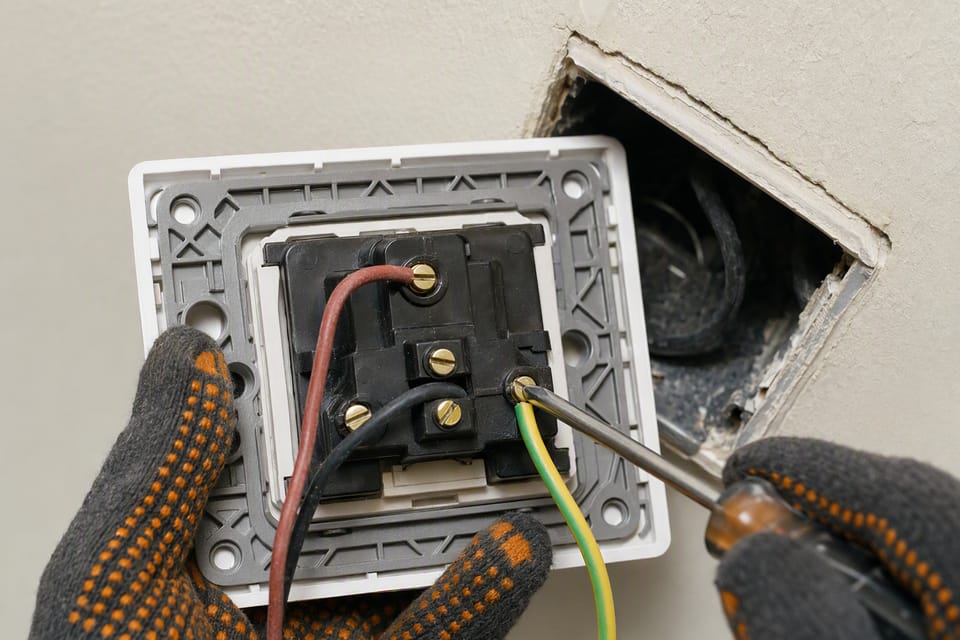
Depending on the supply, the two are either separate all the way from the source (IS 3043 calls this TN-S and shows it for single-phase domestic supply), or they share one combined conductor in the supplier’s cable and are linked at one point, the main earthing terminal (TN-C-S, which IS 3043 says is the most common system used by supply companies). Either way, inside the house they run as separate wires. IS 732, the Indian wiring code, then says that once they are separate, “it is not permitted to connect the neutral … conductor to any other earthed part of the installation”. IS 3043 adds that inside an appliance, the earthing terminal “shall not be connected to the neutral terminal”.
Can I use the neutral as earth?
No. This is a dangerous shortcut that still turns up online. IS 732 forbids joining the neutral to earthed parts once they are separate, and IS 3043 forbids it inside appliances. If the neutral is used as earth and it ever breaks or comes loose, the metal bodies of every appliance on it can become live (our reading of how the circuit works; ask your electrician). If you suspect this has been done in your house, stop using the affected sockets and call a licensed electrician.
What do the rules require in a house?
From the CEA Regulations 2023:
- Earthed three-pin sockets. In new or renovated installations on a single-phase household supply, “all plug sockets shall be of the three pin type, and the third pin shall be permanently and effectively earthed” (regulation 43).
- Bonding. “Every building shall have protective equipotential bonding”, which connects the exposed metal parts to the earthing system (regulation 43).
- Built to last and tested before switch-on. Earthing systems must be mechanically strong, withstand corrosion, keep their continuity for the life of the installation, and be tested “before the electric supply lines or apparatus are energised” (regulation 43).
- The supplier’s earth terminal. The supplier must provide an earthed terminal on your premises, near where the supply starts, and you must protect it from damage (regulation 18). For some installations, the regulation also asks the consumer to provide their own earthing system with an independent electrode, linked to the supplier’s terminal; IS 3043 shows this as necessary for a three-phase domestic supply. For a single-phase house, the code advises consulting the electricity supplier. Many new houses have their own earth pit anyway (site practice). Ask your electrician.
- Residual current device. The installation must be protected by a residual current device (regulation 44); IS 732 also requires one. It works alongside earthing, not instead of it.
- Owner’s duty. The owner must keep the installation “in a condition free from danger” (regulation 32).
From IS 732: every circuit must have a protective (earth) conductor, and no switch may be put in the earth wire.
What is an earth pit, and which type is best?
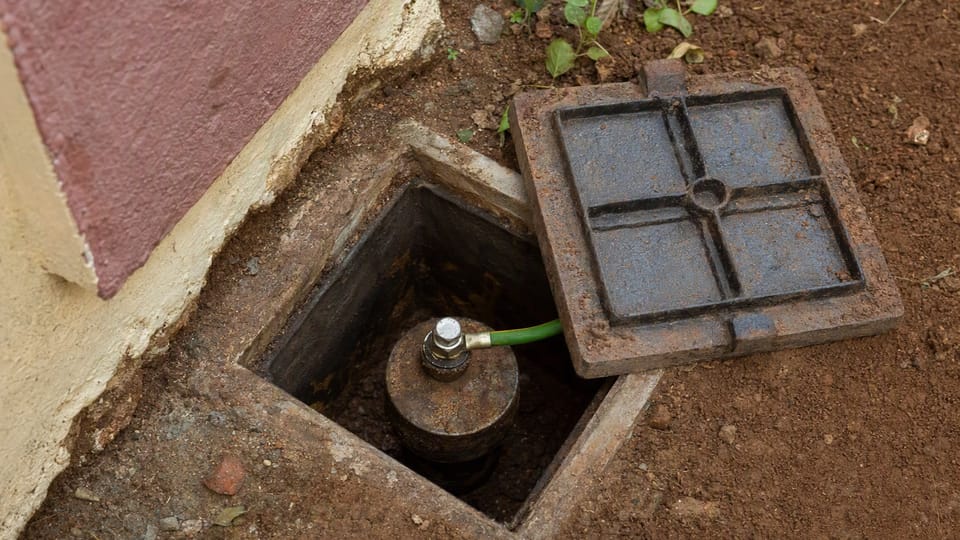
The earth pit holds the earth electrode, a metal conductor buried in the ground and connected to your main earth terminal. Common types in IS 3043 include pipes or rods, plates and strips, and the code gives their sizes and materials; the electrician chooses the type and size for your soil and load. This page gives none.
So-called chemical or maintenance-free earthing uses a backfill compound around the electrode. Sellers often say it needs no watering. Even so, IS 3043 recommends periodic check tests of all earth electrodes, with records kept, and IS 732 says protection must not be harmed by changes in the electrode due to “corrosion, drying or freezing”. No watering does not mean no testing.
Can a water pipe be used as earth?
No. IS 3043 says “Water pipes shall not be used as consumer earth electrodes”, and gas or other fuel pipes must not be used as earth electrodes either. IS 732 adds that metal water pipes and pipes carrying flammable gases or liquids are not permitted as protective conductors. This is different from bonding: IS 3043 says connecting metal water service pipes to the main earthing terminal is permissible and usually necessary. Bonding is the electrician’s job; using a pipe as your only earth is not allowed.
Where does earthing fit in construction?
Earthing is part of the services stage, along with the concealed wiring, and the electrician should test and certify the wiring and earthing before the supply is switched on. See the services stage in our stages of house construction checklist. Practical points (site practice, not from a code):
- Fix the earth pit position before the final paving or landscaping, so it is not buried later.
- Keep the pit cover accessible. IS 3043 says that, as far as possible, earth connections should be “visible for inspection”, and each electrode should be testable on its own.
- Make sure an earth wire runs to every socket and metal fitting, alongside the live and neutral wires.
How do I know if my house earthing is OK?
You cannot tell by looking, and the online “bulb tests” and meter tests on live wiring are not safe for owners to try. Ask a licensed electrician to test it with proper instruments and give you the results. IS 732 recommends periodic verification of every installation by a skilled person, and IS 3043 recommends that records of earth electrode tests be kept.
Signs to call an electrician (practice): a tingle or shock from an appliance body, a metal tap or a switch plate; two-pin sockets or broken earth pins; an old house with no record of an earthing test; a buried or lost earth pit. Have the earthing checked before the rains, as in our pre-monsoon checklist, and after renovation or when adding large appliances.
IS 3043 says the soil around an earth electrode should be kept moist where necessary by pouring water periodically. Whether your pit needs this depends on its type; ask your electrician.
What mistakes should I avoid?
These come from the codes above and from site practice:
- Joining the earth wire to the neutral, or using the neutral as earth.
- Using a water or gas pipe as the earth.
- Two-pin sockets for appliances with metal bodies.
- Paving over the earth pit or losing track of where it is.
- Assuming an RCCB makes earthing unnecessary. IS 732 does not accept a residual current device as the only means of protection.
- Doing DIY tests on live wiring.
Frequently asked questions
Is earthing compulsory for a house?
The CEA regulations require earthed three-pin sockets in new or renovated household installations, bonding in every building, and earthing that is tested before the supply is switched on. Your electrician and electricity supplier tell you what your connection needs.
What happens if a house has no earthing?
Appliances may work normally, but if a live wire touches a metal body, that body stays live and can give a shock, and the MCB may not switch off. Earthing exists to make faults safe.
What is the earthing value as per Indian standard?
IS 3043 asks for earthing low enough that the protective devices operate in a fault; the electrician measures and judges it for your installation. This page gives no figures.
Why do I get a shock from my fridge or washing machine?
It can be a fault in the appliance, missing or broken earthing, or wrong wiring. Do not touch the appliance. Switch off that circuit’s MCB or the main switch at the distribution board, keep it off, and call a licensed electrician.
Do I still need earthing if I have an RCCB?
Yes. An RCCB adds protection; it does not replace earthing.
Related guides
- Stages of house construction in India: checklist and inspection points
- Pre-monsoon checklist for your house and your building site
- MCB vs RCCB vs RCBO: what each protects against at home
This guide is general information. Read the disclaimer. Earthing must be designed, installed and tested by a licensed electrical contractor under the CEA regulations and the Indian standards.
Sources
- IS 3043:2018, Code of Practice for Earthing (Second Revision). Foreword and clauses 1, 3, 4, 11, 14, 23 and 38.
- IS 732:2019, Code of Practice for Electrical Wiring Installations (Fourth Revision). Clauses 3, 4.1.5, 4.2.11, 4.2.15, 5.4 and 6.3.
- Central Electricity Authority (Measures relating to Safety and Electric Supply) Regulations, 2023, regulations 2, 18, 31, 32, 43 and 44 (Gazette copy hosted by KSEB).
General information only. It is not a structural design or professional advice. Ask a licensed structural engineer or architect to check your plans and site.