
Short answer
What should I do before the monsoon? For a finished house, clear the terrace outlets, rain pipes, sunshades and drains, repair known leaks and cracks before the rains, and check the tank and the electrical points. On a building site, keep materials covered and off the ground, protect trench sides, and protect fresh concrete from rain. Details are in the guides linked below.
On this page (7)
The best time to fix a leak is before the rain. This page is a short checklist for two cases: a house that is already built, and a building site where work is in progress. It points to our detailed guides and does not repeat them. It gives no prices, brands or measurements.
Why do a checklist before the monsoon?
The CPWD Maintenance Manual, the government’s own guide to maintaining buildings, says to clean roofs, rain water pipes and drains regularly, and especially before the monsoon. It also says repairs needed to stop leakage and dampness should be given priority and finished before the monsoon. That manual is for government buildings. We use it here only as a list of what to check, and your engineer decides what applies to your house.
Part A: a finished house
Terrace and roof
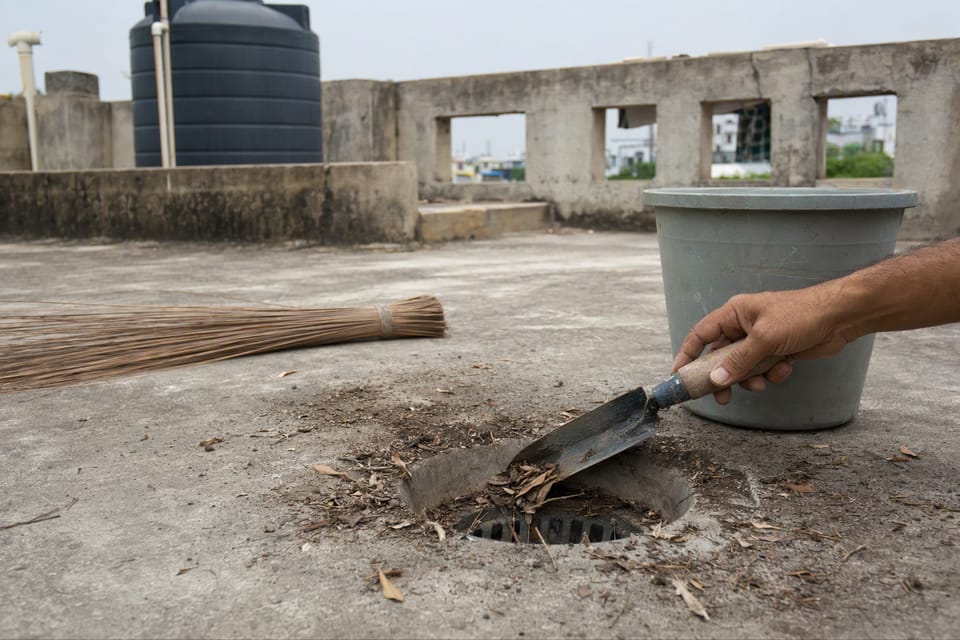
- Clear the terrace outlets, rain water pipe inlets and any gratings of leaves, plastic and dust. Do not let water stand on the roof.
- Look at the top of the parapet and the corners for cracks.
- Check the waterproofing near anything fixed to the roof, such as a dish antenna or solar panel fixings. The CPWD manual lists damage to waterproofing from such fittings and from weeds or plants on the roof.
- Pull out weeds and small plants growing on the roof.
- Look at the roof tank for leaks. See water tank leakage.
- Repair known leaks now. For methods and for the ponding test, read terrace leakage and waterproofing.
Rain pipes, sunshades and drains
- Clear the sunshade tops, gutters and downpipes. IS 2527, the code for rainwater gutters and downpipes, says efficient roof drainage is important for keeping a building well maintained, and that gutters and pipes should be inspected regularly and any defect made good.
- Clear the ground drains around the house.
- Check that the ground near the walls does not hold water. Ask your engineer to look at the plinth protection and the drainage if it does.
Walls and cracks
- Look for cracks in the outer plaster and for pieces of concrete or plaster coming off.
- Look at the joints around windows and sunshades.
- If a wall is already damp, find the cause first. See damp walls and hairline cracks in plaster.
- Do not paint over a damp wall. Fix the cause, let it dry, then paint.
Electrical safety
These are practice points. Ask a licensed electrician.
- Ask the electrician to check outdoor sockets, loose wiring and the earthing before the rains.
- Do not touch wet switches or sockets.
Part B: a building site in progress
Materials
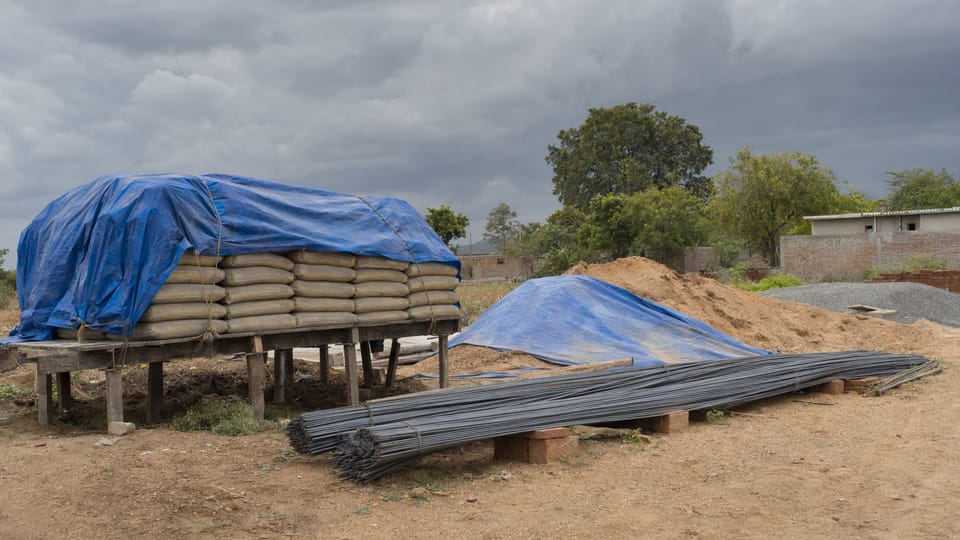
- Cement. IS 4082, the code for storing construction materials at site, asks for a dry, leak-proof shed. In the monsoon, cover the whole stack with a plastic sheet and do not tear the sheet. See cement shelf life and storage.
- Bricks. Stack them on dry, firm ground.
- Sand and aggregate. Keep them on a hard, dry patch or on a platform, so they do not pick up clay and dirt.
- Steel bars. Keep them off the wet ground and covered. This is practice.
- Tie down every tarpaulin well.
Trenches and excavation
- After every rain, a responsible person should inspect the sides of an excavation. IS 3764, the code of safety for excavation, asks for protection against slides and cave-ins where needed.
- A trench wall that is stable when dry can become highly unstable when the earth is soaked by heavy rain. Keep people out of trenches after rain until they have been checked.
- Ask your engineer about pumping out water and about protecting the foundation base. We found no Indian code text to quote for this, so these are practice points.
Concrete and formwork
These are practice points. Ask your engineer.
- Plan slab casting for dry weather. See best time to build a house in Delhi.
- Have tarpaulins ready to protect fresh concrete from rain.
- Check that the props under formwork are firm and not standing in mud.
- Do not cast a slab if heavy rain is expected, unless your engineer approves the plan. For curing, see how many days to cure a slab.
Safety
- Stop work at heights during heavy rain, wind or lightning. This is practice.
- Check scaffolds and ladders before work restarts after rain.
What about after the monsoon?
Inspect your house again after the rains. The CPWD manual asks for an inspection of important structures soon after the monsoon for likely damage. Look for new damp patches, stains on the ceilings, cracks and blocked drains, and fix them before the next season.
Frequently asked questions
Can I build during the monsoon?
It can be done with care, but it needs planning. Our guide on the best time to build a house in Delhi explains what changes.
Will waterproof paint stop a leak?
A leak has to be found and fixed at its source. Ask your engineer before you rely on a paint. See the terrace and damp wall guides above.
How often should I clean the terrace outlets?
The CPWD manual asks for regular cleaning, especially before the monsoon. Also clear them whenever you see leaves collecting.
Who should check my house before the rains?
You can do the visual checks above. Ask your engineer or a licensed electrician for anything structural or electrical.
Related guides
- Terrace leakage and waterproofing: methods, slope and ponding test
- Water tank leakage: how to find and fix it
- Damp walls: rising damp, seepage or condensation, and the fix
This guide is general information. Read the disclaimer. The repairs and the precautions for your house and your site are decided by your engineer.
Sources
- CPWD Maintenance Manual 2019 (preventive maintenance: cleaning roofs, rain water pipes and drains before the monsoon; repairs of leakage and dampness before the monsoon). An official guide for government buildings, used here as a list of what to check.
- IS 2527:1984, Code of practice for fixing rainwater gutters and downpipes for roof drainage (clauses 0.2 and 8.2)
- IS 4082:1996, Recommendations on stacking and storage of construction materials and components at site (cement, bricks, sand and aggregate)
- IS 3764:1992, Code of safety for excavation work (inspection of excavation sides after rain)
General information only. It is not a structural design or professional advice. Ask a licensed structural engineer or architect to check your plans and site.