
Short answer
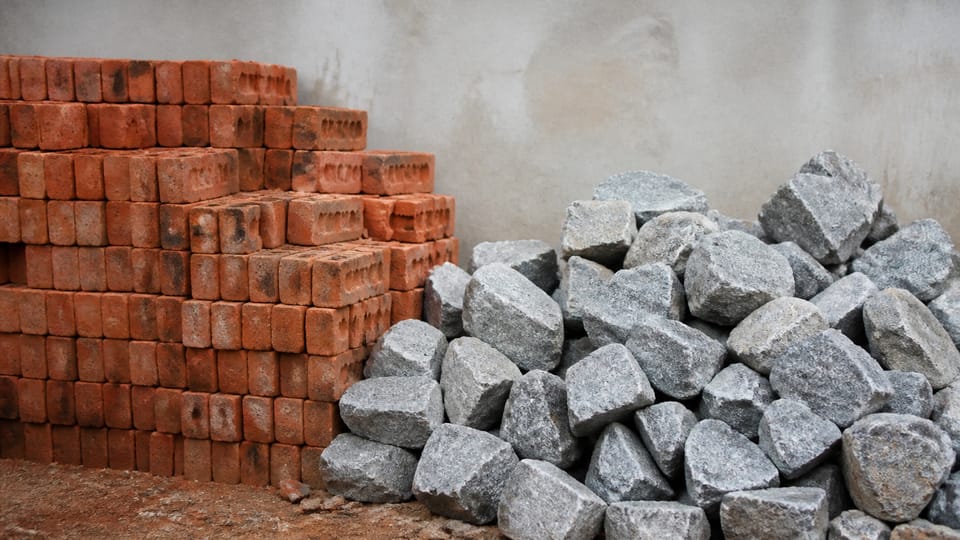
What is the difference between brick masonry and stone masonry? Brick masonry uses fired clay units laid in courses, with bond set by the brick code IS 2212. Stone masonry uses natural stone, laid to the stone code IS 1597. The codes do not rank one above the other. The strength of either depends on the units, the mortar and the workmanship. Your engineer decides which suits your walls.
On this page (12)
Brick is common in Indian houses. Stone is common in some regions, such as the hills, the Konkan coast and parts of Kerala (practice). A builder or a family may ask which is better, and the honest answer is that the Indian codes treat them as two different kinds of masonry with different rules, and do not rank one above the other.
This page sets out what each code says about the units, the bond, the mortar and the use. It does not give a wall thickness, a bond spacing or a strength for your house. Those are for your engineer.
What are the units?
Brick masonry is built from burnt clay bricks. IS 2212 covers only masonry with clay bricks (clause 1.2). Clay bricks are to conform to IS 1077, and heavy-duty bricks under IS 2180 are used where the building carries very heavy loads (clause 5.1.1). Fly ash bricks and other units are under other standards, not IS 2212.
Stone masonry is built from natural stone. IS 1597 names granite and other igneous rocks, limestone including marble, and sandstone as the common building stones (clause 5.1.1). The stone must be strong, hard and durable. It must be free from cavities, cracks and soft or loose patches. Its water absorption should generally not exceed 5% (clause 5.1.2.2).
IS 1597 Part 1 describes rubble walling:
- Random rubble: stones as they come from the quarry, laid uncoursed or brought to courses (clause 7.1.1).
- Squared rubble: roughly squared stones, laid uncoursed or in courses, including coursed squared rubble (clause 7.1.2).
- Polygonal rubble (clause 7.1.3).
Ashlar, which is dressed stone in regular courses, is covered by IS 1597 Part 2.
The stone code’s foreword says the type of stone masonry used depends on local factors, such as the stone, the climate and the workmanship. The types of masonry page lists the masonry types the codes name.
How is each bonded?
Bond in brick. IS 2212 sets the bond by the arrangement of the bricks in courses. It gives English bond, double Flemish bond, single Flemish bond and garden wall bonds in Table 2. The code says the primary purpose of bond is to give strength to the masonry, though bond can also give an artistic effect where the brickwork is exposed (clause 6.3.1). For English bond, the code says it “contributes substantially to the strength of brickwork”. For single Flemish bond, the code says it is “considered inferior in strength than English bond” but may be suitable for single-brick walls in normal house construction with a strong mortar. The English bond and Flemish bond page goes into the brick bonds.
Bond in stone. IS 1597 says vertical joints shall be staggered as far as possible (clause 8.7.4). The stone code requires through bond stones, or sets of overlapping bond stones, to tie the two faces of a thick wall together (clause 9.1.4). It strictly prohibits masonry with too-thin faces tied up with occasional through stones, filled with dry packing, or filled with small-size aggregate (clause 8.7.10). The spacing of the bond stones is in the code, and this page does not give it. The random rubble and coursed rubble page covers the stone types.
What mortar do they use?
Brick mortar. IS 2212 says that mortars are to be prepared to IS 2250 (clause 5.2 and 6.2.1). The code also gives a rule on mortar strength against the bricks: where bricks have drying shrinkage above 0.02 percent, it is desirable that the mortar be weaker than the bricks, so that cracks run through the joints and not through the bricks (clause 6.6.4.1). The code also says quick lime must never be used for a structural purpose, and must be slaked first (note under clause 5.2.2).
Stone mortar. IS 1597 allows cement-sand, cement-lime-sand, lime-sand and lime-pozzolana mixes (clause 5.2). It says the choice of mortar is based on local experience and practice for the stone selected and the climate, and that the mortar must be workable, stick to the stone and reach enough strength (clause 7.4). The stone code does not print a mortar ratio. Mortar ratios in IS 2212 are for particular cases, such as reinforced brickwork, and are not a general brick mix.
Where is each used?
Brick. IS 2212 selects bricks by situation, from its Table 1 (clause 6.1.1). Where the strength of the masonry predominates, the grade is chosen for the strength needed, with reference to IS 1905 (clause 6.1.2), and the mortar selection is also governed by that strength (clause 6.2.2). Heavy-duty bricks are for very heavy loads (clause 5.1.1).
Stone. IS 1597 Table 2 gives the stone to choose by situation. Dense stones such as granite and gneiss are for masonry under water, or below the plinth or in contact with the soil. Sandstone is for fire-resistant work. Marble and sandstone are for carved work and arches. The stone code also says that projecting features such as plinth projections, string courses and cornices must be bonded into the stone work to stay stable (clause 7.5.1).
What the codes do not say
Neither code compares brick and stone head to head. Neither gives a strength ranking for the two kinds of masonry. For ashlar and coursed rubble, the stone code ties strength to the crushing strength of the stone and to the mortar, worked to IS 1905 (clause 5.1.2.1). The brick code ties strength to the brick grade and the mortar (clauses 6.1 and 6.2). So a claim that one is always stronger is not in the codes. The stone code does rank some stone types within stone: it calls block-in-course masonry a superior type of coursed rubble (IS 1597 Part 2, clauses 7.1.5 and 9.6.2). It does not rank stone against brick.
Inline image
Why do stone walls split?
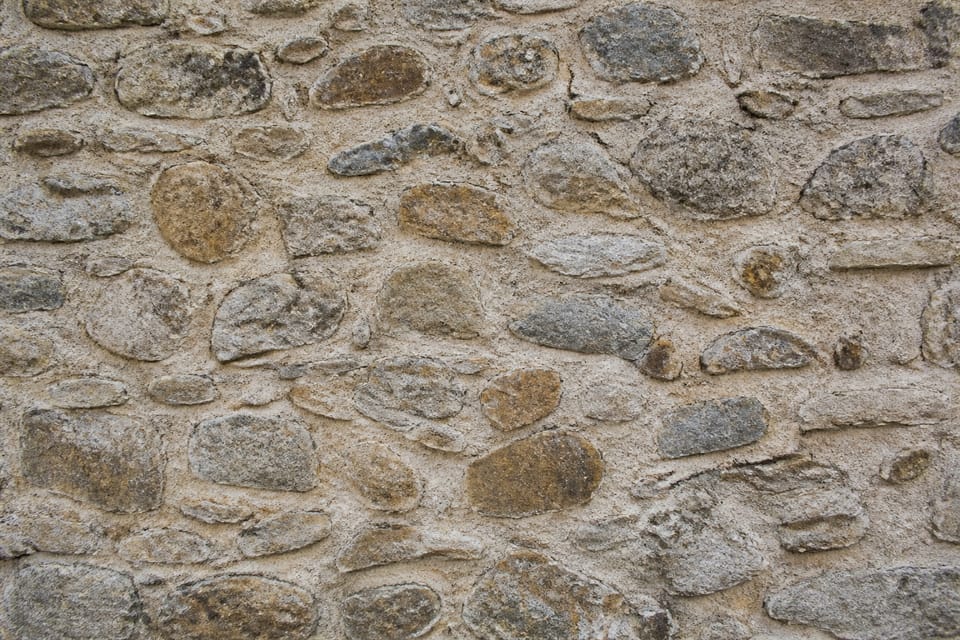
Practice and guidance from the BMTPC and IIT Kanpur earthquake guidance say that a thick stone wall with no through stones can split into two separate layers, with the two faces not tied together. This is guidance, not a code clause, and it is why the stone code asks for through stones or bond stones. Stone walls in earthquake areas are a question for the engineer, who should check the wall thickness, the bond and the roof connection.
Summary table
| Point | Brick masonry | Stone masonry | Source |
|---|---|---|---|
| Unit | Burnt clay brick (IS 1077); heavy-duty brick for very heavy loads (IS 2180) | Granite, limestone, sandstone and similar stone | IS 2212 cl 5.1.1; IS 1597 cl 5.1.1 |
| Bond | English, Flemish and garden wall bonds | Staggered joints and through or bond stones | IS 2212 Table 2; IS 1597 cl 8.7.4 and 9.1.4 |
| Mortar | Mortars to IS 2250 | Mix chosen by local experience and climate | IS 2212 cl 5.2; IS 1597 cl 5.2 and 7.4 |
| Strength | Set by brick grade and mortar | Set by stone strength and mortar | IS 2212 cl 6.1 to 6.2; IS 1597 cl 5.1.2.1 |
| Typical use | Walls of many kinds, by situation (Table 1) | Plinths, walls and facings by stone type (Table 2) | IS 2212 Table 1; IS 1597 Table 2 |
What mistakes should I avoid?
These are practice points, not rules in the codes:
- Thin stone faces. A stone wall with thin faces and no through stones splits. The code forbids it (IS 1597 clause 8.7.10).
- Choosing by the look of the wall. Stone looks solid, but the bond and the mortar decide how it behaves. Ask for the bond and the mortar on the drawing.
- Assuming a rule of thumb for strength. Neither code ranks the two. Ask the engineer for the strength the wall needs.
- Using mud mortar on a stone wall in an earthquake area. Guidance says to avoid it in higher seismic zones.
Frequently asked questions
Which is stronger, brick or stone?
Neither code ranks them. Strength depends on the brick or stone, the mortar, the bond and the workmanship. Your engineer checks the strength the wall needs.
Which is cheaper?
It depends on local material and labour costs, which change. This page does not give prices.
Can I use stone instead of brick?
It depends on the design and the site. The codes allow both, but each has its own bond, mortar and stone rules. Ask your engineer before you change the wall material.
Does IS 1597 give a bond stone spacing?
Yes, in clause 9.1.4 for random rubble, and in Part 2 for ashlar. This page does not repeat the figures, because the figures need to be read from the code by your engineer.
Related guides
- Types of masonry: brick, stone, block and composite walls
- Stone masonry for plinths and walls: random rubble vs coursed rubble
- Ashlar masonry: what it is, its types and how it differs from rubble
- Brick bonds: English bond vs Flemish bond, and which goes where
- Laterite stone walls in Kerala, Goa and Konkan: what to check
This guide is general information. Read the disclaimer. Your engineer decides the wall material, bond and thickness for your house.
Sources
- IS 2212:1991, Code of Practice for Brickwork (First Revision). Clauses 1.2, 5.1.1, 5.2.2, 6.3.1, 6.3.2, 6.6.4.1 and Table 2 read. IS 1597 (Part 1):1992, Construction of Stone Masonry, Part 1 Rubble Stone Masonry (First Revision). Clauses 1.1, 5.1.1, 5.1.2, 5.2, 7.2, 7.4, 8.7.4, 8.7.10, 9.1.4 and Table 2 read. The stone code's cover marks it reaffirmed; its BIS validity runs to 31 December 2026.
- IS 1597 (Part 2):1992, Construction of Stone Masonry, Part 2 Ashlar Masonry (First Revision). Foreword read. Covers dressed stone in courses.
General information only. It is not a structural design or professional advice. Ask a licensed structural engineer or architect to check your plans and site.