
Short answer
What is the difference between a false ceiling and a POP ceiling? In India, a false ceiling usually means gypsum boards fixed on a metal frame hung below the slab. A POP ceiling means plaster of Paris, applied or cast, often on a frame. Both hide pipes and wires. Neither is waterproof, so fix any leak above the ceiling before you repair the ceiling.
On this page (10)
Many owners ask which is better, a gypsum false ceiling or a POP ceiling. The honest answer is that it depends on your room, your slab and your engineer. This page explains what each one is, how they differ, and what to do when a ceiling stains or cracks. It gives no prices and no thicknesses. Those are set by the maker and your engineer.
What is a false ceiling, and what is a POP ceiling?
The words are used loosely, so here is how this page uses them.
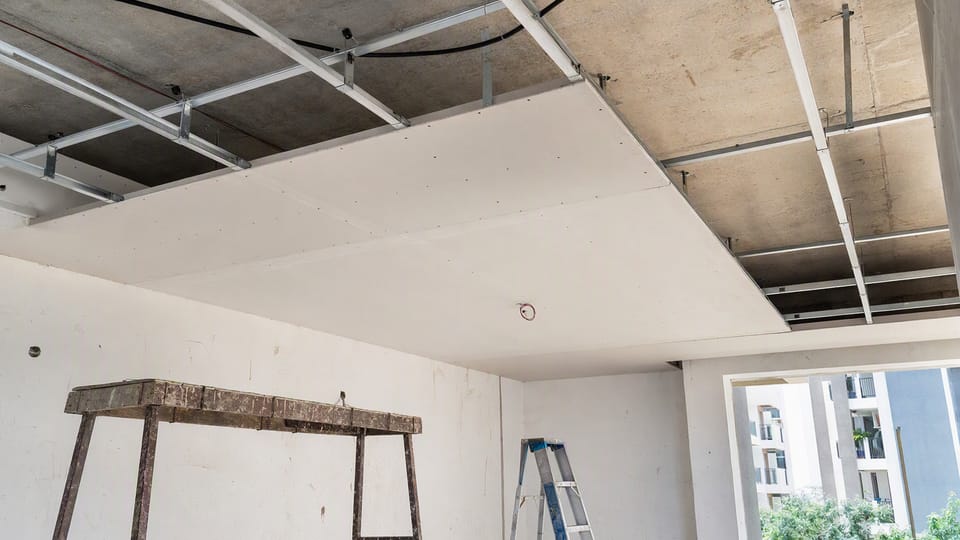
- False ceiling: a second ceiling hung below the concrete slab. In India it most often means gypsum boards fixed on a metal frame.
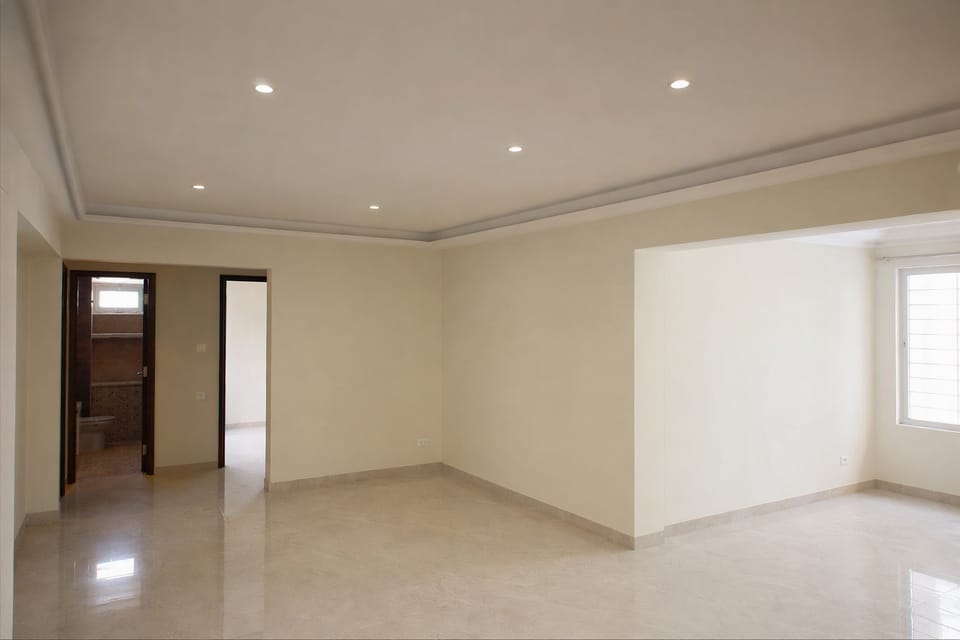
- POP ceiling: a ceiling of plaster of Paris (POP), applied or cast, or POP sheets or tiles fixed on a frame.
Plaster of Paris is a class of gypsum plaster. IS 2547 (Part 1), the Indian Standard for gypsum building plaster, lists “plaster of paris” as the first class.
IS 2441, the Indian code for fixing ceiling coverings, covers both plaster of Paris ceilings and gypsum plaster board ceilings. In the traditional POP ceiling in that code, a frame with laths and wire mesh hangs under the slab and is finished with POP. The joints are finished flush so that the ceiling looks like one piece.
How are they different?
| Gypsum board false ceiling | POP ceiling | |
|---|---|---|
| What it is | Boards on a metal frame | Plaster of Paris, applied or cast |
| Indian Standard for the material | IS 2095 for the boards; IS 18387 for gypsum ceiling tiles | IS 2547 (Part 1) for the plaster |
| Joints | Joints between boards are usually filled and finished | In the traditional frame-and-mesh ceiling, joints are finished flush |
| Moisture | Ordinary board is for dry interiors | Keep it dry too, and ask your engineer about damp rooms |
| Repair | Depends on the damage and the fixing | Depends on the damage and the frame |
The table gives no thickness or spacing. Those depend on the product and the design. IS 2095 was revised in 2023, and we did not read that text, so we do not quote its details here.
Is a false ceiling waterproof?
No ceiling material is waterproof. Ordinary gypsum board is made for dry interiors. One manufacturer, Gyproc, sells a moisture resistant board with water-repellent additives for bathrooms and kitchens. That is a maker’s description. If water leaks from above, any ceiling will stain and may fail. Do not hang a ceiling in a damp room unless the slab above is dry.
Is a false ceiling fire safe?
Fire resistance belongs to a complete tested system, meaning the board, the frame and the fixing together, and not to ordinary board alone. Special fire-resistant boards exist, and one maker describes its own. The National Building Code of India 2016, Part 4 (fire and life safety), has fire-safety requirements for false ceilings and their suspension fixtures. Ask your engineer what applies to your building.
Why does a ceiling stain or crack?
The most common cause of a stain is water from above. These are practice points, and your engineer should confirm them for your house:
- A leak from the terrace above. See our guide on terrace leakage and waterproofing.
- A leaking pipe, tank or AC drain above or inside the ceiling void. See water tank leakage.
- Cracks at the joints between boards, or around cut-outs for lights.
- Movement in the slab or the wall underneath. For cracks in plaster, see hairline cracks in plaster.
The stain may sit away from the real leak, because water travels along the slab or the frame before it shows.
How do I repair a stained or cracked ceiling?
- Find and fix the source first. Painting over a stain does not stop the leak.
- Let the area dry out. Do not repair a ceiling that is still damp.
- Open the damaged part to look at the frame and the fixing. Water may have damaged them.
- Repair the damaged area or replace the damaged piece, then finish the joint. The method depends on the material. Ask the contractor who installed it, or your engineer.
- Paint after the repair is dry. For smooth wall finishes, see our page on wall putty.
What mistakes should I avoid?
- Hanging a ceiling under a slab that still leaks.
- Fixing the ceiling frame to weak points. Ask your engineer to approve the fixing points.
- Hanging heavy fittings from the boards instead of from the slab. This is practice, so confirm it with your engineer.
- Putting no access panel where pipes, AC units or concealed lights sit.
- Using ordinary board in a damp room.
- Painting over a wet or stained ceiling.
Frequently asked questions
Which is better, a false ceiling or a POP ceiling?
Neither is better in every case. It depends on the room, the damp risk, the weight of fittings and your design. Ask your engineer and the contractor to explain the fixing and the repair method for each.
Is POP the same as gypsum?
Plaster of Paris is a gypsum plaster. IS 2547 (Part 1) lists it as a class of gypsum building plaster. Gypsum boards are a different product made from gypsum.
Can a false ceiling be used in a bathroom?
Ordinary board is for dry interiors. A maker sells a moisture resistant board for bathrooms and kitchens. Keep the room ventilated and the slab above dry.
Does a false ceiling hide leaks?
It hides them until they stain the ceiling. Find the cause before you cover it.
Is a false ceiling fire safe?
Fire safety belongs to the whole tested system. Ask your engineer what applies to your building.
Related guides
- Terrace leakage and waterproofing: methods, slope and ponding test
- Hairline cracks in plaster: causes and what to do
- Wall putty: coverage per kg, number of coats and why it cracks
This guide is general information. Read the disclaimer. The ceiling type, its fixing and its repair for your house are decided by your engineer and the maker’s instructions.
Sources
- IS 2441:1984, Code of practice for fixing ceiling coverings (covers plaster of Paris and gypsum plaster board ceilings)
- BIS record for IS 2095 (Part 1):2023, Gypsum plaster boards, plain (the 2023 text was not read)
- BIS record for IS 18387:2023, Gypsum ceiling tiles
- Gyproc India, moisture resistant board (one manufacturer's description)
- Gyproc India, fire resistant board (one manufacturer's description)
General information only. It is not a structural design or professional advice. Ask a licensed structural engineer or architect to check your plans and site.