
Short answer
Is there an Indian rule for how anti-skid a tile must be? No number is set. IS 13712:2019 lists slip resistance for floor tiles and says the manufacturer declares the value and the test method. A 2026 BIS circular on IS 15622 points the test to IS 18433 (pendulum or ramp). Ask the seller for the declared value and the test report, and ask your engineer for your room.
On this page (9)
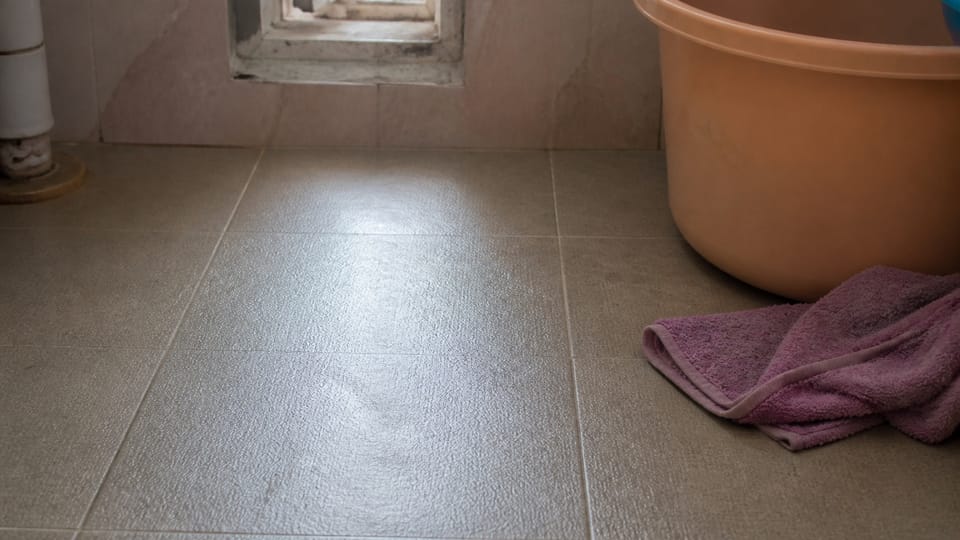
A tile shop will often call a tile “anti-skid” and show it on a bathroom display. The word sounds like a test result. It is not one. The word does not appear in the standards checked for this page. What the standards do is ask the maker to declare a slip value and the test method used to get it. This page explains what IS 13712 says, what the 2026 change to the tile standard adds, and what to ask the seller before you buy. It gives no slip rating and no price.
What does “anti-skid” mean?
“Anti-skid” and “anti-slip” are trade words. Sellers use both for tiles they say are less slippery, often because of a textured or matt surface. Neither term is defined in IS 13712, IS 15622 or IS 13630 (Part 15). So a box that says “anti-skid” tells you the seller’s view of the tile, not a test result. The way to know how a tile grips is the declared test value and the test report behind it.
What does IS 13712:2019 say about slip resistance?
IS 13712:2019 is the standard that defines and classifies ceramic tiles. It groups tiles by how they are made and how much water they absorb, as the wall tiles and floor tiles page explains. Its Annex B is a guideline table. It lists the properties that matter for each use, and for floors it includes one row on slip resistance:
| Property in Annex B | Used on | What the table says for the test |
|---|---|---|
| Slip resistance, coefficient of friction | Floors (interior and exterior) | Manufacturer to declare value and test method |
The table does not set a minimum. It does not name a number that a tile must reach. It asks the maker to say what the value is and how it was measured. The standard’s text does not say whether Annex B is compulsory, so do not read it as a rule that every tile must pass a set figure.
An older 2006 edition of IS 13712 has no slip row at all. If an article or a shop sheet quotes that edition, it is out of date on this point.
What did the 2026 circular change?
The Bureau of Indian Standards issued circular CMD-III/16 on 2 April 2026 about Amendment No. 2 to IS 15622:2017, which covers pressed ceramic tiles. The circular says the friction test for floor tiles is now called “slip resistance/coefficient of friction”, and that the test methods are set by IS 18433. It gave licensed makers of pressed ceramic tiles (IS 15622) until 28 June 2026 to implement it, and that date has now passed. The maker must show evidence that the tile meets the test. That evidence can come from the maker’s own lab or from an independent lab. The circular gives no numeric pass value.
| Document | What it says about slip | Number given? |
|---|---|---|
| IS 13712:2019, Annex B | Slip resistance listed for floors; maker declares value and method | No |
| IS 15622:2017 | Coefficient of friction for floor tiles; maker declares value and method where required | No |
| BIS circular, April 2026 (on IS 15622 Amendment No. 2) | Test moves to IS 18433 Part 1 or Part 2; maker gives evidence | No |
| IS 18433 (Part 1), pendulum test | Describes how to measure a floor surface’s slip resistance in a lab | Test method, not a tile pass mark |
How is slip resistance tested?
IS 18433 is the test standard for measuring surface frictional properties. Part 1 is the pendulum test, and Part 2 is the ramp test. Both measure a floor surface in a lab or on site. The scope of Part 1 says it can classify floor surfaces by a pendulum test number, which indirectly shows slip resistance. That classification is for measured surfaces. It is not a grade that a tile must reach, and this page does not quote its figures. The R-classes (R9 to R13) are a foreign scale. IS 18433 Part 1, Table 2, lists them only as a correlation with the pendulum number for measured surfaces. No Indian standard read for this page sets an R-grade for a tile.
What should I ask the seller?
Ask for these, in writing, before you pay:
- The tile’s declared slip value, and the test method used (IS 18433 Part 1 or Part 2, if the maker has moved to the 2026 route).
- The test report or the certificate that goes with the declared value, with the lab’s name and date.
- Whether the tile is sold for floors, or only for walls. A wall tile is a different group under IS 13712, and the wall and floor tiles page explains why.
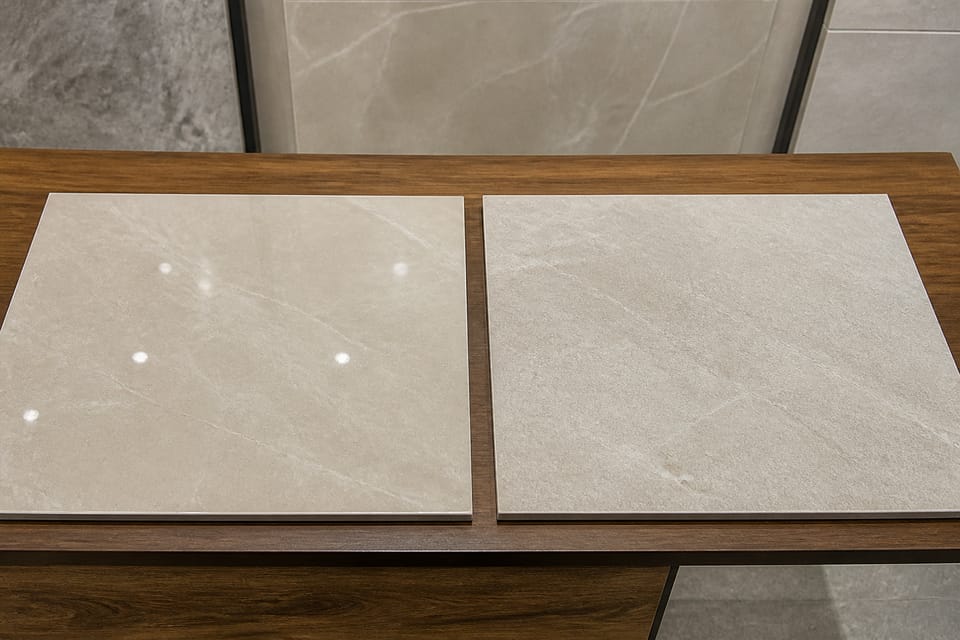
- The surface finish. A glossy or polished face is slippery when wet, whatever the box says.
What mistakes should I avoid?
- Buying on the word “anti-skid”. The word has no test behind it in the standards. Ask for the declared value and the report. This is practice, not a code rule.
- Using a wall tile on a bathroom floor. IS 13712 groups wall tiles separately from floor tiles. Annex B lists more properties for floors than for walls, including the slip row. The choice of tile for a bathroom floor is practice.
- Choosing a glossy tile for a wet room because it looks clean. Polished and glazed faces are slippery when wet. Matt or textured faces are the usual choice for bathrooms. This is practice, not an IS 13712 statement.
- Assuming a textured look means a tested grip. Texture can help, but only the declared test value shows what the maker measured.
- Mixing up the adhesive “slip” with floor slip. In the tile adhesive page, slip means a tile sliding down a wall while it sets. It has nothing to do with how a floor feels underfoot.
- Thinking an R-rating is required in India. No Indian standard read for this page makes an R-rating mandatory.
Frequently asked questions
Is there an Indian rule that sets a slip rating for floor tiles?
Not one with a number. IS 13712:2019 and IS 15622:2017 ask the maker to declare the value and the test method. The 2026 circular for IS 15622 points the test to IS 18433 and asks for evidence, but it gives no pass figure.
Are anti-skid and anti-slip tiles different?
No Indian standard defines either term, so there is no legal or standard difference. Read the declared value and the report instead of the name.
Can I make a smooth tile less slippery after it is laid?
This page does not cover treatments. Ask a tile contractor or the maker. Any treatment should come with the maker’s written advice on the surface it will be used on.
Which standard should I ask about first?
Ask whether the maker tested under IS 18433 (Part 1 or Part 2), the route in the 2026 circular for IS 15622 tiles, and ask for the declared value and method. Your engineer can then check whether the tile suits the room, the water and the traffic.
Related guides
- Wall tiles vs floor tiles: what IS 13712 says is different
- Ceramic vs vitrified vs porcelain tiles: what the water absorption groups mean
- Marble vs granite vs vitrified floor: what each standard tests
This guide is general information. Read the disclaimer. Your structural engineer or architect decides for your house, and a tile supplier’s test report is the basis for any slip claim.
Sources
- IS 13712:2019, Ceramic Tiles: Definitions, Classification, Characteristics and Marking (second revision): clause 5 and Annex B, row 'r) Slip resistance coefficient of friction' (floors), test column 'Manufacturer to declare value and test method'. Annex B is titled as guidelines; its normative status is not stated in the text. The 2019 edition is the one read for this page.
- IS 15622:2017, Pressed Ceramic Tiles: Specification (first revision, reaffirmed 2022): physical requirement for coefficient of friction on floor tiles, 'Where required manufacturer to declare value' and 'Manufacturer to declare Test Method(s)'. No numeric minimum.
- BIS circular CMD-III/16, 2 April 2026: Guidelines for Implementation of Amendment No. 2 to IS 15622:2017. Implementation by 28 June 2026. The floor-tile friction test is renamed slip resistance/coefficient of friction and its methods are IS 18433 (Part 1) or (Part 2). The amendment text itself was not read.
- IS 13630 (Part 15):2019, Ceramic Tiles: Methods of Test, Sampling and Basis for Acceptance (Part 15): foreword, 'the sampling procedure has been updated to include ... slip resistance'. Sampling only; no slip test in this part.
- IS 18433 (Part 1):2023, Measurement of Surface Frictional Properties: Methods of Test, Part 1 Pendulum Test: clause 1.3 (scope). Test method only; its classification bands are not tile requirements and are not quoted here.
General information only. It is not a structural design or professional advice. Ask a licensed structural engineer or architect to check your plans and site.