
Short answer
Which tile adhesive type is for which tile and surface under IS 15477? IS 15477:2019 says it has five types. It describes Type 1 as for porous tiles in interior dry areas. Type 2 is described as for dense, vitrified or large tiles, wet areas and exterior floors, Type 3 for exterior wall substrates, Type 4 for dry wall boards and Type 5 for glass or metal surfaces. The maker prints the type on the bag. The standard gives no coverage per bag.
On this page (9)
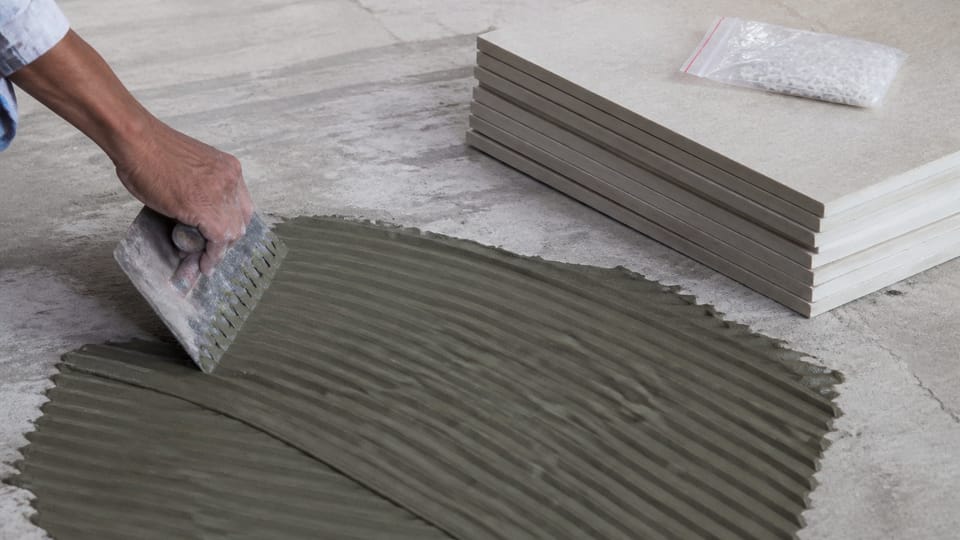
The words on a tile adhesive bag, “Type 1”, “Type 2” and so on, come from IS 15477. They tell you what kind of tile and surface the maker says the product is for. This page explains the five types as the standard prints them, how a tile adhesive differs from a plain cement-sand bed, and what the bag must say. It gives no coverage per bag, no price, no brand and no adhesion test value: coverage depends on the tile, the notch of the trowel and the base, and the answer is “see the maker’s sheet”. For outdoor wall tiles, see exterior wall tiles: how to fix them so they do not fall off: IS 4101 (Part 3) of 1985, the exterior wall tile code, uses a cement mortar bed and that page does not recommend an adhesive class. This page only reports what IS 15477 says each type is for; the maker’s sheet and your engineer decide.
What are the five types?
IS 15477:2019 says tile adhesives “shall be classified into 5 types”. The text below is from clauses 4.1 to 4.5.
| Type | What the standard says it is suitable for |
|---|---|
| Type 1 | Mainly tiles with apparent porosity greater than 3 percent: most clay and ceramic (non-vitrified) tiles of small size (not more than 300 mm x 300 mm), on most cement-based backgrounds such as cement plaster, concrete and screed, “for interior dry area applications only” |
| Type 2 | Mainly tiles with apparent porosity of 3 percent or less: vitrified and fully vitrified tiles, glass mosaic, all stones, dense and large tiles (more than 300 mm x 300 mm) and stone slabs, and where the background and location are more demanding, such as wet and submerged areas. Recommended for interior floors and walls and for exterior floors |
| Type 3 | Mainly tiles and stone tiles on exterior wall substrates such as plaster or concrete, including ceramic, clay, vitrified, glass mosaic, porcelain and natural stone tiles |
| Type 4 | Tiles and stone tiles of Types 1, 2 and 3 on dry wall board substrates such as gypsum board, plywood, wood, calcium silicate board and fibre cement board; all tiles except metal tiles and engineered stones |
| Type 5 | All tiles, including engineered stone, on glass or metallic substrates such as mild steel, stainless steel, aluminium or copper, and also on cement-based substrates and boards |
The standard’s own notes add:
- Type 1 “generally contains varying small amounts of chemical polymers”, and its powder is “based on bulk cement and filler”. It is the general-purpose adhesive.
- Types 2, 3 and 4 are “more technical products, generally referred as polymer modified adhesives”, required where the background, the tile or the surface is particularly challenging.
- Type 5 is generally a mixture of synthetic resin, mineral fillers and organic additives that hardens by chemical reaction, such as polyurethane and epoxy adhesives.
- Adding a liquid admixture to a Type 1 adhesive gives what the standard calls a polymer fortified adhesive, which can be enhanced to meet the performance criteria of Type 2, 3 or 4.
The foreword says suitability depends on the porosity and density of the tile, its size, the nature, surface and location of the substrate, and the area of application (interior, exterior, submerged or wet). Type 1 is the only type limited to “interior dry area applications only”. The standard does not call any type “waterproof”, and it does not say that a type fits every tile of its kind. Clause 7 ties suitability to the types of background the manufacturer recommends, so ask for the maker’s sheet.
What are S1, S2 and T?
For tiles fixed on vertical surfaces, the standard has two extra requirements, clause 5.5 (slip) and clause 5.6 (deformability), both “required for vertical application only”:
- Slip: the downward movement of a tile embedded in combed adhesive on a vertical surface. Slip-resistant adhesives are marked “T”.
- Deformability: the capacity of the hardened adhesive to deform under stress without damaging the installed surface. A deformable adhesive is marked “S1” and a highly deformable one “S2”.
In the Type 4 clause, the standard says that for tiles or stones larger than 600 mm x 600 mm the adhesive “shall also comply with ‘S1’”, and for those larger than 1 200 mm x 1 200 mm with “S2”. That sentence sits in the clause on dry wall boards, so we do not apply it to other types. If you see S1, S2 or T on the bag, it is a special characteristic the maker declares “if and as applicable”.
Marks such as C1 and C2, used in other standards, do not appear in IS 15477 anywhere, so an imported “C2” does not mean “Type 2”. Ask the supplier which standard the bag follows.
How is it different from a cement bed?
A plain bed of cement mortar is another method, described in the CPWD Specifications for government works (clause 11.15.4: a cement mortar bedding under tiles that are soaked and set in cement slurry). IS 15477 does not mention plain cement mortar or slurry as a substitute for any type, and it does not say that one is better than the other. Any such claim is practice, not standard. What the standard does give for an adhesive is a product with a type, a declared open time, a declared adjustment time and tested adhesion.
Two terms matter in use. Open time is the “maximum time interval after application at which tiles can be embedded in the applied adhesive” (3.4), and adjustment time is the maximum time after which tiles positioned in the adhesive “can be adjusted without significant loss of adhesion” (3.5). The maker declares both, and the test result is not less than the maker states (5.3 and 5.4). In practice, the declared open time is the limit the maker gives, so spreading more adhesive than it allows is working outside it.
CPWD’s adhesive clause (11.17) describes fixing tile flooring with a polymer-modified quick-set adhesive over existing flooring without dismantling it, and says the adhesive “conforming to IS 15477” is mixed and spread as that clause describes. CPWD does not name a type, and its times and thicknesses belong to its own item and are not printed here.
What does the bag have to say?
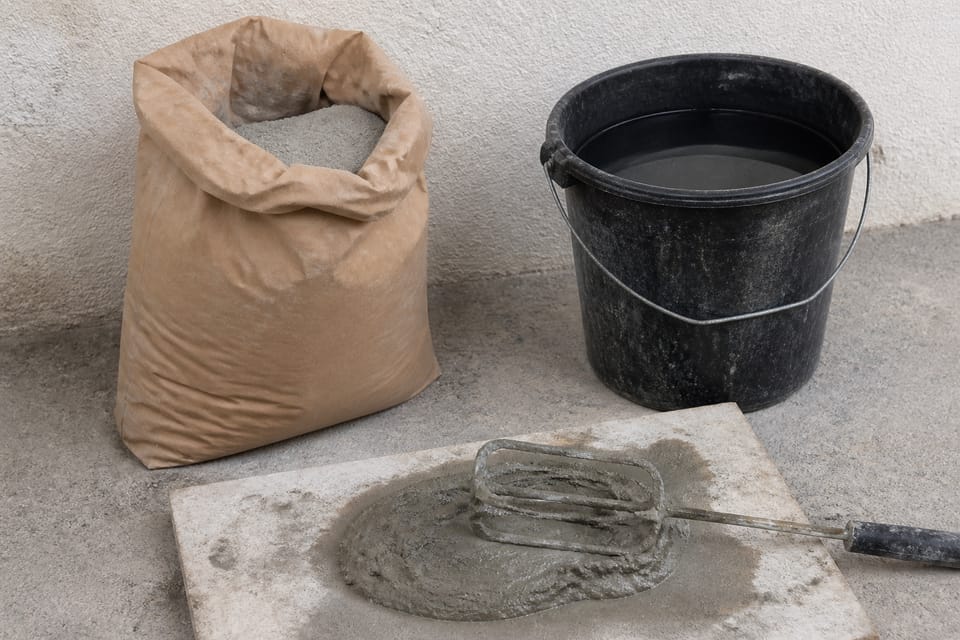
IS 15477 clause 8.2.1 says each bag or liquid container is legibly and indelibly marked with:
- the maker’s name and the trade mark, if any;
- the batch or lot number;
- the month and year of manufacture;
- the type: Type 1, 2, 3, 4 or 5;
- special characteristics, “S1” or “S2” and “T”, if applicable;
- the open time and adjustment time;
- the storage life and storage condition;
- the mixing instructions.
The standard says adhesive is packed in leak-proof and moisture-proof bags or containers (8.1). Clause 8.2.2 says products conforming to the standard “may” be certified and marked with the Standard Mark; it is not a requirement of the standard. The BIS list of products under compulsory certification (Scheme I), read on 2026-10-29, shows no tile adhesive entry.
What should I check?
This is practice, unless a clause is named.
- The bag prints the type, batch, month and year, open time and adjustment time. Photograph it, or keep the empty bag.
- The type matches the tile (porosity, size) and the place (clause 4 and the maker’s sheet). Ask the tiler and the supplier to show the sheet.
- Use the same adhesive type across a floor or area.
- The base is clean, sound and flat. A note under clause 3.3 says that where level variation on a floor or wall is more than an average of 12 mm in 3 m (excluding intentional slope for floors for drainage), surface preparation to bring the surface true “shall be taken up with appropriate materials”.
- The adhesive is mixed as the maker instructs, with water only; do not add cement or sand (practice; clause 7 only says to follow the maker’s instructions).
- Tiles are embedded within the open time, and the tiler combs or back-butters as the maker says.
- Tap each tile before grouting: a hollow sound means it is not bonded. See epoxy flooring vs tiles for a house: where each works.
- In bathrooms and other wet areas, waterproofing and the ponding test come first; an adhesive is not waterproofing. See bathroom waterproofing: steps, wall height and the ponding test.
What mistakes should I avoid?
These are practice, not code rules.
- Using any adhesive for any tile, without checking the type against the tile and the place.
- Buying by brand name or a “premium” label instead of the type printed on the bag.
- Spreading more adhesive than the open time allows and pressing tiles into skinned adhesive.
- Using adhesive to level a bad base.
- Adding cement or extra water to the mix.
- Using a dry-interior type outdoors or in a wet area.
- Mixing types or batches on one floor.
- Throwing the bag away, so nobody can show the type later.
- Taking coverage, thickness or price from a website.
Frequently asked questions
What is the difference between tile adhesive and cement?
A tile adhesive is a product classified under IS 15477 with a type, an open time and an adjustment time. Type 1 powder is based on bulk cement and filler with small amounts of polymers. A cement-sand bed is a separate method in CPWD. The standard does not rank them.
Which type is for floor tiles and which for wall tiles?
The five types are not a floor and wall split; they follow the tile, the substrate and the place. Type 2 is named for exterior floors, Type 3 for exterior wall substrates and Type 4 for dry wall boards, and S1, S2 and T are required for vertical application only.
Can I use Type 1 for vitrified tiles?
The standard says Type 1 is mainly for tiles with porosity above 3 percent and small size, in dry interiors, and Type 2 mainly for vitrified and dense tiles. The maker’s sheet decides, so ask for it.
How much adhesive per bag?
The standard gives no coverage. It depends on the tile, the trowel notch and the base, so see the maker’s sheet.
Is C2 the same as Type 2?
No. C1 and C2 are marks from other standards and do not appear in IS 15477.
Related guides
- Exterior wall tiles: how to fix them so they do not fall off
- Epoxy flooring vs tiles for a house: where each works
- Bathroom waterproofing: steps, wall height and the ponding test
This guide is general information. Read the disclaimer. Your tiler and the adhesive maker’s sheet decide the product and method for your tiles.
Sources
- IS 15477:2019, Adhesives for Use with Ceramic, Mosaics and Stone Tiles, Specification (first revision): foreword, foreword, clauses 1, 3, 4.1 to 4.5, 5.3 to 5.6, 7 and 8, Table 1 structure and annex titles (page images read; base July 2019 text, Amendments 1 and 2 not read). BIS lists it as in force, valid to 2030-12-29. The 2004 edition is withdrawn.
- CPWD Specifications 2019 Vol 1, clause 11.17, fixing of tile flooring with cement based high polymer modified quick set adhesive (page image read), and clause 11.15.4 on the cement mortar bed (text read). A departmental specification for government works, not an Indian Standard.
- BIS list of products under compulsory certification, Scheme I, read on 2026-10-29: no tile adhesive entry found.
General information only. It is not a structural design or professional advice. Ask a licensed structural engineer or architect to check your plans and site.