
Short answer
What is the difference between wall tiles and floor tiles? IS 13712:2019 groups ceramic tiles by how they are made and their water absorption, and names Group BIII ceramic wall tiles and Groups BIIa and BIIb ceramic floor tiles. For floor use it asks for abrasion resistance, a declared slip resistance and bulk density, which it does not ask for walls. It does not say a wall tile can never go on a floor.
On this page (9)
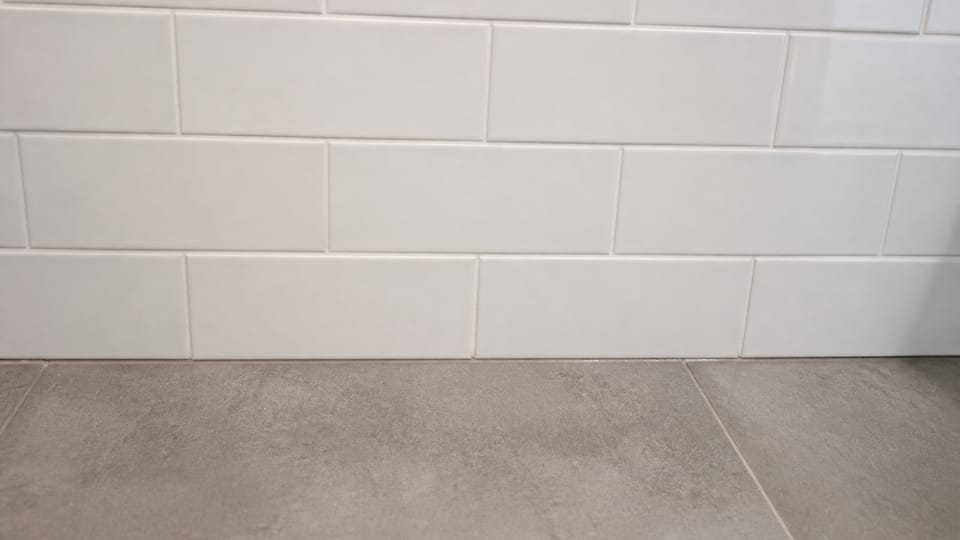
Wall tiles and floor tiles often look alike on the shop’s display board, and many owners are told they are the same thing in different sizes. They are not, and in practice, putting a wall tile on a floor is a common way for a new floor to fail: cracks, a worn glaze or a slippery bathroom. IS 13712 is the standard that defines and groups ceramic tiles. It is not a buying guide, and it does not forbid anything in so many words, so this page says what it does say, and what it leaves to the maker’s data sheet. It gives no thickness, strength or absorption figure and no brand or price. The guides below cover the wall and floor jobs.
How does IS 13712 group tiles?
The standard says ceramic tiles “are divided into groups according to their method of manufacture and their water absorption” (clause 4). Table 2 crosses five water absorption groups with three methods of shaping: extruded (A), pressed (B) and cast (C). For pressed tiles, which are the ordinary house tiles, the clauses name the groups:
| Group | Name in IS 13712 | Clause |
|---|---|---|
| B Ia | Ceramic fully vitrified tiles | 4.2.1(a) |
| B Ib | Ceramic porcelain tiles | 4.2.1(b) |
| B IIa | Ceramic floor tiles | 4.2.2(a) |
| B IIb | Ceramic floor tiles | 4.2.2(b) |
| B III | Ceramic wall tiles, “tiles of high water absorption” | 4.2.3 |
Group III is the group with the highest water absorption, and it is the one the standard calls wall tiles. The two floor groups have lower water absorption. The two groups with the lowest absorption, fully vitrified and porcelain tiles, carry no wall or floor label of their own. The scope (clause 1.1) says the standard covers tiles “generally used for floor and wall surfaces”, and clause 3.1 says tiles “generally used as coverings for floors, walls or facades” may be glazed, unglazed or engobed, and that a low water absorption tile is also called a porcelain tile. So “vitrified for floors, ceramic for walls” is a shop habit and not the standard’s rule. The standard names the groups, and the product standard for pressed tiles, IS 15622, sets their requirements.
What extra does a floor tile need?
Annex B of IS 13712 lists the properties and marks which are required for floors and walls, interior and exterior. Most are required for all four uses: dimensions, flatness, surface quality, water absorption, breaking strength, thermal expansion, thermal shock, crazing for glazed tiles, moisture expansion, impact resistance, scratch hardness, and resistance to stains and chemicals. The standard’s difference between wall and floor is in these:
| Property | Wall | Floor |
|---|---|---|
| Resistance to abrasion (glazed tiles) and to deep abrasion (unglazed tiles) | Not asked | Required |
| Slip resistance (coefficient of friction) | Not asked | Required, with the manufacturer to declare the value and the test method |
| Bulk density | Not asked | Required |
| Frost resistance | Required for exterior walls only | Required for exterior floors only |
So the wall-versus-floor difference the standard states is that a floor tile has to be tested for wear and slip, and a wall tile does not. That is why a wall tile is not a safe floor tile unless its maker rates it for floors. It does not say a wall tile can never be laid on a floor. We found no sentence in IS 13712 that does, and no marking item that says “for floor use”. The marking (clause 6.1) gives the maker and country of origin, the quality, the standard, the nominal and work size, and whether the tile is glazed or unglazed, rectified or unrectified, polished or unpolished.
What does Annex C say about floor use?
Annex C is “for information only”. It classifies glazed floor tiles into six classes, 0 to 5, by surface abrasion resistance, and says it is “guidance only” and “not meant to be taken as product specification”. Class 0 is for glazed tiles “not recommended for use on floors”. Classes 1 and 2 are for areas walked on barefoot or in soft-soled footwear: class 1 gives bathrooms and bedrooms as examples, and class 2 living rooms and kitchens, with some dirt from outside. Class 3 covers low traffic such as corridors and terraces, class 4 regular traffic such as entrances and shops, and class 5 heavy traffic over long periods. The standard asks you to consider footwear, traffic and cleaning, and to protect entrances with footwear cleaning devices.
How do I tell one from the other in the shop? (practice)
This is practice, apart from the clauses named.
- Read the carton. Look for the standard number, whether the tile is glazed, rectified or polished, and any wall or floor use mark the maker prints.
- Ask for the data sheet for the exact tile, and the maker’s stated slip result with the scale used. IS 13712 leaves the slip value to the manufacturer to declare.
- Ask in writing whether the tile is rated for floor use, and for the room and area where you plan to use it: a bathroom floor, kitchen, steps or balcony.
- Look at the surface. A glossy glaze is slippery when wet; a matt or textured surface is the usual choice for wet floors. This is practice and not an IS 13712 statement.
- Do not judge by weight or thickness alone. The standard gives neither.
- Check the batch and the shade codes on every carton, and buy all you need together with a spare box.
Where does each go? (practice)
- Walls: a tile in the wall group, or any tile the maker rates for walls, suits bathroom walls and a kitchen backsplash. For the wall height in a bathroom and the waterproofing under it, see bathroom waterproofing: steps, wall height and the ponding test.
- Floors: a tile rated for floors, with a wear class that suits the room, and a slip-resistant surface for wet floors. See epoxy flooring vs tiles for a house: where each works.
- Outside walls: a separate fixing job: see exterior wall tiles: how to fix them so they do not fall off.
- The same design on wall and floor: choose a tile range the maker sells in both versions, or a floor-rated tile for both. A floor-rated tile can usually go on a wall, but check its weight, the wall and the adhesive.
What mistakes should I avoid? (practice)
- Laying wall tiles on a floor unless the maker rates that tile for floor use.
- Choosing by looks and a sample board, not by the carton and the data sheet.
- Glossy or polished tiles on a wet floor.
- Assuming a tile is anti-skid because it looks textured, with no tested slip data.
- Mixing batches, shades or sizes between rooms or reorders.
- Using one adhesive for everything without reading its data sheet for the tile and the surface.
- Treating “ceramic is for walls, vitrified for floors” as a rule. The rating decides.
Frequently asked questions
Can I use wall tiles on the floor?
Only if the maker rates that tile for floor use. IS 13712 asks for abrasion and slip properties for floors and not for walls, and it names Group BIII as the ceramic wall tile group.
Can floor tiles go on walls?
Often yes. IS 13712 asks for the properties of a floor tile in addition to the common ones, and does not forbid it. Check the weight, the wall and the adhesive.
Are vitrified tiles only for floors?
No. IS 13712 gives fully vitrified and porcelain tiles no wall or floor label, and its scope covers ceramic tiles for floor and wall surfaces.
What is an anti-skid tile?
IS 13712 asks the manufacturer to declare a slip resistance value and test method for floor tiles. It sets no number, so ask the maker for the result on your tile.
Is there a different adhesive for wall and floor tiles?
The adhesive follows the tile, the surface and the place. Read the adhesive’s data sheet.
Related guides
- Epoxy flooring vs tiles for a house: where each works
- Bathroom waterproofing: steps, wall height and the ponding test
- Exterior wall tiles: how to fix them so they do not fall off
This guide is general information. Read the disclaimer. Your contractor and tile supplier decide the tile for each part of your house.
Sources
General information only. It is not a structural design or professional advice. Ask a licensed structural engineer or architect to check your plans and site.