
Short answer
Is epoxy flooring or tile better for a house? Neither is better in every room. Tiles are the usual choice for most house floors and wet areas, and they need a sound, bonded base. Epoxy is a seamless resin coat that suits some dry, hard-use areas, but it does not breathe and can blister on a damp base, and smooth epoxy is slippery when wet. The base, the damp check and the finish decide the choice more than the material name.
On this page (11)
- What is each finish?
- Where does each suit a house?
- What must the base be before either goes down?
- How do I test a tiled floor after it is laid?
- What are the known problems?
- What about skin contact, ventilation and fumes?
- What mistakes should I avoid?
- What should an owner check?
- Frequently asked questions
- Related guides
- Sources
A floor is a large, lasting choice, and it is hard to change once it is done. Two finishes come up often: a seamless resin epoxy coat and a tile floor. Sellers describe each as the best. This page sets out where each one suits an Indian house, what the base under it must be, and what an owner should check. It gives no prices, names no brands and gives no curing or moisture figure. Those come from the product data sheet and the applicator, and your engineer should confirm the base.
What is each finish?
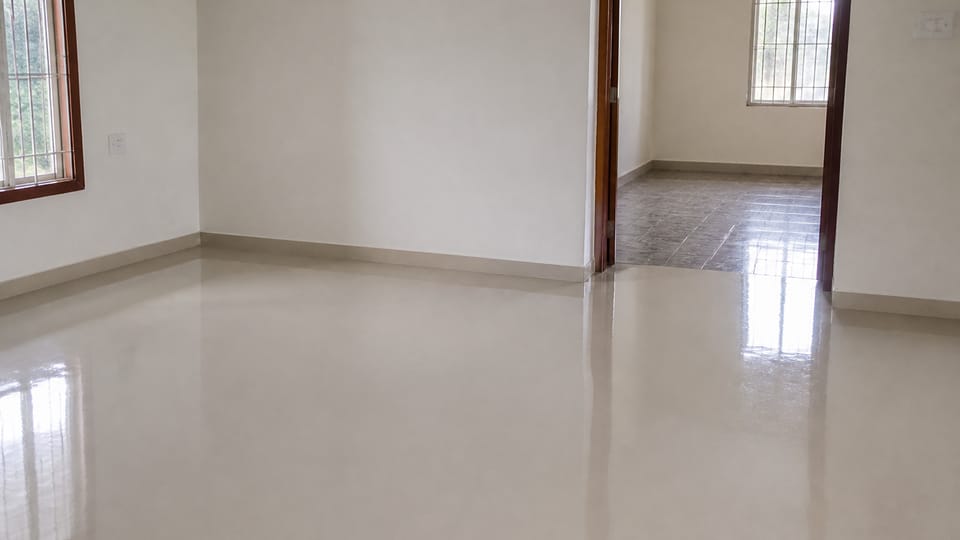
Epoxy resin flooring is a resin coat laid on a prepared concrete or cement base. It can be poured or trowelled, and it can have anti-slip grit added. The standard IS 4631 describes how it is laid. Clause 8.1 says the substrate “shall be clean, free from grease and oil, dry and rough,” and clause 8.2 asks for a structurally sound base.
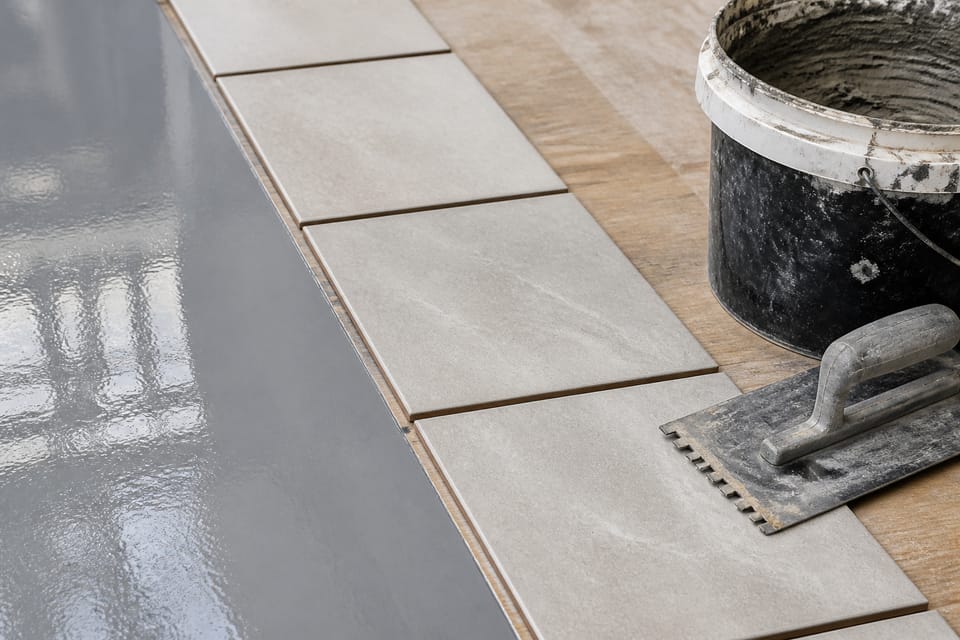
Tiles are ceramic or vitrified tiles, usually laid on a cement-mortar bed or with an adhesive. The tile product standard, IS 15622, covers pressed ceramic tiles, and groups them by how much water the tile absorbs (BIa to BIII in the 2006 text, which was read; the current 2017 text was not). The Indian tile standard does not say how a floor is laid; that is the laying work, set by your engineer and the installer.
One point needs care. IS 4631, the Indian standard for epoxy floors, presents the material in its foreword for industrial floors. The foreword lists chemical plants, warehouses, garages, breweries and similar sites. The text does not mention houses. The article therefore does not treat IS 4631 as a house standard. The sources reviewed for this page do not cover home floors.
Where does each suit a house?
| Place | Tiles | Epoxy |
|---|---|---|
| Living and bedrooms | Usual choice; a wide range of finishes | Possible on a sound, dry base; check the finish |
| Kitchen | Usual choice; a non-slip finish is available | Possible if the base is sound and dry; spills must be cleaned fast |
| Bathroom and wet areas | Usual choice, with a bonded waterproof base and a non-slip finish | Not a waterproofing; smooth epoxy is slippery when wet |
| Balcony or verandah in the sun | Usual choice; choose a tile for outdoor use | Standard epoxy can yellow in strong sunlight; a UV-stable finish is needed |
| Garage or workshop | Possible | Often chosen for hard use and oil spills |
The table describes practice, not a standard rule. Your applicator and the product data sheet decide the choice for your floor.
What must the base be before either goes down?
The base decides how long either floor lasts.
- Dry and sound. A damp slab can push moisture into epoxy and make it blister. Ask for a base test in writing. Ask the applicator which moisture test they will use, and what limit the product data sheet sets for it.
- Clean and rough. IS 4631 asks for the base to be clean, free from grease and oil, and rough (clause 8.1). A smooth, dusty or greasy base will not hold the coat.
- Structurally sound. For an existing concrete floor, check its structural soundness. Seal all cracks and broken areas, lay fresh concrete where needed, and let that portion cure completely before the coat goes on (clause 8.2).
- Bonded screed under tiles. Tiles need a screed that is bonded to the slab and sound. A hollow or cracked screed will lift tiles and crack their grout.
- Damp checked. If there is rising damp, dampness, or efflorescence on the wall, find and fix the source before any floor finish goes on. The damp walls page explains the checks.
How do I test a tiled floor after it is laid?
Tap each tile after it is laid. A tile that sounds hollow or drummy is not bonded, and it will loosen. Mark it, and ask the installer to lift and relay it. Check that the grout is full and even.
What are the known problems?
These are practice points, not standard rules.
- Epoxy blistering. Moisture that rises from the slab, or air trapped in a porous base, can push through the coat and form blisters. The fix is a dry, well-prepared base, not a thicker coat.
- Epoxy yellowing. Standard epoxy can yellow in strong sunlight. A UV-stable finish is used outdoors.
- Epoxy slipperiness. Smooth epoxy is slippery when wet or oily. An anti-slip grit or a satin finish gives more grip, but grit makes a floor harder to clean.
- Tile lifting. Tiles lift when the screed is weak, cracked or not bonded to the slab.
- Tile grout. Grout cracks and stains if the tiles move or the grout is not full.
What about skin contact, ventilation and fumes?
IS 4631 clause 10.1 says epoxy resins can irritate sensitive skin. It recommends good ventilation of work and storage rooms to minimise these hazards, and rubber or polyethylene gloves as the most effective precaution. It is the standard’s only safety clause; it does not deal with fumes or respirators.
The advice below is practice, not from the standard. Solvent fumes are a concern in some resin systems. Where they are, the room should be ventilated with exhaust going outdoors, and people should stay out until the fumes clear and the coat is dry. Ask the applicator for the safety data sheet, which names any respirator needed. An ordinary dust mask does not protect against solvent vapour.
What mistakes should I avoid?
These are practice points, not standard rules.
- Laying epoxy on a damp or unprepared slab. It blisters or peels.
- Treating epoxy as waterproofing. Epoxy is a floor finish. A wet room needs its own waterproofing first.
- Choosing a smooth finish for a wet room. Ask for a non-slip finish, whether tile or epoxy.
- Skipping the tap test. A hollow tile is a fault, and it will get worse.
- Accepting a verbal warranty. Get it in writing, with what it covers and what voids it.
- Laying epoxy in direct sun without a UV finish. It may yellow.
What should an owner check?
These are practice points, not standard rules.
- The base test, in writing, before any epoxy goes down.
- The damp check on the walls and the floor after rain.
- The surface preparation: the applicator should clean and roughen the base, not just wash it.
- The data sheets and the safety data sheet for the epoxy and the tile, and whether the planned work matches them.
- The ventilation during the epoxy work.
- The tile bed and the grout, and the tap test after laying.
- The non-slip finish for wet areas, and a UV finish for sun-exposed areas.
- The warranty in writing: what it covers, what voids it, and for how long. Do not assume it covers a damp base.
Frequently asked questions
Can epoxy go over existing tiles?
Only if the old tiles are sound, clean and bonded, and the product data sheet allows it. Ask the applicator to confirm this in writing.
Is epoxy suitable for a bathroom?
Epoxy is not waterproofing. A bathroom needs its own waterproof base, and a non-slip finish. Check the waterproofing first.
Does the house floor need a permit?
Ask your local body whether re-flooring needs a permit, since the rules differ by place. Check too if the work is part of a larger alteration.
How much does each cost?
This page gives no prices. Ask the applicator and compare written quotes for the same scope. The house construction cost page explains how to compare quotes.
Related guides
- Bathroom waterproofing steps and ponding test
- Damp walls: rising damp, seepage or condensation
- How to calculate house construction cost
This guide is general information. Read the disclaimer. Your engineer and the applicator decide the base, the finish and the warranty for your floor.
Sources
- IS 4631:1986, Code of Practice for Laying of Epoxy Resin Floor Toppings (first revision; BIS listing shows it not withdrawn). Foreword 0.2 presents epoxy for industrial floors; scope 1.1 does not exclude other floors, and the text does not mention houses. Clauses 1.1, 5, 8.1, 8.2, 10.1, 12.1.
- IS 15622:2017, Pressed Ceramic Tiles: Specification (BIS listing shows current; the 2017 text was not read for this page). The 2006 edition is withdrawn and was read as background only.
- Manufacturer and industry guidance on epoxy blistering, moisture and yellowing (used as practice only; no manufacturer product is named on this page).
General information only. It is not a structural design or professional advice. Ask a licensed structural engineer or architect to check your plans and site.