
Short answer
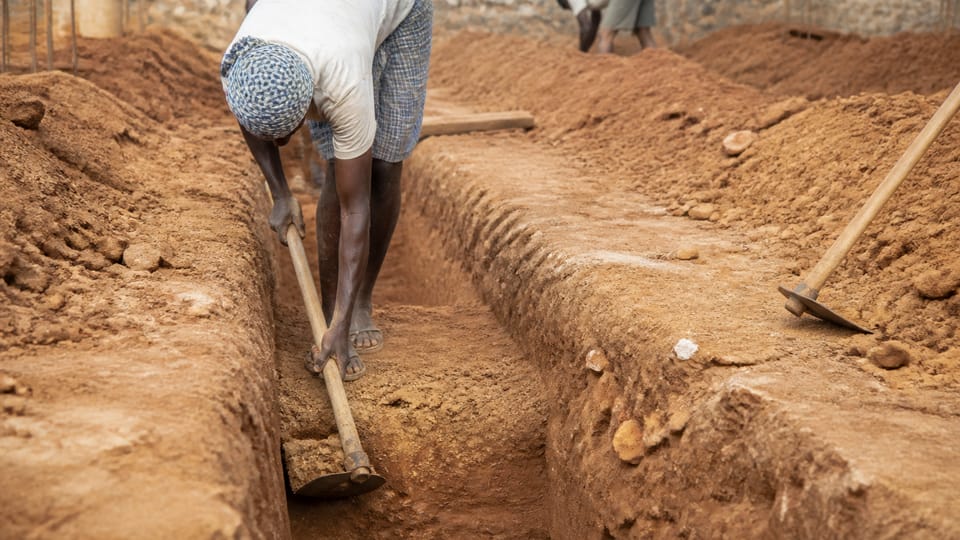
What do the Hindi words neev, khudai, bharai and murum mean on a foundation job? Neev is the foundation, khudai is the digging, bharai is the filling, and murum is a gravelly soil often used as fill. Foundation and gravel are defined in IS 2809, the soil glossary. Excavation and filling are site-usage English terms, not standard terms. The Hindi words are common site usage, not standard terms, and their meaning can differ by region and by trade.
On this page (10)
Site talk on a house mixes English and Hindi words, and the same word can mean different things to a mason, a contractor and an engineer. This page sets out four Hindi words that come up on foundation work, the English term each one usually stands for, and the standard term from the soil glossary. It is a glossary of site usage, not a standard.
The page gives no depth, size or soil value. Those are for the engineer and the soil report.
What the standard says
IS 2809 is the soil engineering glossary. It defines the English terms, and it does not use Hindi or regional words. The three definitions below are the ones that match the words in this page (clauses as listed in the standard).
| English term in IS 2809 | What the standard says (paraphrased) | Clause |
|---|---|---|
| Foundation | The part of the structure in direct contact with the soil | 2.144 |
| Gravel | Rock or soil particles of a defined particle-size range, angular, rounded or semi-rounded (the clause gives the range) | 2.154 |
| Made-up ground | Refuse, excavated soil or rock deposited to fill a depression or raise a site above the natural ground surface | 2.191 |
Source: IS 2809:1972, as listed. The Hindi words below are not in the standard.
The four words
| Hindi word | Usual meaning on site | English term to use | Note |
|---|---|---|---|
| Neev | The foundation, the base under the walls | Foundation (IS 2809, 2.144) | Common site usage |
| Khudai | Digging or excavation work | Excavation | Common site usage |
| Bharai | Filling, including filling back the trench | Filling or backfilling | Common site usage. Backfilling is the English term used on site |
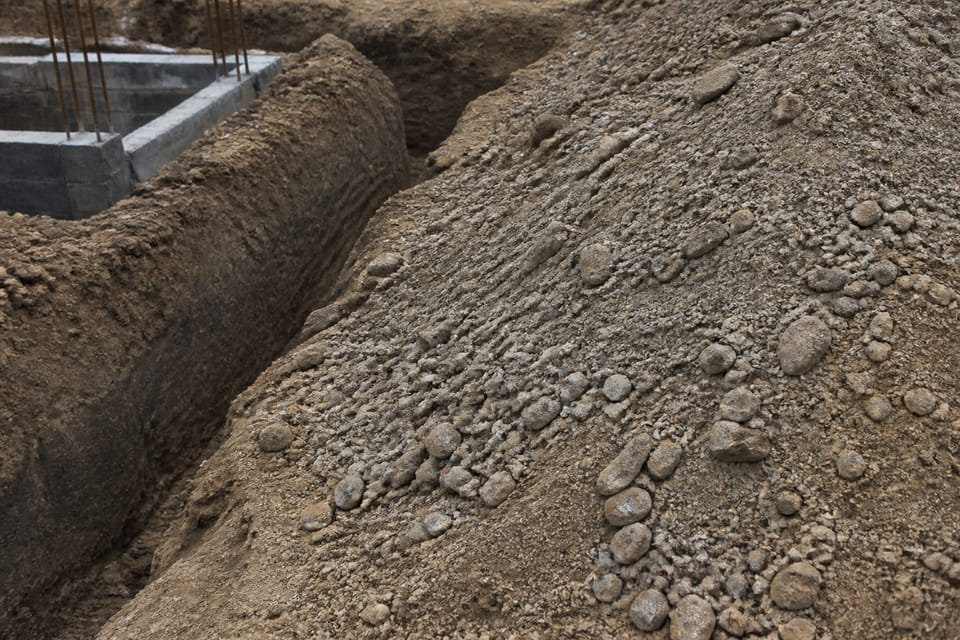
| Murum | Gravelly soil, often used as fill; it differs by region | Gravelly soil. Name the material by its tested description, for example the soil report’s classification | Not defined in IS 2809. The material varies by region |
Source: site usage, not a standard. Foundation and gravel are from IS 2809 (table above); the other English terms are site usage.
Why does the word matter?
When the contractor says “neev ki khudai”, they mean the digging of the foundation. When the engineer writes “foundation”, the word means the part of the structure in contact with the soil. The two are related but not the same thing. A plan that says “foundation” may show the depth and the width; the contractor’s words on the site should match it.
Bharai is the same kind of word. “Bharai ki” can mean the filling of a trench, and the engineer should specify the material and its compaction.
Inline image
What is murum?
Murum is a gravelly soil that is used as fill in parts of India. The material differs by region and by the source, so the word does not have one fixed meaning. If the contractor uses murum for fill, ask what the material is, where it came from, and whether the engineer has approved it.
The standard does not define murum. The English term that the engineer uses should be the one written on the drawing or the specification.
What should an owner check?
These checks are practice, not steps in the standard:
- Ask what the Hindi word means on the job. Ask the mason or the contractor to say what each word refers to.
- Match the words to the drawing. Use the drawing and the specification for the depths and the materials.
- Ask what the fill is. For any murum, filling or backfill, ask the source and the engineer’s approval.
- Write the English term in the contract. The contract should use the English term, so that the meaning is clear to both sides.
What mistakes should I avoid?
These are practice points:
- Assuming the word has one meaning everywhere. Site words vary by region and by trade.
- Treating a site word as a standard term. IS 2809 does not use these words.
- Accepting murum as a material without a check. Ask what it is and whether it is approved.
Frequently asked questions
Is neev the same as the foundation in the standard?
On site, neev is used for the foundation. In IS 2809, the foundation is the part of the structure in direct contact with the soil (2.144). The meaning matches in practice, but the standard does not use the Hindi word.
Is murum a soil type?
Murum is a site word for a gravelly soil used as fill. The standard does not define it, and the soil type on your plot is found by the soil investigation.
Who decides the fill?
Usually the engineer specifies and approves the fill, its source and its placing; check your contract and specification. The contractor carries out the work.
Related guides
- Soil test before building a house: what it is and why it matters
- Safe bearing capacity of soil explained: SBC, ultimate and allowable
- Before the footing concrete: an owner’s checklist for pit and steel
- Sariya, gitti, balu, bori, dhalai, lintar: Hindi site words in English
This guide is general information. Read the disclaimer. Your soil investigation and your structural engineer decide the foundation, the fill and the depths for your house.
Sources
Change log
- : Added Related guides link to newly published article(s): sariya-gitti-balu-bori-dhalai-and-lintar-hindi-site-words-in-english. No other text changed. Approved by the reviewing engineer.
General information only. It is not a structural design or professional advice. Ask a licensed structural engineer or architect to check your plans and site.