
Short answer
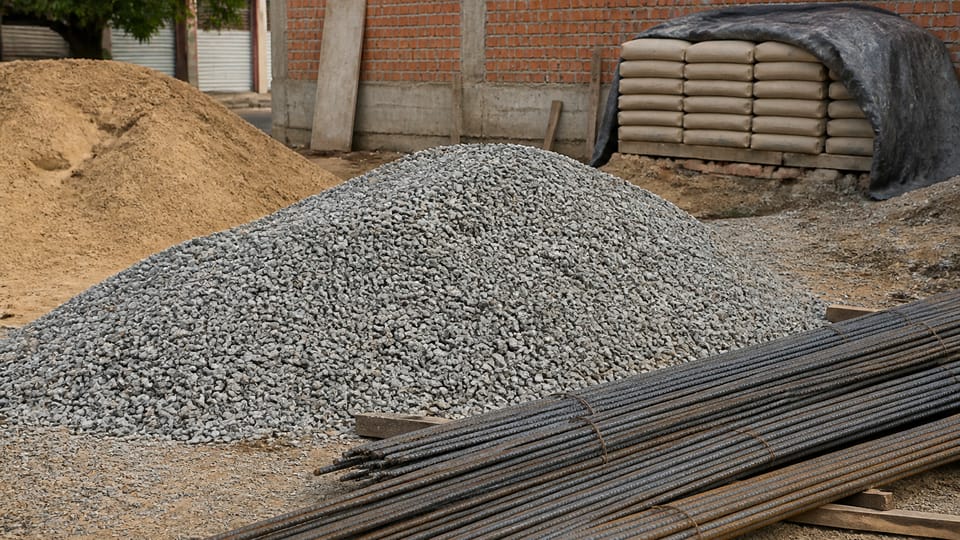
What are sariya, gitti, balu and dhalai called in English? Sariya is a steel bar, called reinforcement when it is cast in concrete. Gitti is coarse aggregate or stone chips. Balu is sand, which the standards call fine aggregate. Bori is a bag. Dhalai means casting, and chhat ki dhalai is slab casting. Some words change by region, such as lintar and bajri, so show a sample or point to the work.
On this page (12)
- What do the common Hindi site words mean in English?
- What is sariya in English?
- What is gitti in English, and is it the same as rodi and bajri?
- What is balu in English?
- What is a bori of cement?
- What does dhalai mean?
- Is lintar the same as a lintel?
- What are masala, tarai, shuttering, kursi and chajja?
- What mistakes should I avoid?
- Frequently asked questions
- Related guides
- Sources
A mistri says “sariya”, the drawing says “reinforcement” and the bill says “TMT”. The same thing on a site can have three names, and a wrong word can mean the wrong material arrives. This page gives the English word for the common Hindi site words in cement and steel work, the word the Indian standards use, and where the meaning changes by region. Most of these Hindi words are not in any standard we read, so we use dictionaries for them and say so. The page gives no prices, no brands and no design values. For foundation words, see our page on neev, khudai, bharai and murum.
What do the common Hindi site words mean in English?
The table gives the usual meaning on site. The last column gives the word to use in writing.
| Hindi word | Usual meaning on site | English word | Word in the standards |
|---|---|---|---|
| Sariya (सरिया) | Steel bar | Steel bar, rebar | Reinforcement, deformed bar |
| Gitti (गिट्टी) | Broken stone | Stone chips, stone aggregate | Coarse aggregate |
| Rodi (रोड़ी) | Broken stone or brick | Stone chips | Coarse aggregate |
| Bajri (बजरी) | Gravel or river material; depends on the region | Ask to see it | Gravel, or fine aggregate |
| Balu, ret (बालू, रेत) | Sand | Sand | Fine aggregate |
| Bori (बोरी) | Sack or bag | Bag | Bag |
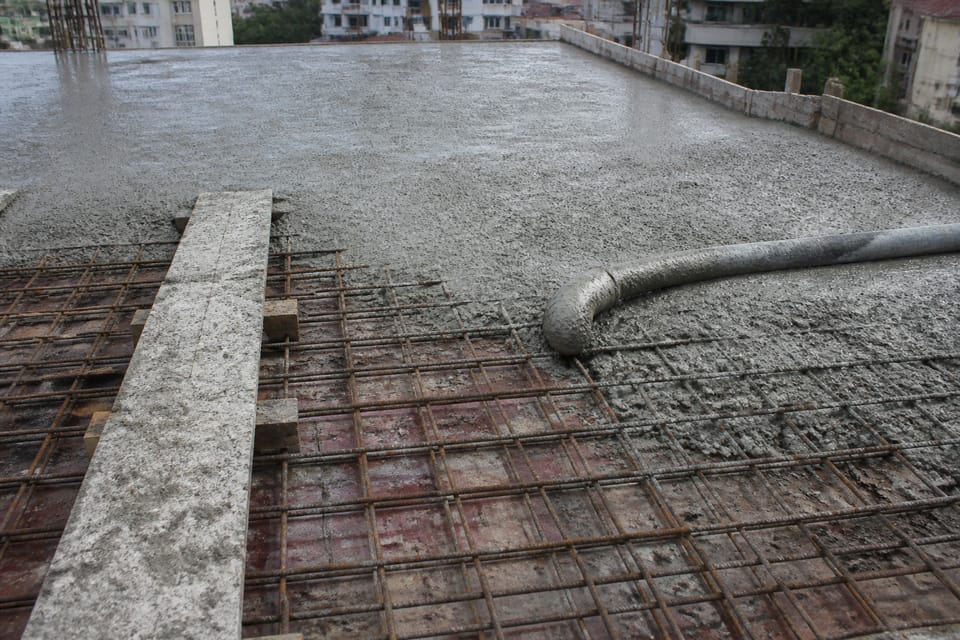
| Dhalai (ढलाई) | Casting concrete | Casting, pouring | Placing |
| Chhat ki dhalai (छत की ढलाई) | Casting the roof slab | Slab casting | Placing |
| Lintar, lenter (लिंटर, लेंटर) | A lintel, or in some areas a slab | Lintel, or roof slab | Ask which one |
| Masala (मसाला) | Mortar | Mortar | Mortar |
| Tarai (तराई) | Keeping work wet | Curing | Curing |
| Shuttering (शटरिंग) | Temporary moulds | Formwork | Formwork |
| Kursi (कुर्सी) | The raised base of a house | Plinth | Plinth |
| Chajja (छज्जा) | Overhang above an opening, sometimes a balcony | Sunshade, chajja | Chajja in the model bye-law |
| Mistri, raj mistri (मिस्त्री, राजमिस्त्री) | Skilled worker; mason | Artisan; mason | Not a technical term |
| Thekedar (ठेकेदार) | The one who takes the job | Contractor | Not a technical term |
The usual-meaning column is common site usage, read with the dictionaries named below. It is not a code definition, and your mistri may use a word differently.
What is sariya in English?
Sariya is a steel bar, and in concrete it is called reinforcement or rebar. Hindi dictionaries give “an iron-bar” (Caturvedi) and “a thin iron rod” (McGregor). A standard uses the word too: the Hindi title of IS 1786 calls its deformed bars “इस्पात सरिए”.
Dictionaries do not tie sariya to one kind of bar, so “sariya” alone does not tell you which bar you are buying. The older glossary IS 6461 defines a deformed bar as a reinforcing bar with surface deformations for a locking grip in the concrete. TMT, or thermomechanical treatment, is one process used to make such bars: IS 1786 Annex A describes hot rolling followed by controlled cooling. See TMT vs HYSD vs CTD vs mild steel bars, and write the grade and size in your order.
What is gitti in English, and is it the same as rodi and bajri?
Gitti is broken stone, which the standards call coarse aggregate. IS 383 says coarse aggregate is “most of which is retained on 4.75 mm IS Sieve”. Dictionaries give “rubble; ballast” (McGregor) and “grit, ballast” (Bahri), and Rekhta says it can be broken brick as well as stone. So ask what it is made of.
Rodi is close to gitti. Bahri equates the two, and McGregor says a small piece of broken stone or brick. No source we read ranks them by size. People who sell them may use the words differently.
Bajri is the tricky one. Dictionaries say “gravel”, but the meaning depends on the state:
- Rajasthan. The state’s Minor Mineral Concession Rules 2017 define bajri as material usually found in river beds, which “also covers river sands”, and they write “bajri (river sand)”.
- Punjab. The 2022 crusher policy lists bajri by size in mm, as separate items from sand.
So one word can bring two different materials. Our advice is to see a sample and write the material and size in the order. See coarse aggregate for a house.
The Hindi title of IS 383 uses a different word again: “मिलावा”, as in “मोटे व महीन मिलावा” for coarse and fine aggregate. That is the standard’s word, and you may meet “aggregate” as गिट्टी on site. In the standard, aggregate covers both stone and sand.
What is balu in English?
Balu is sand, and ret is the same thing. Bahri gives “sand” and lists रेत as the synonym. McGregor and Platts also give gravel, but on site the usual meaning is sand. The standards call it fine aggregate: “most of which passes 4.75 mm IS Sieve” (IS 383).
IS 383 separates natural sand, which “may also be called as uncrushed sand”, from crushed stone sand, “produced by crushing hard stone”. It also says crusher dust “cannot be called crushed sand”. See M-sand vs river sand.
What is a bori of cement?
A bori is a sack or bag (McGregor), so cement ki bori is a cement bag. IS 1489 (Part 1), the standard for fly ash based PPC, says “The net quantity of cement per bag shall be 50 kg”, subject to its tolerances. It also allows smaller bags by agreement. Other cements have their own standards. So check the weight printed on the bag. For how bags turn into quantities, see cement, sand and aggregate per cubic metre.
What does dhalai mean?
Dhalai means casting. Bahri gives “moulding, casting”, with iron, brass and coins among its examples. On a Hindi site it means pouring concrete, and chhat ki dhalai is slab casting or roof casting. The word is not limited to roofs. A central government mason book uses it for panels laid on the ground. The standards say placing, which the older IS 6461 glossary defines as the deposition and compaction of fresh concrete where it is to harden. The word can also mean the charge for casting: McGregor gives “cost of, or wages for, casting”. As a practice point, a quote for “dhalai” may mean labour only, so ask what it includes.
Before casting day, see our slab pour checklist.
Is lintar the same as a lintel?
Not always, so ask which one is meant. In English, a lintel is the member over a door or window opening that carries the wall above it. No Indian code we read defines the word, and our lintel page explains this.
The Hindi word lintar has two meanings across these sources:
- Caturvedi’s dictionary gives “a lintel”.
- Hindi Shabdsagar describes a roof made with a mesh of steel bars, a single course of brick and cast cement, needing no beam below.
- Uttar Pradesh news reports use लिंटर and लेंटर for a slab being cast or just cast, in stories from Firozabad and Budaun.
So “lintar dalna” may mean casting the roof, and “lintar level” may mean the level of the door head. A roof slab and a door lintel are very different work. Say “door lintel” or “roof slab” when you agree work or payment.
What are masala, tarai, shuttering, kursi and chajja?
- Masala usually means mortar, the mix used to join bricks. Rekhta gives गारा, and a central government mason book uses मसाला for mortars. The older IS 6461 defines mortar as a mixture of cement paste and sand. It is not the same as concrete: see cement vs concrete vs mortar. McGregor also gives “raw material”, so a person asking for masala may mean materials.
- Tarai means curing. Of the five dictionaries on the Digital Dictionaries of South Asia site, only Caturvedi gives curing, and Rekhta gives “wetting with water”. So not everyone may use it. The site word may also be plain “curing”. See how many days to cure a slab.
- Shuttering is the temporary mould. The older IS 6461 treats shuttering and formwork as the same thing, and centering as the temporary support to a soffit. See shuttering vs centering vs staging.
- Kursi means plinth (Caturvedi). The Model Building Bye-Laws define plinth as the part of a structure between the surrounding ground and the floor just above it. See plinth height.
- Chajja in the Model Building Bye-Laws is “A sloping or horizontal structural overhang provided over openings on external walls for protection from the weather”. McGregor also gives balcony, so check what is meant. See what is a chajja.
What mistakes should I avoid?
These are practice points, not code rules.
- Ordering “bajri” without seeing a sample. It may not be what you expect in another state.
- Writing “lintar” in a contract. Write “door lintel” or “roof slab”.
- Treating “sariya” as a full order. Write the size and grade.
- Reading a “dhalai” rate as the full job. Ask if it covers material or labour only.
- Assuming the mistri’s word matches the drawing’s word. Point to the work and agree it.
Frequently asked questions
What is sariya called in English?
A steel bar, rebar or reinforcement bar. The Hindi title of IS 1786 uses the same word for deformed steel bars.
Is gitti the same as aggregate?
Partly. Gitti is coarse aggregate. In the standards, aggregate covers both coarse stone and fine sand.
Is sand an aggregate?
Yes. IS 383 calls it fine aggregate, whether it is natural sand or crushed stone sand.
What is chhat dhalai in English?
Slab casting or roof casting. The standards use the word placing for the concrete work itself.
Is bajri sand or stone?
It depends on the state. Dictionaries say gravel. Rajasthan’s rules include river sand in it. Punjab’s crusher policy lists bajri by size in mm, apart from sand. See a sample before you order.
Is a mistri the same as a mason?
Not always. Bahri gives mechanic first, and says the word is used loosely for any kind of artisan, such as a mason, blacksmith or electrician. A raj mistri is a mason.
Related guides
- Neev, khudai, bharai and murum: Hindi words for foundation work
- What is a lintel? Lintel vs beam, lintel level and types of lintel
- Civil engineering full forms: PCC, RCC, DPC, BBS, BOQ and more
- Chhat dhalai: what happens on slab casting day, from batch to curing
This guide is general information. Read the disclaimer. Your drawing and written order, not the site word, decide what is supplied and built.
Sources
- IS 1786:2008, High Strength Deformed Steel Bars and Wires for Concrete Reinforcement, Specification: Hindi title on the cover and Annex A.
- IS 383:2016, Coarse and Fine Aggregate for Concrete, Specification: Hindi title, Foreword and clauses 3.1, 3.1.1, 3.1.2.1 and 3.2.
- IS 6461 (Part 3):1972, Glossary of terms relating to cement concrete, Reinforcement: clauses 2.7, 2.10 and 2.71. Withdrawn and replaced by the 2024 edition, which we did not read.
- IS 6461 (Part 7):1973, Glossary, Mixing, laying, compaction, curing and other construction aspects: clauses 2.118 (curing), 2.227 (mortar) and 2.244(a) (placing). Withdrawn and replaced by the 2024 edition, which we did not read.
- IS 6461 (Part 5):1972, Glossary, Formwork: clauses 2.56(a) and 2.148. Withdrawn and replaced by the 2024 edition, which we did not read.
- IS 1489 (Part 1):2015, Portland Pozzolana Cement, Fly Ash Based: clauses 10.1.1 and 10.2.
- Model Building Bye-Laws 2016 (Ministry of Urban Development): definitions 23 (chajja) and 94 (plinth). A model text: state bye-laws govern.
- Hindi dictionaries on the Digital Dictionaries of South Asia site: McGregor, Bahri, Caturvedi, Platts and Hindi Shabdsagar. Entries for the words on this page.
- Rekhta Dictionary: masala (masaala).
- Rekhta Dictionary: gitti (gittii).
- Rekhta Dictionary: tarai (taraaii).
- NIMI/DGT Hindi Mason trade practical book, 2022: pp. 60, 115. Used as evidence of usage only.
- Rajasthan Minor Mineral Concession Rules, 2017: definition of bajri (unofficial IELRC copy; later amendments not fully checked).
- Punjab Crusher Policy 2022, gazette of 16 August 2022: item names only. Whether it is still in force was not checked.
- Amar Ujala, Firozabad report of 13 February 2026: use of the word linter. News usage, not a definition.
- Amar Ujala, Budaun report of 2 March 2026: use of the word lenter. News usage, not a definition.
General information only. It is not a structural design or professional advice. Ask a licensed structural engineer or architect to check your plans and site.