
Short answer
Which glass counts as safety glass, and where is it needed? IS 2553 (Part 1) names two safety glasses: toughened and laminated. Heat-strengthened glass (unless laminated) and glass with a film stuck on are not safety glass. IS 16231 (Part 4) treats glazing within 1.5 m of the floor as likely to be hit by people and asks for safety glass at doors, side panels, bathrooms, overhead glazing, stairs and railings, with a table of cases. Your engineer or supplier decides the glass for each opening.
On this page (11)
- What are the kinds of glass?
- Where do the codes ask for safety glass?
- What about glass doors and railings?
- How can I tell which glass I got, and can it be cut?
- What do the standards not say?
- What should I ask the supplier? (practice)
- What mistakes should I avoid? (practice)
- What can I check myself? (practice)
- Frequently asked questions
- Related guides
- Sources
Windows, doors and railings all use the word “glass”, but the glass behind that word can break in very different ways. This page sets out, from the Indian standards, what float, toughened and laminated glass are, which of them the codes call safety glass, where the codes ask for it, and what to ask your supplier. It gives no glass thickness, price, brand or railing design: the standards leave thickness to design case by case, and your engineer or supplier decides.
What are the kinds of glass?
| Kind | What the standard says |
|---|---|
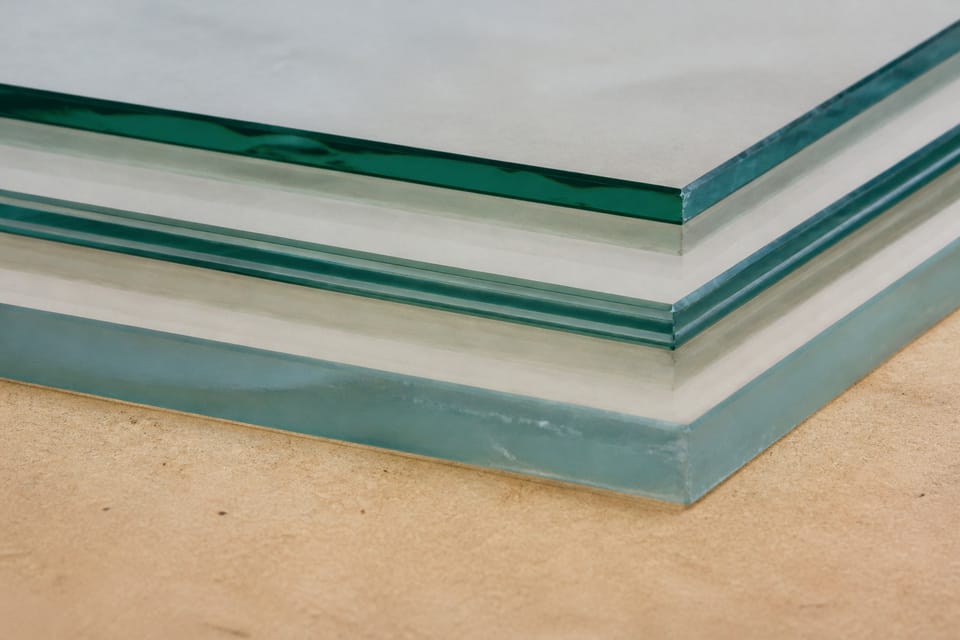
| Annealed (“normal”) glass | “Also known as ‘normal’ glass, which has not been subjected to toughening, lamination and heat strengthening” (IS 16231 Part 4, clause 4.1). Float glass is “flat, transparent, clear or tinted soda-lime silicate glass having parallel and polished surfaces obtained by casting and floatation on a metal bath” (clause 4.15). |
| Toughened (tempered) safety glass | “A single piece of specially heat treated glass, with a stress pattern such that the piece when fractured reduces to numerous granular fragments, with no large jagged edges” (IS 2553 Part 1, clause 3.20) |
| Laminated safety glass | “Two or more pieces of glass held together by an interleaving layer or layers of plastic sheet material”; it “will crack and break under sufficient impact, but the pieces of glass tend to adhere to the plastic and do not fly” (clause 3.15; the NBCS wording matches) |
| Heat-strengthened glass | Not safety glass: IS 16231 Part 4, clause 5.2.1, says heat-treated or heat-strengthened, coated and annealed glasses “are not classified as safety glasses unless laminated” to meet the tests |
IS 2553 Part 1 clause 4 names two safety glasses: toughened and laminated. IS 16231 Part 4 also says that organic coated films on glass, such as safety films on annealed glass, are not to be construed as safety glass. In practice, tinted, frosted and reflective describe the look, heat or privacy rather than how the glass breaks, so ask which break type each pane is.
Where do the codes ask for safety glass?
IS 16231 Part 4, clause 5.3.1 (and NBCS 7.1.3) says glazing within 1.5 m above the floor is considered likely to be subjected to human impact and shall meet the human-impact safety requirements. Safety glazing should also be used where infill glass could fall from overhead glazing, where there is a danger of falling due to a change in floor level, and in balustrades, stairs and floors. The clause lists critical locations: in and around doors and low windows, door side panels, panels that could be mistaken for a doorway or opening, panels at low levels in walls and partitions, bathrooms, buildings with special activities such as gymnasia and enclosed swimming pools, schools and child care facilities, and nursing homes and care facilities for the aged and infirm.
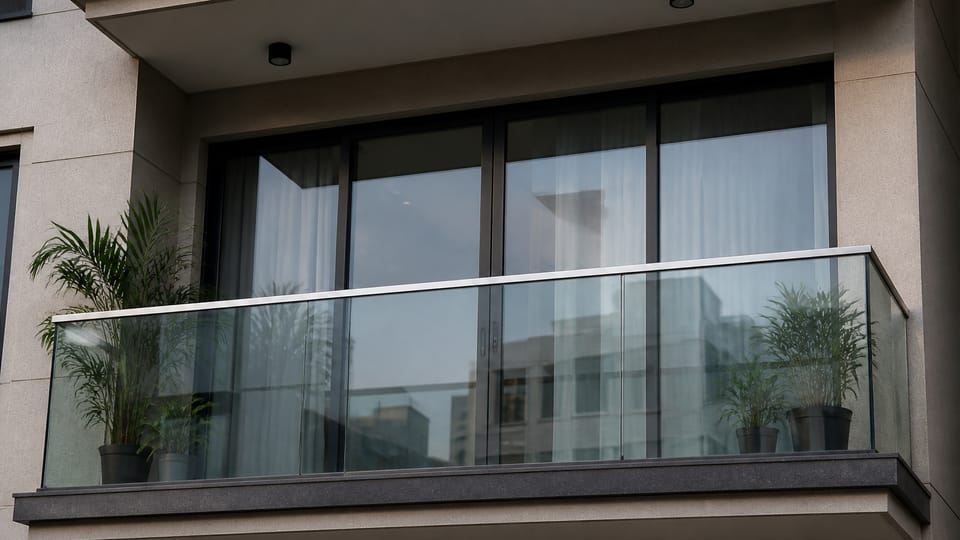
Table 1 sorts the cases by the height of the sill and the height of a possible fall: the table says “any glass” may be used where the sill or a guard such as a transom or chair rail protects it, with a note that safety glass is not mandatory there; safety glass is asked for in doors, side panels, bathroom doors, low windows and partitions; laminated float safety glass is preferred where a fall is possible; laminated safety glass is asked for in horizontal or sloped glazing such as skylights, stairs and floors, and where the glass acts as a balustrade or railing. The reading of which case applies to your window is the engineer’s call.
IS 16231 Part 4 clause 5.1 is careful about what it promises: it does not assume glass will never be broken under all human impact conditions, but that cutting injuries are minimised.
What about glass doors and railings?
- Glass doors: glass in a door, side panel or panel that could be mistaken for an opening, and not made apparent by bars, frames or large handles, “should be made apparent by some form of manifestation”, preferably permanent, for example etching (clause 5.4.1). For glass doors the code says the manifestation shall be an opaque band (clause 5.4.2). The band positions and the exemptions are in clauses 5.4.2 and 5.4.3; this page does not print them.
- Glass railings: NBCS Part C Section 8 says railing and overhead glazing “shall consist exclusively of laminated safety glass” (clause 2.77.1 note), and Annex J-5.1 recommends laminated safety glass for all glass railings and says “in the event of glass breakage, the glass panel shall remain in place without falling from its position”. J-1 says the basic requirement of a parapet, which a glass railing intends to substitute, shall be met. J-5.4.3.1 asks for a handrail on a free-standing glass railing over a level difference above the limit stated there, unless a laminated construction that remains in place if a panel fails is used. For glass size, support and loading, J-5.4.1 sends you to the standards and the manufacturer. IS 16231 Part 4 excludes frameless glazing systems (clause 1.2). The railing gap rule and height are not repeated here; for the parapet idea see parapet wall: purpose, the model bye-law height rule and coping.
How can I tell which glass I got, and can it be cut?
IS 2553 Part 1 clause 6.2.1 asks that each piece be marked indelibly with the word “Toughened” for toughened glass and “Laminated Safety” or “Toughened Laminated Safety” for laminated glass, with the source and year of manufacture; the Standard Mark “may” also be marked (clause 6.2.2). IS 16231 asks that safety glass come from certified manufacturers and carry the marking. The standards we read do not describe a test an owner can do at home, so look for the mark and ask for the type in writing.
Toughened glass “shall not be cut, sawed, drilled or edge worked after toughening” (IS 2553 Part 1, clause 5.2.8), and every glass to be toughened has its edges worked before toughening (clause 5.2.8.4). So the size, holes and notches must be final before the glass is made. For laminated glass, clause 5.3.9.2 says that after cutting, grinding the edge is not allowed; seaming or arrising is allowed if the interlayer does not touch the tool. An informative annex says nickel sulphide, an impurity rarely present in glass, may cause spontaneous breakage of toughened glass; heat soaking reduces the risk and is recommended where the stability of the structure and the safety of users may be at risk.
What do the standards not say?
- A thickness for a safety-glass window, door or railing: IS 16231 Part 4 clause 5.3.3(e) says it is determined case by case, considering wind, snow, dead and human loads, the dimensions, the aspect ratio and the fixing. Clause 5.3.3 also has a small-pane allowance with a minimum thickness, which this page does not print.
- A price, a brand, or whether toughened is better than laminated: they only say which is asked for in which case.
- A home test to tell the types apart: the standards we read do not describe one.
What should I ask the supplier? (practice)
This is practice, apart from the clauses named.
- Is each pane plain, toughened or laminated, and can I have that in writing?
- Is the safety glass marked with its type, and to which Indian Standard is it made?
- Are all holes and cut-outs made before toughening?
- For a railing: who designs it, with what glass type, fixing and handrail, in writing from the engineer or supplier?
- How are the edges protected, and who is responsible if a pane breaks in the warranty period?
What mistakes should I avoid? (practice)
- Plain float glass in a glass door or a low window.
- Cutting or drilling a toughened pane on site.
- Treating tinted or frosted glass as safety glass.
- Choosing a glass railing for looks with no written type and fixing.
- Leaving panel edges unprotected or chipped.
What can I check myself? (practice)
The mark on the corner of the glass, smooth edges with no chips, no scratches, a continuous gasket or beading, and no cracks starting at corners or holes. Do not try to remove or test a pane yourself.
Frequently asked questions
Which glass is safety glass?
Toughened and laminated, under IS 2553 Part 1. Heat-strengthened glass (unless laminated) and glass with a film on it are not.
Is toughened glass unbreakable?
No. IS 16231 says it breaks into numerous granular fragments, and that thick pieces can stay interlocked and fall as lumps. Rarely, it can break on its own.
Can toughened glass be cut after it is made?
No. The standard says it shall not be cut, sawed, drilled or edge worked after toughening.
Which glass for a balcony railing?
NBCS asks for laminated safety glass in railings. Your engineer or supplier decides the type and fixing.
Is a glass door without a marker safe?
IS 16231 asks for a manifestation on doors and panels that could be mistaken for an opening, and an opaque band on glass doors.
Related guides
- Parapet wall: purpose, the model bye-law height rule and coping
- Windows leaking in rain: frame, sill and drip, and where to start
- Staircase types for a house: straight, L, U, dog-legged and spiral
This guide is general information. Read the disclaimer. Your engineer or supplier decides the glass for your house.
Sources
- IS 2553 (Part 1):2018, Safety Glass, Specification, Part 1 Architectural, Building and General Uses (fourth revision): clauses 3.15, 3.20, 4, 5.2.8 (including 5.2.8.4), 5.3.9.2, 6.2.1, 6.2.2 and Annex C (page images read for 5.2.8, 5.3.9.2, 6.2 and Annex C; others text). BIS lists it as in force, valid to 2031-05-14. IS 2553 Part 2 is for road transport and is not used.
- IS 16231 (Part 4):2019, Use of Glass in Buildings, Code of Practice, Part 4 Safety Related to Human Impact (first revision): the foreword (safety films), clauses 1.2, 4.1, 4.15, 5.1, 5.2.1, 5.3.1, 5.3.3, 5.4 and 5.5 and Table 1 (page images read for 5.1, 5.2.1, 5.3.1, 5.3.3, 5.4 and Table 1; others text). BIS lists it as in force, valid to 2029-01-31. It lists IS 2553 (Part 1):1990, now withdrawn, as its reference.
- National Building Code of India, Second Revision (NBCS 2026, SP 7:2026), Part C Section 8, clauses 2.77.1 (note) and 7.1.3, and Annex J clauses J-1, J-5.1, J-5.4.1 and J-5.4.3.1 (page images read).
General information only. It is not a structural design or professional advice. Ask a licensed structural engineer or architect to check your plans and site.