
Short answer
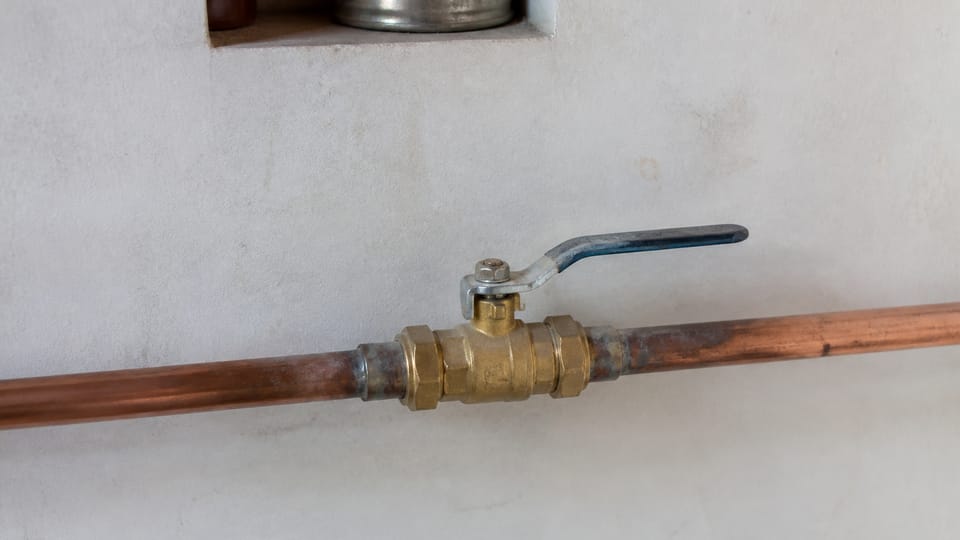
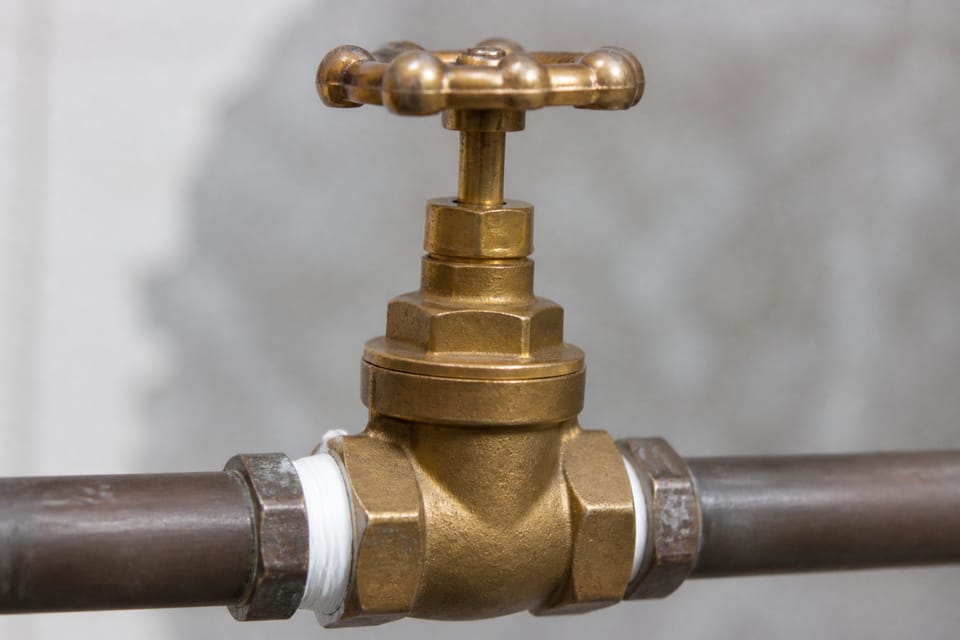
What is the difference between a ball valve and a gate valve? A gate valve closes with a wedge or disc that slides across the flow, turned by a stem; IS 778 defines it this way. A ball valve has a ball with a bore that turns, and IS 9890 covers ball valves only as cast iron and carbon steel general-purpose valves. In houses, 'ball valve' often means the tank float valve, so ask the seller what they mean.
On this page (9)
Two valves in the same plumbing shop can have very different jobs, and the names make it harder. A gate valve and a ball valve both shut off water, but they open and close in different ways. The word “ball valve” also means something else in a tank. This page explains each valve, what the Indian standards say, and what the standards do not say. It gives no price, no brand and no ranking.
What is a gate valve?
IS 778:1984 defines a gate valve this way: “a valve through which the flow of fluid is controlled by means of a gate in the form of a wedge or disc between the body ends which are in line with each other; the gate is actuated by a stem whose axis is at right angles to that of the body ends” (clause 2.1). In plain words, a wedge or disc slides across the pipe, and the stem turning it moves the gate in and out of the flow. IS 10446 gives the same idea in its glossary: “a valve which affords a straight-through flow and in which a sliding gate is moved in its own plane at right angles to the flow” (entry 2.252).
IS 778 covers copper alloy gate, globe and check valves of nominal sizes 8 to 100 mm for waterworks purposes, at a non-shock working pressure up to 1.6 MPa (clause 1.1). It is a waterworks standard, so it sets the valve body, not how a house should use it.
What is a ball valve?
A ball valve has a ball with a hole through it. A quarter turn of the lever or handle turns the hole into the line (open) or across it (shut). IS 9890:1981 covers ball valves, but only “cast iron and carbon steel ball valves for general purposes” of nominal sizes DN 10 to DN 600 (clause 1). That is a general-purpose scope. The standard does not cover the brass or plastic ball valves sold for household pipes, and it does not use the words “quarter turn” or “house”.
So no Indian standard read for this page sets the household ball valve. A seller’s claim that a valve “meets IS 9890” for a house tap line is not supported by the standard’s own scope.
What is the “ball valve” in a water tank?
This is the usual point of confusion. In IS 10446, the glossary entry for “float operated valve (ball valve)” describes a valve “for controlling the flow of water into a vessel, the valve being operated by the vertical movement of a float riding on the surface of the water” (entry 2.220). IS 2065 uses the same name for the tank valve. Clause 11.3 says a storage tank “shall be provided with a sound and suitable ball valve conforming to IS 1703” (IS 1703-1977 is the edition IS 2065 cites). IS 1703:2000, the current edition, calls the device a float valve and covers “float valves (horizontal plunger type) for water supply purposes” (clause 1.1). The same standard also uses “ball valve” for a part inside the float valve (clause 7.1), so the name appears in two senses.
So when a plumber says “ball valve” for the tank, they usually mean the float valve that stops the cistern filling. It is not a valve to shut off a pipe. If you need one of each, ask for a “float valve” for the tank and a “stop valve” or “gate valve” for the line, and give the size.
Which valve goes where, according to the standards?
| Valve | Name in the standard | Standard read | What the standard says about it |
|---|---|---|---|
| Gate valve | Gate valve | IS 778:1984 (waterworks, copper alloy) | A wedge or disc slides across the flow, moved by a stem (clause 2.1) |
| Screw-down stop valve | Screwdown stop valve, a globe valve in IS 778 | IS 778:1984 clause 2.2; IS 781:1984 clause 2.3 | Closed by a disc with a renewable washer, against the pressure (IS 781 clause 2.3) |
| Ball valve (shut-off) | Ball valve, cast iron or carbon steel | IS 9890:1981 | General-purpose scope only, DN 10 to DN 600 (clause 1) |
| Float valve in a tank | Float operated valve (ball valve) | IS 10446:1983 entry 2.220; IS 1703:2000 | Controls the flow of water into a vessel by a float (IS 10446 entry 2.220) |
The standards read for this page say very little about which valve suits which house job. The one clear rule is in IS 2065 clause 8.1.3:
- Where the service pipe is less than 50 mm in diameter, “the stop valves shall be of the screw-down type and shall have loose washer plates to act as non-return valves (see IS: 781-1977)”.
- “Other stop valves in the service line may be of the gate type (see IS: 778-1980).”
IS 781 covers screw-down bib taps and stop valves. It defines a screw-down stop valve as one “closed by means of disc carrying a renewable non-metallic washer which shuts against the water pressure on a seating at right angles to the axis of the threaded spindle” (clause 2.3). Clause 11.3 of IS 2065 asks for an IS 781 stop valve “as near the tank as practicable on every outlet pipe from a storage tank, excepting on the warning pipe”.
No standard read for this page says that a quarter-turn valve is better, or worse, for throttling, or that a gate valve suits one line and a ball valve another.
What is practice, not standard?
Practice is not in the standards, but a plumber will often give these points. Mark them as practice when you repeat them:
- Do not use a gate valve to control flow. A gate valve partly open can wear the gate and seat. This is practice; the taps and valves page gives the same practice point.
- Close a valve slowly on a long line. A quick shut can cause water hammer. The water hammer page explains the cause and the fixes.
- Turn a gate valve that has sat shut for years with care. A dry or scaled valve can seize. This is practice.
- Ask for the valve’s pressure and temperature rating. IS 778 gives a non-shock pressure of 1.6 MPa for its own scope; check the rating the maker gives for the valve you buy. Do not assume a rating.
What should I check when buying?
- The name on the body. IS 778 says the valve body should carry the manufacturer’s name or trade mark, the class number and the nominal size, cast in or stamped (clause 13.1).
- The BIS mark. IS 778 says the valve “may also be marked” with the BIS Standard Mark (clause 13.3). A missing mark is not, on its own, a breach of IS 778.
- The size. The valve’s nominal size should match the pipe. Check it against the bill of materials.
- What the seller means by “ball valve”. Ask whether it is a quarter-turn shut-off or a float valve for a tank.
Frequently asked questions
Is a ball valve better than a gate valve for water?
No standard read for this page ranks the two. Each does a different job, and the choice depends on the line and the rating the maker gives.
Can a ball valve shut off the water to a tap?
The standards do not forbid it. For a house tap or cistern, IS 781 defines the screw-down stop valve, and IS 2065 clause 8.1.3 names its use on a small service pipe. Ask your plumber which valve the line calls for.
Which valve do I need for the water tank?
The tank needs a float valve (IS 1703) and a stop valve on each outlet (IS 2065 clause 11.3, IS 781). The float valve is the one a seller may call a ball valve.
Does IS 9890 apply to the valves in my house?
Not by its own scope. IS 9890 covers cast iron and carbon steel ball valves for general purposes, DN 10 to DN 600 (clause 1).
Related guides
- Taps and valves in house plumbing: bib tap, pillar tap, angle valve, stop cock and gate valve
- Overhead water tank fittings: inlet, outlet, overflow, washout, vent and float valve
- Water hammer in house pipes: why pipes bang when a tap shuts
This guide is general information. Read the disclaimer. Your plumber and the maker’s instructions decide which valve your house needs and how it is installed.
Sources
- IS 778:1984, Copper Alloy Gate, Globe and Check Valves for Waterworks Purposes (fourth revision): clause 1.1 (scope), 2.1 (gate valve), 2.2 (globe valve or screwdown stop valve), 13.1 and 13.3 (marking; BIS mark optional). The 1984 text was read; IS 2065 cites the 1980 edition.
- IS 9890:1981, General Purpose Ball Valves: clause 1 (scope: cast iron and carbon steel, DN 10 to DN 600). Read in full; the standard has no clause on household or quarter-turn use.
- IS 781:1984, Cast Copper Alloy Screw Down Bib Taps and Stop Valves for Water Services (third revision): clause 1.1 (scope) and 2.3 (screw-down bib tap or stop valve). The text read is the 1984 edition; IS 2065 cites the 1977 edition.
- IS 10446:1983, Glossary of Terms Relating to Water Supply and Sanitation: entries 2.220 (float operated valve, ball valve), 2.252 (gate valve), 2.603 (stop-valve).
- IS 2065:1983, Code of Practice for Water Supply in Buildings (second revision): clause 8.1.3 (screw-down stop valves on a service pipe under 50 mm) and clause 11.3 (ball valve on a storage tank, IS 1703; stop valve on every tank outlet, IS 781).
- IS 1703:2000, Water Fittings: Copper Alloy Float Valves (Horizontal Plunger Type) (fourth revision): clause 1.1 (scope). The standard's own name for the device is float valve.
General information only. It is not a structural design or professional advice. Ask a licensed structural engineer or architect to check your plans and site.