
Short answer
Why does a bathroom drain or nahani trap smell, and what should I check? A smell comes up when the water seal in the trap is lost or the pipe is not sealed. IS 5329 defines the water seal as the barrier to air through the trap, and says the trap must keep its seal. It also asks for a vent that protects the seal and for cleaning access. Neither standard lists the causes of smell, so the checks below are practice, and a plumber should confirm the cause.
On this page (9)
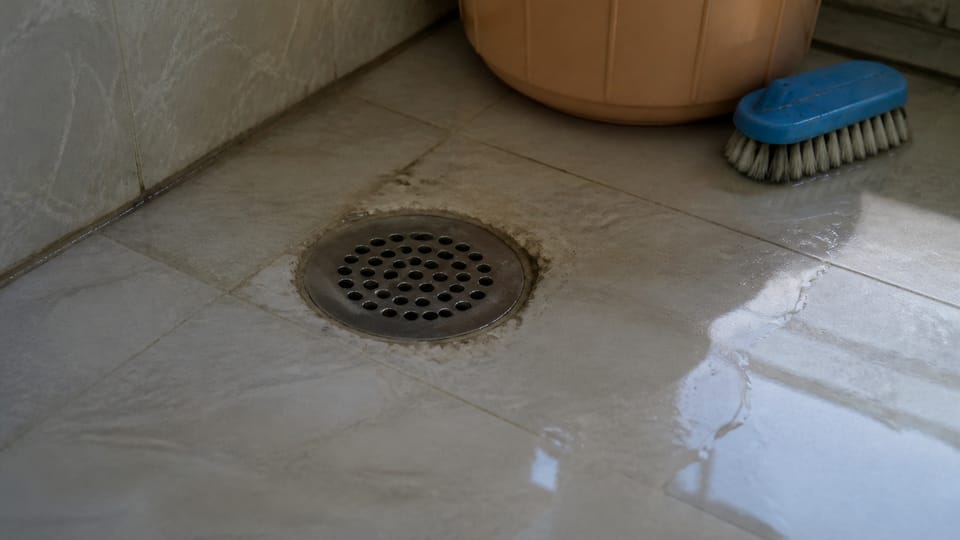
A smell from a bathroom floor drain, or from the nahani trap under a washbasin, is one of the most common complaints in a house. In practice, the usual cause is that the water in the trap has gone, or that air is moving through the pipe in a way the trap cannot resist. This guide explains what the Indian codes say about the water seal, the venting, the cleaning access and the joints, what they do not say about smell, and what to check. It names no product and gives no pipe size or trap depth.
What keeps the smell in the drain?
The trap holds water, and the water is the barrier. IS 5329 defines the water seal as “The water in a trap which acts as a barrier to the passage of air through the trap” (clause 2.24). If the seal is lost, air and smell from the drain can come up into the room.
The code names the ways a seal is lost. One is back pressure, “Air or waste water from pipes being forced up through traps” (clause 2.1). Another is induced siphonage, “extraction of water from a trap by siphonage set up by reduction of pressure at the outlet of the trap” (clause 2.14). In its design tests, the code requires that traps keep their seal under the discharge conditions “which may occur in practice” (clause 7.3.1).
How does venting protect the seal?
The vent protects the seal. IS 1742 says a ventilating pipe “protects trap seals from excessive pressure fluctuation” (clause 2.44). IS 5329 asks for the traps to be ventilated where needed to keep the seal, and it says that in one-pipe systems “all the traps of water closets, basin, etc, are completely ventilated to preserve water seal” (clause 2.20(b) as read).
Table 3 of IS 5329, which covers single stack systems, guards a wash basin waste against self-siphonage. Where the waste pipe is longer than a set maximum, it says “should be vented, or a larger diameter waste pipe or approved resealing trap should be used” (Table 3, row i). For bath and sink wastes it says self-siphonage is not important (row ii). In single stack design, flat gradients also reduce self-siphonage (clause 6.9.1(c)). The plumber chooses the arrangement. Ask for the vent and the layout to be shown on the drawing.
What about cleaning and blockage?
The trap must be cleanable. The code says traps “should always be of a self-cleansing pattern” (clause 6.5.2), and that they should be “conveniently accessible and provided with cleaning eyes, or other means of cleaning” (clause 6.5.3 of IS 5329). A cleaning eye is an access opening “to facilitate the clearing of obstructions and fitted with removable cover” (clause 2.8).
IS 1742 asks for the drain to be inspected and cleaned. It says that “Domestic drainage systems shall be inspected at regular intervals. The system shall be thoroughly cleaned out at the same time and any defects discovered shall be made good” (clause 9.1). The standard gives no interval, so set one with the plumber.
Can a defective joint let the smell out?
Yes, the standard requires joints to be tight. IS 5329 says the joints must be “airtight and watertight and to remain so during use” (clause 6.3.2.2). The standard does not say a leaking joint causes smell, but in practice a joint that is not airtight lets sewer air escape.
Drains also have to keep sewer air out of the building. The soil pipe end should give “a safe outlet for foul air” (IS 5329, clause 6.6.2), and the vent pipe end should give a safe outlet “with the least possible nuisance” (clause 6.8.1). IS 1742 says a drain connection goes through “a gully with sealed cover to guard against ingress of sewer gas, vermin or backflow” (clause 4.8.1).
What should I check?
This section is practice, not a code rule. Neither standard lists the causes of smell.
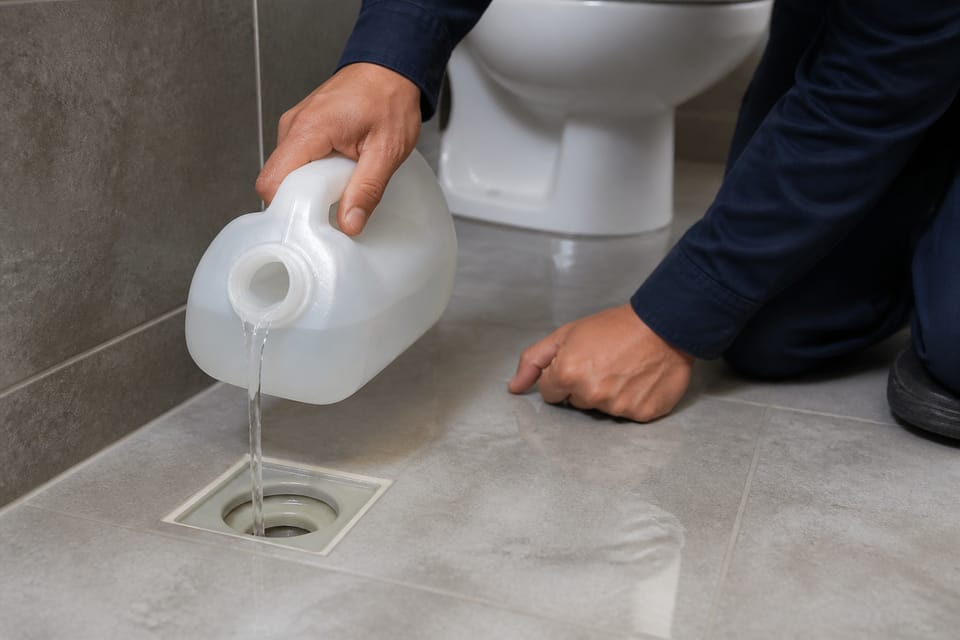
- The trap is full of water. Pour a bucket of water into the drain and watch it hold. If the trap is dry, the seal is gone.
- The fitting is not blocked by hair, soap or grit. Clear the grate and the trap.
- The vent or the layout gives the trap protection, as the plumber’s drawing shows.
- The cleaning access is present and its cover is sealed.
- The joints at the trap and the pipe are tight, and the floor drain is not cracked.
- The gully outside has a sealed cover, if the drain connects through one.
What mistakes should I avoid?
This section is practice.
- Leaving the trap dry because the room is rarely used.
- Pouring strong cleaners to cover the smell rather than finding the cause.
- Ignoring a smell that comes back after cleaning. It often means a fault in the vent or the joint.
- Opening a drain chamber inside the house. The standard says no manhole or inspection chamber is permitted inside a building (IS 1742 clause 4.9.8.1).
- Fitting a new trap without checking the vent.
Frequently asked questions
Does evaporation dry the trap?
Water in a seldom-used trap can evaporate, and the seal is lost. Neither standard discusses evaporation from a trap seal; IS 1742 mentions evaporation only in rainfall run-off design (clause 4.10.2). The check is practice: fill the trap with water, and see whether it holds.
How often should the drain be cleaned?
IS 1742 says drains shall be inspected at regular intervals and cleaned at the same time. The standard gives no interval. Ask the plumber for one that suits your house.
Is a smell always a blocked drain?
No. The smell can come from a dry trap, a broken vent, a loose joint or a blocked fitting. A plumber should confirm the cause.
Related guides
This guide is general information. Read the disclaimer. Your plumber confirms the cause and the fix for your drain.
Sources
General information only. It is not a structural design or professional advice. Ask a licensed structural engineer or architect to check your plans and site.