
Short answer
Why does a tap splutter or stop, and is it an air lock? An air lock is air trapped in a water pipe at a high point or a dip, where it blocks or slows the flow. The BIS handbook SP 35 says trapped air acts as a stoppage and that rodding will not remove it. Before blaming air, check the stop valve, the tank level, the strainer and the mains supply, since they cause the same symptoms.
On this page (10)
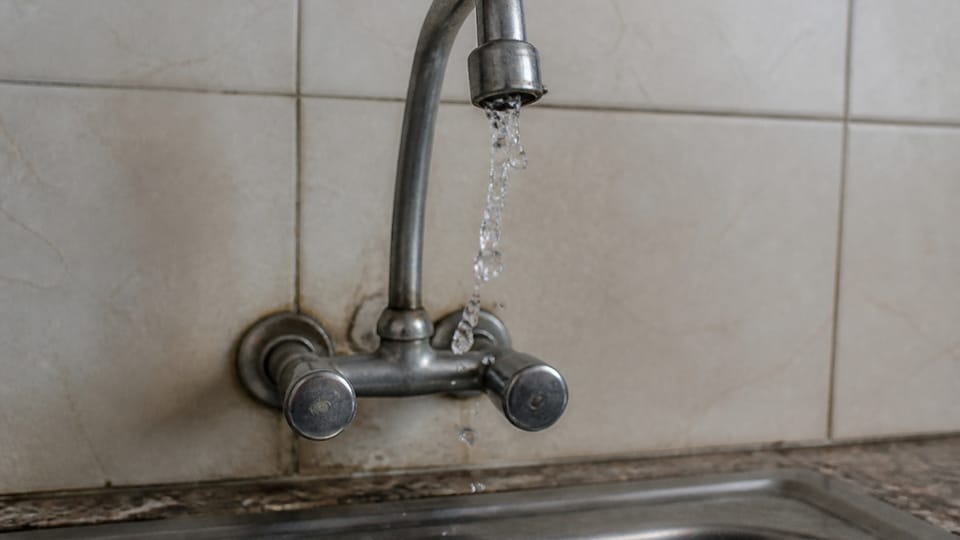
A tap that splutters, runs weakly, or stops after a few seconds can have many causes. One of them is air trapped in the pipe. This page explains what an air lock is, what the Indian codes say about air in house pipes, and what to check before you blame the air.
The page gives no pressure, pipe size, height or time. Those are for the plumber and the design.
What is an air lock?
An air lock is a pocket of air in a water pipe. It forms at a bend or hump in the run, where the air collects and does not move on with the water. The BIS handbook SP 35 describes the effect: trapped air may reduce or cut off the flow, by reducing the area open for the water. It adds that the air acts as a stoppage that rodding will not remove, and that it is not found when the pipe is opened for examination (clause 4.7).
| Point | What the source says (wording only) | Source and clause |
|---|---|---|
| What the air does | Reduces or cuts off flow; acts as a stoppage that rodding will not remove | SP 35, 4.7 |
| Where it gives trouble | Low pressure, and siphons | SP 35, 4.7 |
| Layout | Avoid air locks; draining taps at the lowest points; pipe rises from them to the outlets and high points | IS 2065, 8.1.7 |
| Design | Avoidance of air locks is one of the layout points the designer considers | IS 2065, 7.8 |
| New service line | Charge slowly, let the air escape, avoid shock and water hammer | IS 2065, 14.3 |
Source: SP 35:1987 and IS 2065:1983, as listed.
The handbook also says air locks are likely to give trouble in pipes under low pressure, because there is not enough force to push the air along (clause 4.7). A weak supply on an upper floor may be low on pressure for that reason, but the handbook does not say so directly.
What do the codes say about air in house pipes?
IS 2065 is the code for water supply in buildings. Three clauses matter for air in the pipe:
- Layout. Service pipes are to be designed so as to avoid air locks. There should be draining taps at the lowest points, and the piping should rise continuously from them to the draw-off taps, cisterns, or vents at the high points (clause 8.1.7).
- Design of the layout. The designer gives due attention to the avoidance of air locks, among other points (clause 7.8).
- Charging a new service line. When the service line is complete, it is charged slowly and carefully with water, allowing all the air to escape and avoiding shock or water hammer (clause 14.3).
The handbook also notes that a horizontal branch that is partly full and partly emptied moves air back and forth, so it needs vents that let air enter and leave (clause 4.17).
What does the handbook say about removing an air lock?
SP 35 gives no step-by-step method for clearing an air lock in a house tap. Its air-valve text is written for water-works and pumping mains, and it does not transfer to a house tap without a caveat. The steps in the next section are practice, not code.
How is an air lock cleared, in practice?
These are practice points. A plumber should check any step that involves the supply.
- Check that there is water in the tank. A tank that has run dry lets air into the pipes. Refill it before anything else.
- Open the lowest tap or the drain tap of the line. Water and air leave from the low point.
- Open the affected tap slightly, at the highest point or the furthest tap, so the water pushes the air out. Close it once the water runs steady.
- Do not force the pump or the tap. Forcing can damage the fittings, and a pump run on a starved line can overheat.
Is it really air?
Before you clear the air, rule out the causes that give the same symptoms:
- A stop valve that is only partly open. Open it fully.
- A blocked strainer or aerator at one outlet. If only one outlet is weak, check that outlet first.
- A low or empty tank, or a float valve that does not close or refill. The tank level and the float valve come before the pipe.
- Low supply from the mains. If the supply is weak only at certain hours, the cause is the supply.
- Old galvanised pipe that has scaled inside. The flow falls over months or years, and a plumber should look at it.
Inline image
What mistakes should I avoid?
These are practice points:
- Assuming the air lock is always the cause. A stop valve, a blocked strainer or the tank level gives the same symptoms.
- Leaving a high-point tap open too long. Water runs out and the tank can drain further.
- Forcing the tap or the pump. This can damage the fittings and the pump.
- Running the pipe with humps in it. SP 35 clause 4.7 says humps are a source of air locks, and IS 2065 asks the layout to avoid them.
Frequently asked questions
Will opening all the taps clear an air lock?
Not reliably. Opening every tap can drain a low tank and does not guarantee that the air moves. Clear the line at the low point and the affected tap, one at a time, and check the tank first.
Does an air release valve stop air locks in a house?
SP 35 clause 4.7 mentions an air release valve at the highest point where air is likely to collect. Its detailed air-valve text is written for water-works and pumping practice. For a house, the layout that IS 2065 describes, with draining taps and rising pipes, is the first defence. Ask the plumber whether a vent or valve is needed at a high point.
When should I call a plumber?
Call a plumber if the problem comes back, if the tank is full and the flow is still weak, or if the pipe is hot, noisy or leaking at a joint.
Related guides
- Low water pressure on the upper floor or in the shower: causes, fixes
- Overhead tank fittings: inlet, outlet, overflow, washout and vent
- Water hammer in house pipes: why pipes bang when a tap shuts
- Float valve not closing: why the tank overflows and how to fix it
This guide is general information. Read the disclaimer. Your plumber decides the cause and the fix for the water supply in your house.
Sources
- BIS SP 35:1987, Handbook on Water Supply and Drainage (with special emphasis on plumbing). Clause 4.7 (air and gas locks) and clause 4.17 read from the archive.org text.
- IS 2065:1983, Code of Practice for Water Supply in Buildings (second revision). Clauses 7.8, 8.1.7 and 14.3 read from the archive.org text. BIS record valid to 2027-02-28.
Change log
- : Added Related guides link to newly published article(s): float-valve-not-closing-why-the-tank-overflows-and-how-to-adjust-or-replace-it. No other text changed. Approved by the reviewing engineer.
General information only. It is not a structural design or professional advice. Ask a licensed structural engineer or architect to check your plans and site.