
Short answer
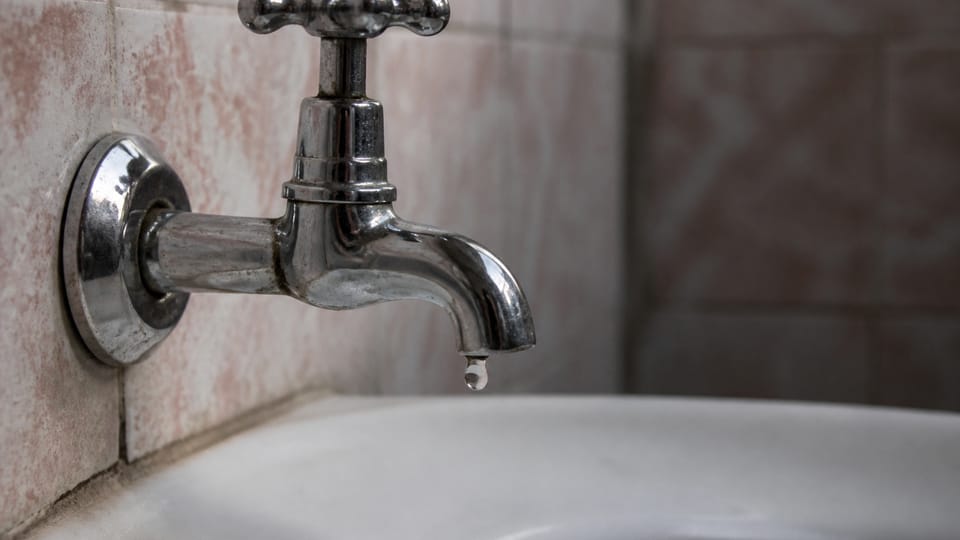
Why is my tap dripping? Where it leaks tells you the cause. A drip from the spout when the tap is shut is usually a worn washer or a damaged seat in a screw-down tap, or a worn cartridge in a ceramic-disc tap. Water at the handle when the tap is open is usually the gland packing or O-ring. A leak at the wall joint is a pipe-joint fault for a plumber.
On this page (8)
A dripping tap wastes water every minute of the day and night. Most drips come from a small part that is made to be replaced. This page says how to tell which part from where the water comes out, what an owner can safely do, and when to call a plumber. It gives no brand, price, torque or pressure figure. It is general information and not a repair manual for your tap.
Where does the water leak from?
The place and the moment of the leak tell you the part. The standards do not give a diagnosis table: the table below is practice, based on how a screw-down tap is built.
| Where and when | Likely cause (practice) | An owner can try | Call a plumber if |
|---|---|---|---|
| Drips from the spout when the tap is fully closed (screw-down tap) | Worn or hardened washer, or a pitted or scored seat | Shut the water off, replace the washer with a matching one, clean the seat gently | The seat is pitted, or the tap will not come apart without force |
| Drips from the spout when closed (ceramic-disc or quarter-turn tap) | Scratched or gritty discs in the cartridge, or scale | Shut the water off and replace the cartridge with a matching one | The drip continues with a new cartridge |
| Water around the handle or spindle when the tap is open | Worn gland packing or O-ring, or a loose bonnet | Shut the water off, repack or replace the O-ring, snug up the gland | The thread is stripped or the body is cracked |
| Leak at the base of a swivelling spout | Worn O-ring at the joint, or a cracked body | Replace the O-ring | The body is cracked: the tap is replaced |
| Leak where the tap meets the wall or pipe | A threaded joint or a concealed wall pipe | Shut the water off and watch for a damp patch | Always: the wall may need opening |
| Drips only with hot water | Hardened hot-side washer or seat, or heat expansion in the line | Let the water cool first, then check the hot-side parts | The drip persists, or it is tied to the geyser |
What do the standards say about these parts?
The standards do not describe causes of leaks, but they show which parts are meant to be renewed.
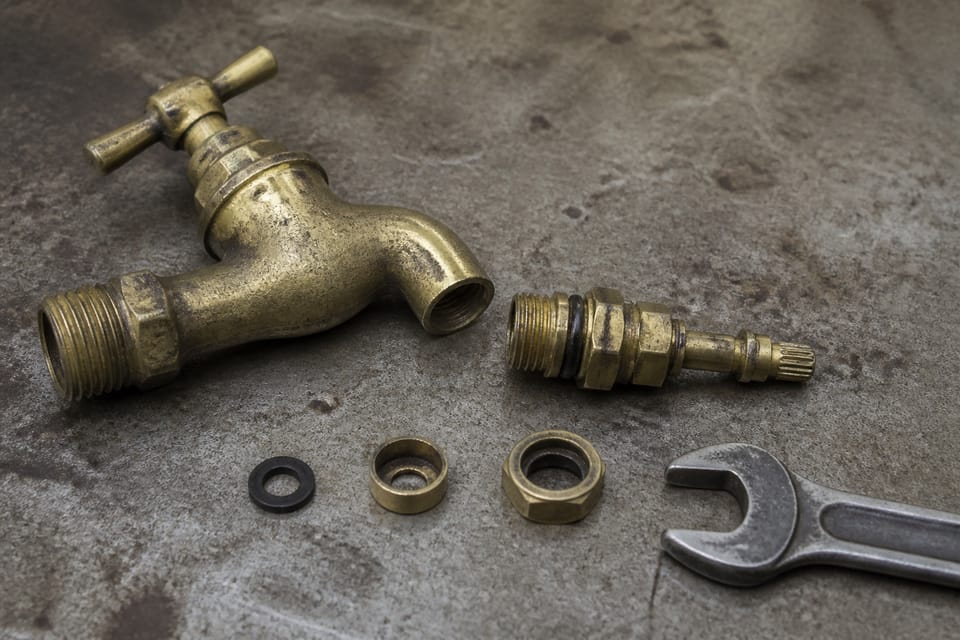
IS 781 defines a screw-down tap as one “closed by means of disc carrying a renewable non-metallic washer which shuts against the water pressure on a seating at right angles to the axis of the threaded spindle which operates it” (clause 2.3). Its seating is “solid with the body”, machined smooth, with the edges rounded off (6.4), so in an IS 781 tap the seat is not a separate part. The washer plate carries the washer on a threaded stud with a nut (6.8). The stuffing box is packed with gland packing suitable for cold and hot water, and there is enough room between the handle and the bonnet to repack the gland without removing the handle (6.9 and 6.11). The packing materials named in that clause include asbestos, hemp or jute, or an equally efficient material. Do not use asbestos packing for a repair today.
IS 8931:2021 covers the chrome-plated copper alloy taps common today: non-rising spindle taps, combination tap assemblies, stop valves and single lever mixers. In these the seat “may be integral with the body or may be separate renewable seat rings” (6.9.1), the bonnet joint may use a gasket or an O-ring (6.10), and where O-rings seal the gland, at least two are fitted and they must be capable of being renewed (6.11.2). The seat washer is synthetic rubber suitable for heat (7.1.3.4 and Table 1). IS 8931 names ceramic discs only inside its endurance test, and it does not define or specify ceramic cartridges. We found no separate Indian Standard for ceramic-disc or quarter-turn taps (a search of BIS titles, not exhaustive).
Both standards test the tap for leakage, but as product tests and not as an on-site limit. IS 781 clause 9.1 requires every tap to be tested under internal hydraulic pressure, during which it shall “neither leak nor sweat”. IS 8931 calls its tests “laboratory tests and not quality control tests” (clause 10.1): it tests water tightness (clause 10.2, Annex B) with the seat closed and with the tap open and the outlet closed, and repeats the leak check after an endurance test of opening and closing. These tests do not say how much a tap may drip in your bathroom. The standards themselves make the Standard Mark optional: IS 781 says taps “may also be marked” with it (clause 11.3), and IS 8931 says products “may be certified” and “may be marked with the Standard Mark” (clause 13.4). We did not check any separate order on compulsory certification.
NBCS 2026, in its plumbing part, says: “All taps and ball valves shall be watertight, glands shall be made good, washers shall be replaced … where required” (clause 4.18.5, in the guidelines for maintenance). So the code’s maintenance guidelines list washers and glands among the things to put right where required. For the pillar and bib taps in government work, CPWD 2019 calls for taps to conform to IS 1795 and IS 781, and for CP brass bib cocks, IS 8931. That is practice for government works.
What can I try myself, and how?
This is practice, not a standard. Keep it simple, and stop if a part will not move without force.
- Close the valve on that water line or the tank outlet, then open the tap to drain it. Plug the basin drain so that small parts do not fall in.
- For a hot-water tap, let the water cool first, and switch the water heater’s power off before you close its supply and drain it. Never leave a heater element on without water, do not touch wiring, and do not block a heater’s safety or relief outlet.
- Hold the tap body or the wall fitting steady (a second spanner or a cloth-padded grip) while you unscrew the bonnet, so that the pipe behind the wall is not twisted.
- Replace the washer with one of the same size, thickness and material. Take the old one to the shop.
- If the new washer does not stop the drip, the seat is probably pitted. A seat that is damaged needs a plumber.
- For a ceramic-disc tap, replace the whole cartridge with a matching one. Do not try to repair the discs.
- A thin smear of plumbers’ silicone grease on rubber O-rings (not oil or petroleum jelly, which can swell some rubbers) helps them seat without tearing.
- Tighten firmly, not hard. Then turn the water back on slowly and check.
- Keep a spare washer and O-ring set that matches your tap.
When should I replace the whole tap?
When the body is cracked, when the seat or threads are corroded, when the drip comes back after a new washer or cartridge, or when spare parts cannot be found. In practice, hard-water scale can roughen seats and jam cartridges, and rubber washers harden with age and heat, so a tap in a hard-water area may need attention more often. If a leak at the wall is not at the tap itself, see damp walls, and for how to check taps in a new house before the final payment, see snag list for a new house.
What mistakes should I avoid?
These are practice, not code rules.
- Not shutting the water off before taking the tap apart.
- Tightening the tap harder to stop the drip. It crushes the washer and scores the seat.
- Over-tightening the gland, so the spindle goes stiff.
- A washer of the wrong size or material.
- Replacing only the washer when the seat is pitted, so the drip returns.
- Winding tape on a leaking spout or handle. Tape does not stop a leak at a washer, gland or O-ring; it is only for tapered pipe-thread joints.
- Ignoring a damp patch behind the wall, which can be a leak in a concealed pipe.
- Opening a hot-water line before it has cooled.
- Mixing taps, spouts and valves from different series without checking the fit.
Frequently asked questions
Why does my tap drip when it is closed?
In a screw-down tap it is usually a worn washer or a damaged seat. In a ceramic-disc tap it is usually the cartridge.
Why does water leak from the handle when the tap is open?
Usually the gland packing or an O-ring has worn, or the bonnet has loosened.
Does a dripping tap waste much water?
It leaks all day and night, so the loss adds up, and a faster drip wastes more. Count the drips for a minute if you want to compare.
Is there an Indian Standard for taps?
Yes. IS 781 covers cast copper alloy screw-down bib taps and stop valves, IS 8931:2021 covers chrome-plated copper alloy taps and mixers, and IS 9763 covers plastic taps. They test the product, and they do not say how to repair one.
Can I fix a leaking tap myself?
Often yes, for a washer, O-ring or cartridge, with the water shut off. A damaged seat, a cracked body or a leak at the wall is for a plumber.
Related guides
- Damp walls: rising damp, seepage or condensation
- Snag list for a new house: what to check before final payment
- Plumbing work during house construction: stages and inspection
This guide is general information. Read the disclaimer. Your plumber decides the repair for your tap and your pipes.
Sources
- IS 781:1984, Cast Copper Alloy Screw Down Bib Taps and Stop Valves for Water Services (third revision): clauses 2.3, 6.4, 6.8, 6.9, 6.10, 6.11, 9.1 and 11 (text read). BIS lists it as in force, valid to 2031-02-27.
- IS 8931:2021, Copper Alloy Single Taps, Combination Tap Assemblies, Stop Valves and Single Lever Mixers for Water Services (second revision): clauses 6.9, 6.10, 6.11, 7.1.3, 10.1, 10.2, 13 and Annexes B and E (text read). BIS lists it as in force, valid to 2026-12-30 (checked on 2026-10-29, so confirm the current edition).
- SP 7:2026, National Building Construction Standards (NBCS) 2026, Part E Plumbing Services, Section 1 Water Supply, clauses 4.18.4 and 4.18.5 on maintenance (text read). From an unofficial archive.org copy.
- CPWD Specifications 2019 Vol 2 (Central Public Works Department), clauses 17.1.7, 18.3.2 and 18.23 on pillar taps, bib taps and CP brass bib cocks (text read; departmental practice, not an Indian Standard).
General information only. It is not a structural design or professional advice. Ask a licensed structural engineer or architect to check your plans and site.