
Short answer
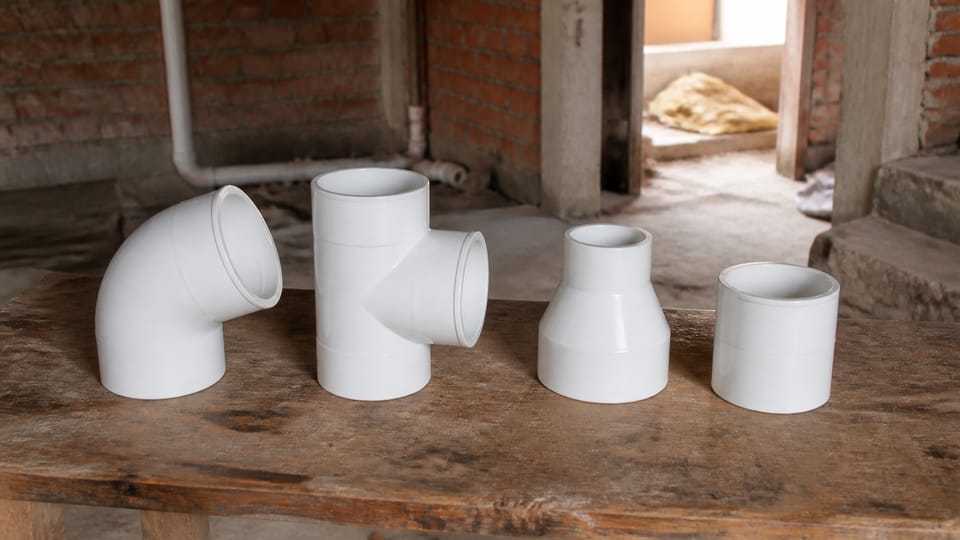
What fitting names does IS 14735 use for SWR pipe fittings? IS 14735:1999 lists the fitting types by their standard names: tee, wye, bend, reducer, coupler, socket plug, cleansing pipe, adaptor, vent cowl, pipe clip and waste trap with strainer. Door bend, Y and access plug are trade or shop names, not names in the standard. A fitting is sized by its socket diameter.
On this page (11)
- What fitting types does IS 14735 list?
- Which trade names are not in the standard?
- How are the fittings sized?
- What does the standard say about the less common fittings?
- What does a vent cowl do?
- What does a door or access fitting do?
- Inline image
- What mistakes should I avoid?
- Frequently asked questions
- Related guides
- Sources
A plumber or a shop may ask for a “door bend”, a “Y” or an “access plug”. These names are common on sellers’ lists. This page sets out the names that IS 14735:1999 uses for the fittings in the standard, which covers UPVC fittings for soil, waste, vent and rain water pipes. It also shows which common trade names are not in the standard, so you can ask for what you need in the standard’s words.
The standard does not explain the fittings or say where to fit them. It lists types, sets sizes and sets tests. Where a fitting goes in your house is for your plumber and your engineer to decide, and the rules for drainage layout are in other codes.
What fitting types does IS 14735 list?
Clause 3, “Types of fittings”, lists the types. Ten items are listed in the standard, in this order:
| Item | Name in IS 14735 | What the standard says about it |
|---|---|---|
| a | Tee and wye | A tee (87.5 degrees) or a wye (45 degrees), single, double (cross) or reducing, with or without inspection doors |
| b | Bend | With or without inspection doors, at 87.5, 45 or 22 degrees |
| c | Reducer | Named only; no definition |
| d | Coupler | Named only; no definition |
| e | Socket plug | Named only; no definition |
| f | Cleansing pipe | Named only; no definition |
| g | Adaptor | For connecting UPVC pipes to other materials |
| h | Vent cowl | Named in clause 3 and in clause 11.4 |
| j | Pipe clip | Named in clause 3 and in clause 11.5 |
| k | Waste trap with strainer | Written as “Nahani trap with jali” |
Source: IS 14735:1999, clause 3. The list runs a to h, then j and k. There is no item i.
Which trade names are not in the standard?
The standard has no definitions clause. It does not define the trade names below, so it cannot be used to confirm them.
| Name you may hear | What the standard uses instead | Note |
|---|---|---|
| Door bend | Bend, with or without inspection doors (clause 3(b)) | “Door” is a shop name for a bend with an inspection door. |
| Y | Wye (45 degrees) (clause 3(a)) | The standard’s name is wye. |
| Access plug | Access opening with threaded caps (clause 11.3). “Socket plug” (clause 3(e)) is listed but not described. | Not in the standard. |
| Cowl (on its own) | Vent cowl (clause 3(h), clause 11.4) | Say “vent cowl”. |
In practice, asking for a “bend with inspection door” or a “wye” is more likely to get the fitting you mean than the shop name alone. This is practice, not standard text.
How are the fittings sized?
Clause 4 says the size of a fitting is “designated by the diameters of their sockets”. The nominal inside diameter of the socket matches the nominal outside diameter of the pipe given in IS 13592. So a fitting is sized by the pipe it takes, not by a separate scale.
The standard gives the socket and dimension tables, but this page does not quote their values. The size list for SWR pipes is on the PVC pipe sizes page.
What does the standard say about the less common fittings?
Three clauses say a little more than the list does. Each sets a rule that is easy to read too far.
- Access opening (clause 11.3). “When so required, fittings shall be supplied with an access opening, with threaded caps.” The standard does not say that every fitting must have one; it applies “when so required”.
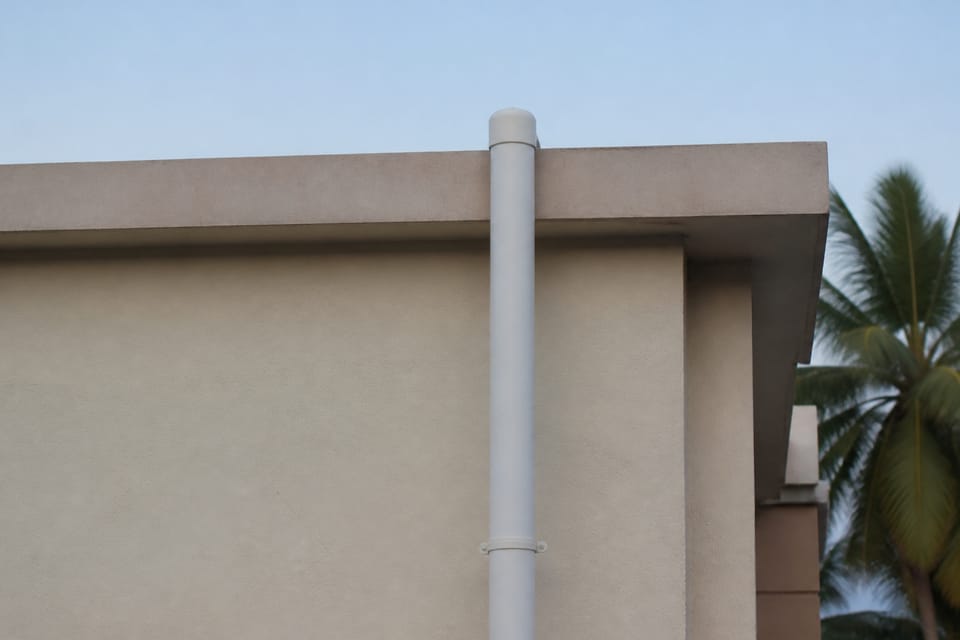
- Vent cowl (clause 11.4). “Vent cowls may be of suitable length with perforations/openings.” The standard does not say how high a vent cowl must sit or where it is fitted. That is a design question for your plumber and your engineer.
- Pipe clips (clause 11.5). “Pipe clips may be of GI/anti-corrosive material.” The standard does not expand GI.
The standard also has a waste trap dimension clause. It is clause 7.3, “Dimensions for Waste Trap (Nahani Trap)”. The values are not given on this page.
What does a vent cowl do?
This is catalogue practice, not standard text. A manufacturer’s product page says a vent cowl lets foul gases from the system escape and is fitted as a cap on top of the vertical line. One manufacturer’s catalogue says its cowl is made to IS 14735. The standard itself only names the vent cowl and allows it to have openings. Whether a particular cowl suits your roof is a question for your plumber.
What does a door or access fitting do?
This is also practice. Manufacturers and sellers describe a fitting with a door or an access cap as a way to reach a blocked horizontal run, so that the blockage can be cleared with a rod. The standard requires an access opening only “when so required” (clause 11.3). Where the access fitting goes on a run is a question for the plumber and the design of the drain.
Inline image
What mistakes should I avoid?
These are practice points, not rules in IS 14735:
- Asking by the shop name only. A shop may sell a “Y” that is a different shape from the “wye” in the standard. Ask for the type and the angle.
- Assuming a name means a standard fitting. Brand names on packs are not standard names. Ask the seller which clause of IS 14735 the fitting meets.
- Mixing standards at a joint. The pipe and the fitting should come from the same standard and the same material. The standard for the pipe is IS 13592, and the IS 14735 reference to the pipe standard is to the 1992 edition.
- Choosing a fitting by its look. A bend with an inspection door is useful only where someone can reach the door. Check the layout before you buy.
Frequently asked questions
What is a door bend in SWR pipe?
IS 14735 does not use the term. The standard lists a bend “with or without inspection doors” at 87.5, 45 or 22 degrees (clause 3(b)). A door bend is a bend of that kind with an inspection door.
What is the difference between an 87.5 bend and a 90 bend?
IS 14735 lists bends at 87.5, 45 and 22 degrees (clause 3(b)). It does not list a 90 degree bend. If a seller offers a 90 degree bend, ask which of the standard’s angles it is closest to, and whether the seller’s documents say it meets IS 14735.
What is a Y fitting in SWR?
The standard calls it a wye (45 degrees) (clause 3(a)). It may be single, double (cross) or reducing, with or without inspection doors.
What does a reducer do?
The standard lists a reducer (clause 3(c)) but does not define it. In general use (practice), the name describes a fitting that joins two pipe sizes. The sizes at each end are set by the socket and pipe sizes in the standard, not by this page.
Related guides
- PVC pipe sizes in mm and inches
- Types of pipes in a house: water, drainage, rainwater and gas
- Vent pipe and anti-siphonage pipe: what each does and how a trap loses its seal
This guide is general information. Read the disclaimer. Your plumber and your engineer decide which fittings your drainage needs.
Sources
General information only. It is not a structural design or professional advice. Ask a licensed structural engineer or architect to check your plans and site.