
Short answer
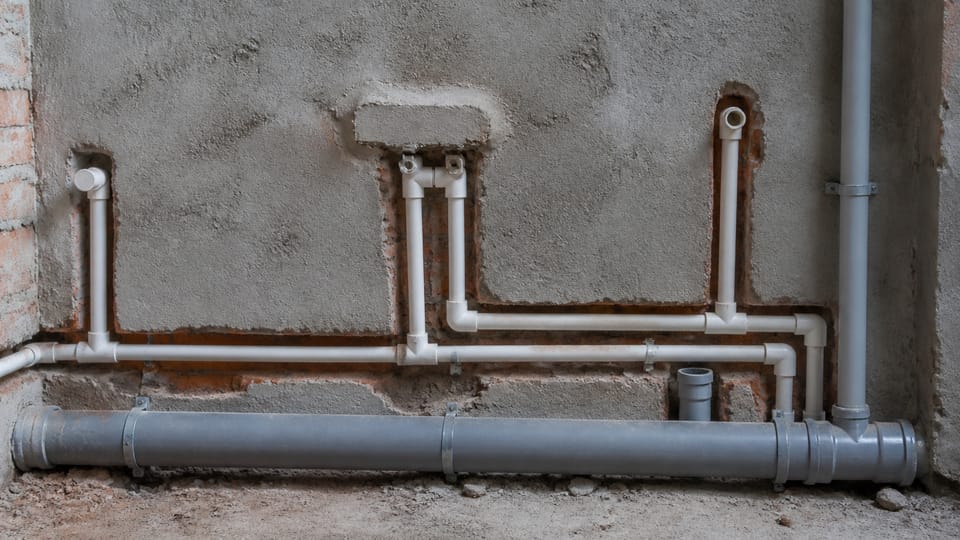
What types of pipes are used in a house? There is no fixed count. It is easier to sort pipes by job: water supply (cold and hot), soil and waste, underground drains, rainwater, and gas. Each job has its own pipe materials and its own Indian Standard. Plastic pipes such as UPVC, CPVC and PPR, steel, copper, stoneware and cast iron all appear. Which pipe goes where is the plumber's and engineer's choice.
On this page (11)
- How many types of pipes are there?
- What pipes carry water into the house?
- What pipes carry waste and soil inside the house?
- What pipes are used for underground drains?
- What pipes carry rainwater?
- What pipes carry gas?
- How do I know what a pipe is?
- What mistakes should I avoid?
- Frequently asked questions
- Related guides
- Sources
A house has several separate pipe systems. They carry different things at different pressures, and mixing them up causes leaks, smells and contamination. This page is a short map: the pipe systems, what each is made of, the Indian Standard behind each material, and where to read more. It gives no prices, no sizes and no “best pipe”. For sizes, see PVC pipe sizes in mm and inches.
How many types of pipes are there?
There is no fixed number. Lists online give five, eleven or thirteen types because they mix materials with jobs. Sort by job instead:
| System | What it carries | Pipe materials in the standards | Read more |
|---|---|---|---|
| Water supply, cold and hot | Drinking and washing water under pressure | Steel, copper, UPVC, CPVC, PPR, polyethylene (PE and HDPE) and others | CPVC vs UPVC, HDPE |
| Soil, waste and vent | Toilet and washing waste inside the house | UPVC (SWR), cast iron | House drainage system |
| Underground drains and sewer | Waste water leaving the house | Stoneware, concrete, UPVC, cast iron | Pipes for the sewer line |
| Rainwater | Roof water | Cast iron, PVC, galvanized sheet and others | Rainwater harvesting |
| Gas | Cooking gas | Steel, copper and others, fitted by a qualified agency | See the gas section below |
What pipes carry water into the house?
NBCS 2026 (Part E, Section 1, clause 4.6.2) lists the materials that water pipes may be made of: cast iron, steel, ductile iron, concrete, galvanized mild steel, copper, brass, wrought iron, stainless steel, polyethylene, HDPE, unplasticized PVC, chlorinated PVC, PPR, composite pipes, cross-linked polyethylene and polybutylene. This is a list of permitted materials, not a ranking. The code adds that the material must resist corrosion inside and out, or be suitably protected.
In a house, the common ones each have their own standard:
- UPVC pressure pipe (IS 4985): a standard for plain and socket-ended pipes for “potable water supplies”.
- CPVC (IS 15778): a standard for pipes for “hot and cold water distribution supplies”.
- PPR (IS 15801): a standard for pipes for hot and cold water, including “wall concealed” pipelines, with the note “properly UV stabilized”.
- Polyethylene, including HDPE (IS 4984): a standard for pipes for water for human consumption and for general purpose water. It is not a hot-water standard.
- Steel tube (IS 1239 Part 1): a general steel tube standard for “water, non-hazardous gas, air and steam”.
On heat, NBCS 4.6.2.2 says polyethylene and unplasticized PVC pipes “shall not be installed near hot water pipes or near any other heat sources”. Read CPVC vs UPVC before choosing a pipe for a geyser line, and the HDPE guide for service lines.
What pipes carry waste and soil inside the house?
Soil pipes carry toilet waste, and waste pipes carry water from basins, sinks and baths. Vent pipes let air in so the traps keep their water seal. Two standards cover the common materials:
- UPVC (IS 13592): pipes for “soil and waste discharge system inside and outside buildings including ventilation, rain water and rain water harvesting applications”. This is a drainage pipe, not a water supply pipe.
- Cast iron (IS 1729): pipes, fittings and accessories for “above ground and … non-pressure applications”. The spun cast iron standard IS 3989 also exists; we did not read its text.
For how soil, waste and vent pipes are laid out and trapped, see the house drainage guide and the kitchen sink drain guide.
What pipes are used for underground drains?
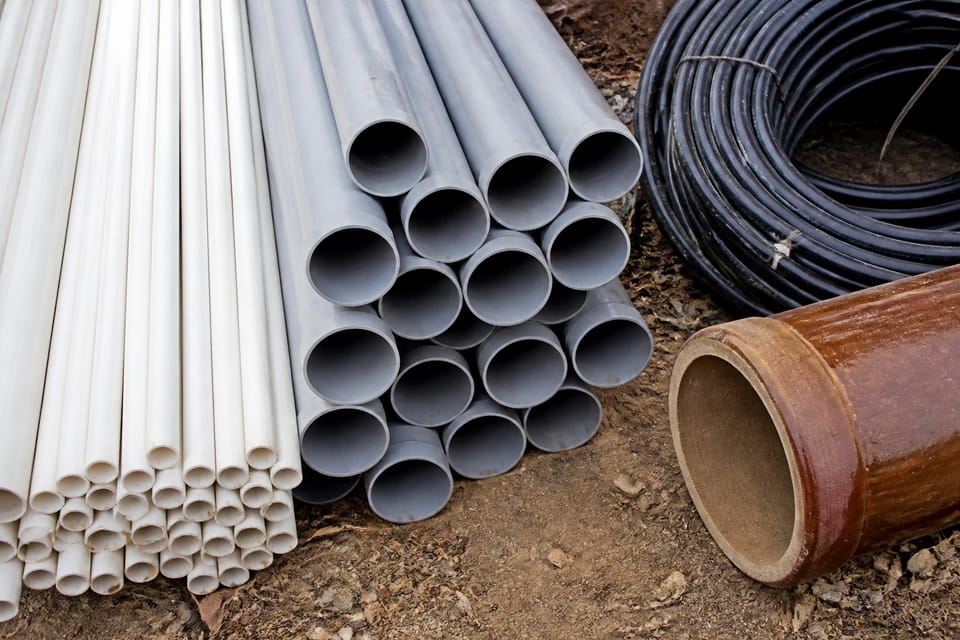
NBCS 2026 (Part E, Section 2, clause 4.3.2) describes the choice for sewers and drains. Glazed stoneware (IS 651) “shall be used as far as possible in preference to other types of pipes” for sewers and drains in all soils, except where support is needed, as in made-up ground. Concrete pipes are an alternative to stoneware sewers when properly ventilated, but not for acid effluents or conditions that produce hydrogen sulphide; NBCS also gives a size condition. Cast iron “shall be used” in unstable or made-up ground, under buildings, in basements, where pipes are exposed or above ground, and at watercourse crossings. UPVC “may be used for drainage purposes”, with a wall-thickness condition where hot water discharge is expected. We leave the numbers out. The sewer-line guide compares the options.
What pipes carry rainwater?
NBCS says rainwater pipes “shall be constructed of cast iron, PVC, asbestos cement, galvanized sheet or other equally suitable material and shall be securely fixed”. IS 13592 includes rainwater applications for PVC-U pipes. IS 2527 is the code for fixing gutters and downpipes.
Rainwater must stay separate. NBCS says a rainwater pipe “shall not discharge into or connect with any soil pipe or its vent pipe or any waste pipe or its vent pipe”, and that soil pipes shall not be connected with any rainwater pipe. A rainwater pipe may discharge into a sewer only where the local Authority permits it. For collecting and storing roof water, see rainwater harvesting.
What pipes carry gas?
Gas piping is not a do-it-yourself job. NBCS 2026 (Part E, Section 4, Gas Supply, clause 8.1) says “installation, repair and replacement of gas piping or appliances shall be performed only by a qualified installing agency”. It lists wrought iron, steel, copper, stainless steel or cast iron as materials for gas piping, with conditions. For piped natural gas (PNG), NBCS says the network must comply with the Petroleum and Natural Gas Regulatory Board’s regulations, and that a housing society should contact the local city gas distributor at the design stage. For a housing society’s PNG network, NBCS (clause 12.2) describes mainly polyethylene underground, mainly galvanized iron in the above-ground riser, and copper pipe and brass fittings inside the kitchen. A stand-alone house’s connection is set by the gas distributor.
We could not open the Regulatory Board’s own text, so this page quotes NBCS only. Ask your gas supplier for the pipe it uses and who installs it. As practice, never use a water pipe for gas.
How do I know what a pipe is?
Read the printed marking on the pipe, which should show the standard number and the use. For plastic water and drain pipes, colour is not a reliable guide, as the CPVC vs UPVC guide explains. Gas pipes are a case where colour is regulated: NBCS (clause 8.3) says gas piping is of the colour stipulated by the explosives authority, painted silver grey with a red band, and canary yellow for a natural gas pipeline. This is about the exposed painted piping, not a concealed kitchen pipe.
What mistakes should I avoid?
These are practice, not code rules, unless a standard is named.
- Treating a pipe list as a menu. Each pipe is made to a standard for a job.
- Using a drainage (SWR) pipe for water supply, or the reverse.
- Putting UPVC or polyethylene near hot pipes or heat sources (NBCS 4.6.2.2).
- Choosing a pipe by colour and not by its printed marking.
- Connecting a rainwater pipe to the soil or waste system.
- Letting an unqualified person fit gas pipe.
- Hiding pipes in walls before they are tested. See plumbing work during construction.
Frequently asked questions
Which pipe is used for hot water?
The standards for CPVC (IS 15778) and PPR (IS 15801) name hot and cold water. See CPVC vs UPVC for why UPVC is not used on hot lines.
Which pipe is used for drainage?
Inside the house, UPVC SWR pipe (IS 13592) and cast iron (IS 1729) are common. For underground sewers, NBCS prefers glazed stoneware, with concrete, cast iron and UPVC as other choices.
Can I use one type of pipe everywhere?
No. Water supply, drainage, rainwater and gas pipes are made to different standards for different jobs.
Which pipe is best?
The standards do not rank pipes. They say what each pipe is made for. Your engineer and plumber choose.
Are GI pipes still allowed?
NBCS 2026 lists galvanized mild steel tubes among the materials for water pipes. IS 1239 covers steel tube for water, non-hazardous gas, air and steam.
Related guides
- CPVC vs UPVC pipes: which one to use for home plumbing
- House drainage system explained: soil, waste and rainwater pipes
- PVC pipe sizes in mm and inches: what the numbers mean
- SWR pipe fittings: the names IS 14735 gives each fitting
- Composite PE-AL-PE pipe: what IS 15450 covers and what it leaves out
- Plumbing materials list for a house: pipes, valves, traps, IS marks
- Is UPVC pipe safe for drinking water? What IS 4985 requires
This guide is general information. Read the disclaimer. Your plumber and engineer decide the pipes for your house, and a qualified agency fits gas piping.
Sources
- SP 7:2026, National Building Construction Standards (NBCS) 2026, Part E Plumbing Services: Section 1 Water Supply clause 4.6.2; Section 2 Drainage and Sanitation clauses 4.3.2, 4.5.3.2.2 and 4.5.11.6; Section 4 Gas Supply clauses 8.1, 8.2.1 and 12. Read from an unofficial archive.org copy of the text.
- IS 4985:2021, Unplasticized PVC Pipes for Water Supplies (scope). The 2000 edition is withdrawn.
- IS 15778:2007, CPVC Pipes for Potable Hot and Cold Water Distribution Supplies (title and scope).
- IS 15801:2008, Polypropylene-Random Copolymer Pipes for Hot and Cold Water Supplies (scope).
- IS 4984:2016, Polyethylene Pipes for Water Supply (scope).
- IS 1239 (Part 1):2004, Steel Tubes, Tubulars and Other Wrought Steel Fittings: Steel Tubes (scope).
- IS 13592:2013, PVC-U Pipes for Soil and Waste Discharge Systems Inside and Outside Buildings Including Ventilation and Rain Water System (scope).
- IS 1729:2023, Sand Cast Iron Spigot and Socket Pipes, Fittings and Accessories (scope: above ground, non-pressure).
- IS 651:2007, Glazed Stoneware Pipes and Fittings (title).
- IS 2527:1984, Code of practice for fixing rainwater gutters and downpipes for roof drainage (title only; the text was not read). IS 3989:2024 (spun cast iron pipes) is named by number only.
Change log
- : Added Related guides link to newly published article(s): plumbing-materials-list-for-a-house-pipes-fittings-valves-traps-and-the-is-mark, is-upvc-pipe-safe-for-drinking-water-what-is-4985-and-is-15778-require. No other text changed. Approved by the reviewing engineer.
- : Added Related guides link to newly published article(s): swr-pipe-fittings-names-what-is-14735-lists, composite-pe-al-pe-pipe-what-is-15450-covers-and-what-it-leaves-out. No other text changed. Approved by the reviewing engineer (owner report, 2026-10-31).
General information only. It is not a structural design or professional advice. Ask a licensed structural engineer or architect to check your plans and site.