
Short answer
What is an anti-siphonage pipe and what does it do? A trap holds a water seal that stops sewer air coming into the house. Pressure changes in the pipes can pull that seal out. A vent pipe lets air in or out so the seal stays. IS 1742 uses the term anti-siphonage pipe, but neither IS 5329 nor IS 1742 defines it. Ask your plumber which vent your drain needs.
On this page (10)
Sewer smell in a bathroom or kitchen usually means a trap has lost its water. The word for the protection against this is the vent. In practice, plumbers also use the words anti-siphonage pipe. This page explains what each does, how a trap loses its seal, and what the Indian standards say. It gives no pipe sizes, no heights, no distances and no seal depths. Those need the engineer and the full standard.
What is a trap and its water seal?
A trap is a fitting that holds water. IS 5329 defines it as a fitting “so designed and constructed as to provide, when properly vented, a liquid seal which will prevent the back passage of air” (cl 2.23). The water in the trap is the water seal. The standard calls it “the barrier to the passage of air through the trap” (cl 2.24). A trap with its seal in place stops the sewer air from coming up into the room.
How does a trap lose its seal?
IS 5329 names three ways the water can be pulled or pushed out of a trap.
- Back pressure. The standard calls it “air or waste water from pipes being forced up through traps” (cl 2.1).
- Induced siphonage. This is “the extraction of water from a trap by siphonage set up by reduction of pressure at the outlet of the trap” (cl 2.14). In practice, a flush elsewhere on the same pipe can cause it.
- Self siphonage. This is “the extraction of water from a trap by siphonage setup by the momentum of the discharge from the sanitary appliance to which the trap is attached” (cl 2.21). In practice, a fast discharge can pull its own trap dry.
| What moves the water | The term in IS 5329 | What protects the seal |
|---|---|---|
| Air pressure forces water up the trap | Back pressure (cl 2.1) | A branch ventilating pipe (cl 2.2) |
| A flush elsewhere on the same pipe draws the water out | Induced siphonage (cl 2.14) | A branch ventilating pipe (cl 2.2) |
| The discharge from the appliance pulls its own seal | Self siphonage (cl 2.21) | Ventilation “whenever such ventilation is necessary to preserve the seal of the trap” (cl 6.7.1) |
What is a vent pipe?
A vent pipe lets air move through the drain so the pressure stays steady. IS 1742 says a ventilating pipe is “a pipe in a sanitary pipework system which facilitates the circulation of air within the system and protects trap seals from excessive pressure fluctuation” (cl 2.44).
IS 5329 defines a branch ventilating pipe. It is “fitted to prevent loss of water seal from a trap owing to partial vacuum back pressure, or surging caused by air movement within the pipe system. It also provides ventilation for the branch waste pipe” (cl 2.2).
What is an anti-siphonage pipe?
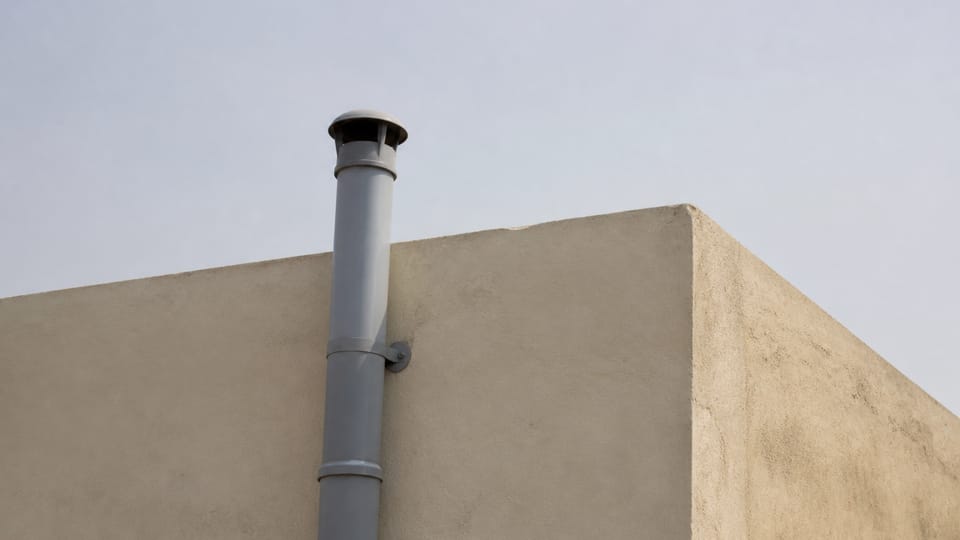
IS 1742 uses the term “anti-siphonage pipes” in clause 4.8.2, where it says vertical soil, waste, ventilating and anti-siphonage pipes are covered on top with a wire dome or terminal guard. Neither IS 5329 nor IS 1742 defines the term. So this page does not give a standard definition of an anti-siphonage pipe.
In practice, the term is used for a pipe that protects a trap from pressure swings, in the same family as the vent. Ask your plumber what the drain needs, and whether the pipe is a separate vent or a branch of the vent.
Where does the vent go?
IS 5329 says ventilating pipes should be installed so that water cannot be retained in them, and “They should be fixed vertically” (cl 6.8.1). It adds that horizontal runs should be avoided where it is possible to do so.
For a branch vent on a waste pipe, clause 6.8.3 says it should be connected to the top of the branch pipe at a distance from the trap crown within a range the clause sets. The distance is in the standard. It is not reproduced here, so read clause 6.8.3 in the printed copy.
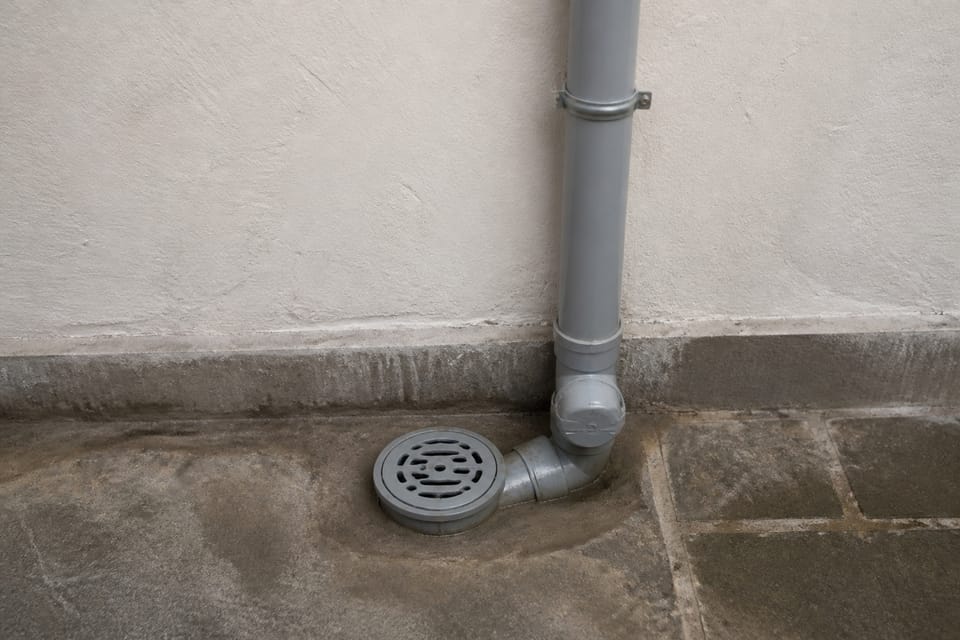
Clause 6.7.1 says that traps under a bath, wash basin or sink should be ventilated to the outside air “whenever such ventilation is necessary to preserve the seal of the trap”. That is the standard’s test: a vent is needed where the seal could be lost.
What is practice, not a standard?
These points are practice from common experience, not standard clauses.
- Gurgling in a basin or sink, and a sewer smell in the room, are common signs that a trap seal is being lost. Have a plumber check the vent when you hear them.
- A trap that is rarely used can dry out through evaporation. Run the tap now and then.
- A blocked vent can push sewer air back through the weakest seal.
What mistakes should I avoid?
These are practice points, not standard clauses.
- Blocking the vent top. IS 1742 clause 4.8.2 says vertical ventilating pipes are covered on top with a copper or heavily galvanised iron wire dome or cast iron terminal guard. In practice, the dome keeps birds and leaves out, so do not seal the open top.
- Running the vent horizontally. IS 5329 says to avoid horizontal runs where possible, and to fix vents vertically.
- Letting water collect in the vent. IS 5329 says ventilating pipes should be installed so that water cannot be retained in them.
- Assuming a trap needs no vent because it looks sealed. The seal can still be pulled out by pressure changes.
Frequently asked questions
Is an anti-siphonage pipe the same as a vent pipe?
Neither standard defines the term. In practice the two are close, and both protect the trap seal. Ask your plumber whether your drain has a separate pipe or a branch vent.
Do I need a vent for every sink?
IS 5329 says traps are ventilated where the ventilation is necessary to preserve the seal (cl 6.7.1). It does not list every sink. Ask your plumber.
Why does my basin gurgle?
Gurgling is practice-level evidence of a pressure problem. Have the vent and the trap checked.
Related guides
- House drainage system explained
- Bathroom drain smell: nahani trap causes and fixes
- P-trap vs S-trap vs Q-trap vs bottle trap: which goes where
- SWR pipe fittings: the names IS 14735 gives each fitting
This guide is general information. Read the disclaimer. A licensed plumber decides the vent and trap for your house.
Sources
- IS 5329:1983, Code of Practice for Sanitary Pipe Work Above Ground for Buildings, cl 2.1, 2.2, 2.14, 2.21, 2.23, 2.24, 6.7.1, 6.8.1 and 6.8.3 (distance not reproduced).
- IS 1742:1983, Code of Practice for Building Drainage (second revision), cl 2.44, 4.7.5 and 4.8.2 (uses the term anti-siphonage pipes without defining it).
Change log
- : Added Related guides link to newly published article(s): swr-pipe-fittings-names-what-is-14735-lists. No other text changed. Approved by the reviewing engineer (owner report, 2026-10-31).
General information only. It is not a structural design or professional advice. Ask a licensed structural engineer or architect to check your plans and site.