
Short answer
How do I stop water pipes freezing in a hill house? IS 6295 covers water supply and sanitation in high-altitude and sub-zero regions. It sets no pipe depth or insulation thickness for a house. It asks for pipes below the frost line, which is generally 0.9 to 1.2 m below ground in northern India where freezing occurs, insulation at exposed points and drain-down facilities where freezing is likely. Ask your plumber for the details.
On this page (9)
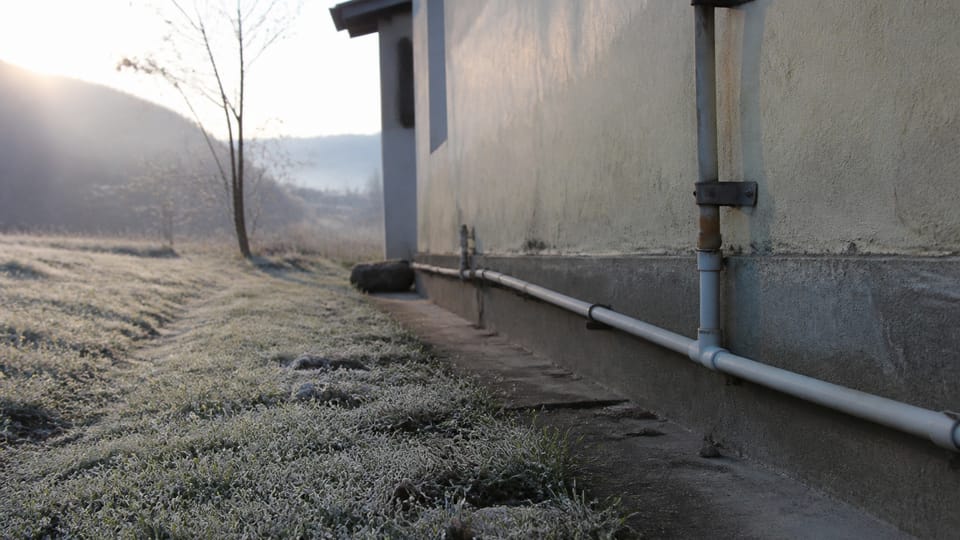
Water pipes freeze in a hill house in the coldest weeks, usually where a pipe runs outside the house or in a room that is not heated. A frozen pipe can split and flood. The Indian codes that deal with this are IS 6295 and the water supply section of the National Building Construction Standards 2026 (NBCS 2026). This page says what each one asks, what neither gives for a house, and what to ask your plumber. It gives no price and no brand.
What does IS 6295 cover?
IS 6295 is the code of practice for water supply and drainage in high-altitude and sub-zero temperature regions. Its scope (clause 1.1) is planning and designing “water supply and sanitation system peculiar to high altitudes and/or sub-zero temperature regions”. It deals mainly with community systems: sources, pumping, treatment, mains, sewers and septic tanks.
Clause 1.2 says that the normal requirements for buildings in the plains are dealt with in IS 2065 and IS 1742. So the house plumbing rules for a hill house sit partly in those plains codes, and the cold-climate points in IS 6295 are added to them.
What does the frost line mean?
The frost line is the depth below ground to which the soil moisture freezes. IS 6295 gives the only depth figure in either code. Its note to clause 4.4 says: “the level of frost line is generally found to be between 0.9 and 1.2 m below ground level in the northern regions of India, wherever freezing occurs.” NBCS 2026 prints the same figure in its note to clause 4.17.4.
The figure is a frost-line statement for northern India, not a burial depth for a house pipe. The codes ask for the pipe to be below the frost line, and they do not give a pipe depth for a house.
What do the codes say about pipes?
| Point | What the code says | Source |
|---|---|---|
| Buried pipes | Keep them below the frost line, with well-consolidated bedding of clean earth or sand | IS 6295 cl 4.4; NBCS 2026 cl 4.12.6 and 4.17.4 |
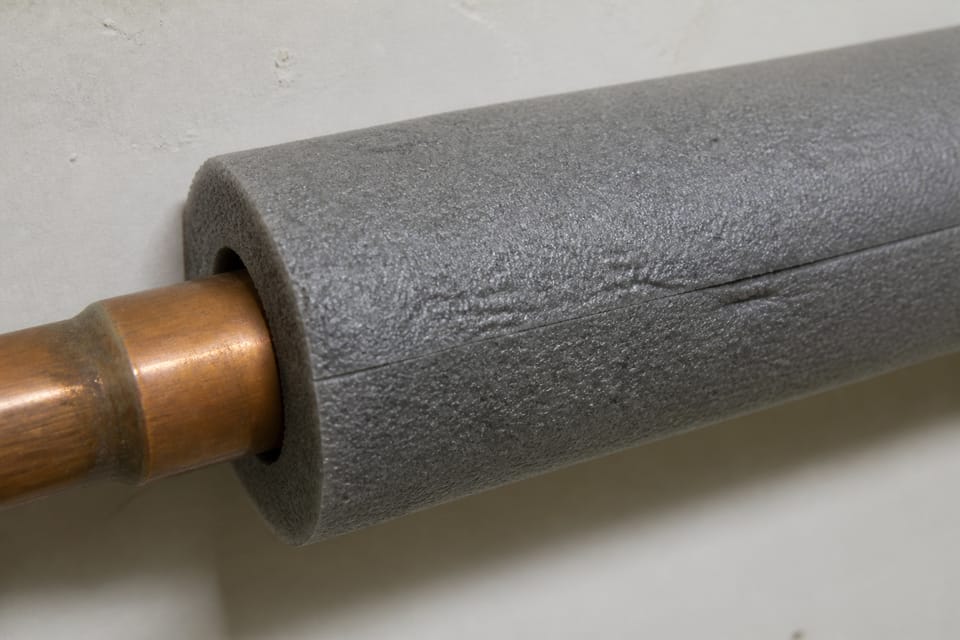
| Insulation | “Of desired thickness”, with cladding for pipes in the open; no thickness given | NBCS 2026 cl 4.17.4.2; IS 6295 cl 4.4.2 |
| Exposed house connections | Insulate them where they are exposed, extending below the frost line | IS 6295 cl 4.4.6; NBCS 2026 cl 4.17.4.5 |
| Drain-down | Provide facilities for draining the pipelines where there is a danger of frost | IS 6295 cl 4.4.4; NBCS 2026 cl 4.17.4.4 |
| Bathroom traps and cisterns | Keep them heated to avoid freezing | IS 6295 cl 5.5.5 |
| Storage water and treatment plant (scheme level) | “Proper housing, insulation and protection shall be provided for all processes and equipment” where freezing is a danger | IS 6295 cl 4.3; NBCS 2026 cl 4.17.3 |
IS 6295 says “if necessary” for heating (clause 4.3) and insulation (clause 4.4). NBCS 2026 says “if required” for frost protection (clause 4.12.7) and “if necessary” for insulation (clause 4.17.4). The decision is left to the designer or the engineer for the building.
What do the codes not give?
Neither code gives a pipe depth for a house, a thickness for insulation, or a cover specification for a house water tank. Clause 4.3 covers storage water and treatment plant, not house tanks. IS 6295 has no clause on pipes inside walls. A house plumber needs the depth and the insulation from the engineer, the manufacturer’s data sheet or the local authority, not from a table on a web page.
Some web pages give depth and thickness tables and attribute them to IS 6295. Those tables are not in the code. The code’s tables are for the water’s viscosity and the barometric pressure, not pipe sizes.
What is practice, not standard?
A state advisory reported in the news in December 2024, from the Jammu and Kashmir Jal Shakti department, asks householders to wrap pipes in unheated spaces such as garages and basements, to leave cabinet doors open so warm air reaches the pipes, and to let cold water drip in very cold weather. It also says a sharp drop in pressure or flow can be a sign of a frozen line. Label these as practice from a state advisory. The advisory was not read in full for this page.
What mistakes should I avoid?
- Burying a pipe above the frost line. The codes ask for the pipe below the frost line. A pipe near the surface is the first to freeze. This is standard text.
- Leaving an exposed house service connection uninsulated. IS 6295 clause 4.4.6 asks for insulation at exposed house connections, and NBCS 2026 clause 4.17.4.2 asks for insulation with cladding for pipes laid in exposed conditions. This is standard text.
- Ignoring the bathroom trap and the cistern. IS 6295 clause 5.5.5 asks for them to be kept heated. This is standard text.
- Taking a depth or thickness from a web page. Those figures are not in IS 6295 or NBCS 2026. Ask the plumber for the figure for your pipe and your site. This is practice.
- No way to drain the pipes. Clause 4.4.4 asks for facilities to drain the pipelines where freezing is likely. Make sure the plumber shows you where the drain-down points are. This is standard text.
Frequently asked questions
How deep should a water pipe be buried in a hill house?
Below the frost line. The codes give the frost line as 0.9 to 1.2 m in northern India where freezing occurs. The depth for your pipe depends on the site, so ask your engineer or plumber.
How thick should the pipe insulation be?
Neither code gives a thickness. NBCS 2026 says “of desired thickness”, with cladding for pipes in the open. Ask the plumber for the thickness and the material.
Do I need an insulated tank cover?
IS 6295 and NBCS 2026 ask for “proper housing, insulation and protection” for processes and equipment in water storage and treatment plant where freezing is a danger. Neither gives a cover specification for a house tank. Ask the plumber what the tank needs in your area.
Which code applies to a house in a hill town?
IS 6295 for the cold-climate points, and IS 2065 and IS 1742 for the house plumbing in general, as clause 1.2 of IS 6295 says. This is practice: ask the local authority which edition it applies.
Related guides
- Overhead water tank fittings: inlet, outlet, overflow, washout, vent and float valve
- Low water pressure on the upper floor or in the shower: causes and fixes
This guide is general information. Read the disclaimer. Your plumber and engineer decide the pipe depth, insulation and tank protection for your house.
Sources
- IS 6295:1986, Code of Practice for Water Supply and Drainage in High Altitudes and/or Sub-Zero Temperature Regions (first revision), reaffirmed 2001: clause 1.1 and 1.2 (scope; house plumbing in plains in IS 2065 and IS 1742), 4.3 (protection of storage and treatment), 4.4 and its note (frost line 0.9 to 1.2 m, northern India), 4.4.2 (insulation materials), 4.4.4 (drain-down), 4.4.6 (house service connections), 5.5.5 (bathrooms and cisterns).
- SP 7:2026, National Building Construction Standards 2026 (NBCS 2026), Part E Section 1: clauses 4.12.6 (underground pipes below the frost line with insulation), 4.17.3, 4.17.4 and its note (frost line 0.9 m to 1.2 m, northern India), 4.17.4.2 (insulation wrapping, no thickness), 4.17.4.4 and 4.17.4.5 (drain-down; service connections). Read from an archive copy; check against the printed edition.
General information only. It is not a structural design or professional advice. Ask a licensed structural engineer or architect to check your plans and site.