
Short answer
What does IS 12894 require of fly ash bricks, and how do I check a delivery? IS 12894 covers fly ash lime bricks used in buildings. It asks that bricks be sound, compact, uniform in shape and free of visible cracks, and it names the tests for strength, absorption and efflorescence. Sampling is in another standard, IS 5454. Ask for the supplier's test report and the marking, and check the bricks by eye and by measuring a row. The standard has no site load test, so the engineer decides the wall.
On this page (9)
Fly ash lime brick is a grey brick made from fly ash, lime and an accelerator. It is used in place of clay brick in many houses, and the buyer needs to know what the standard requires and how to check a delivery. This guide sets out what the Indian standard IS 12894 says, which tests it names, and what can be checked on site. It gives no strength, no absorption and no sample count. Those values are in the standard’s tables and the supplier’s test report, and the engineer decides the wall.
What bricks does IS 12894 cover?
The standard “lays down the requirements for classification, general quality, dimensions and physical requirements of pulverized fuel ash-lime bricks used in buildings” (scope). The Foreword describes the brick: fly ash lime bricks “are obtained from materials consisting of pulverized fuel ash in major quantity, lime and an accelerator acting as a catalyst”. It adds that these bricks “are suitable for use in masonary construction just like common burnt clay bricks”.
The standard covers bricks below a set wet compressive strength, and it points to other standards for stronger bricks. Check the class written on the supplier’s test report, which the standard sets by average wet compressive strength, and make sure it is the class the engineer has asked for.
What must the bricks look like?
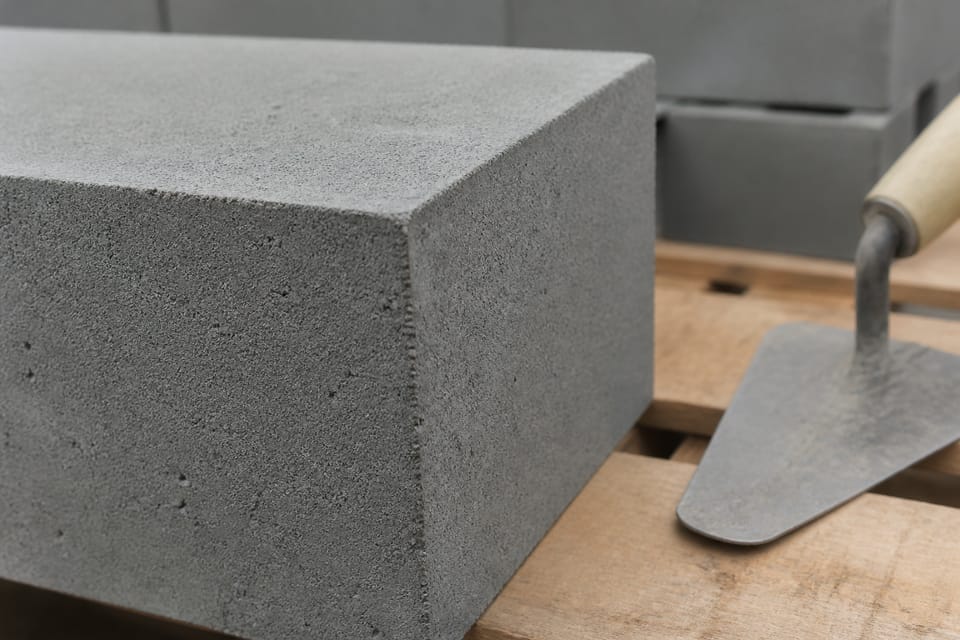
The standard asks that “Visually the bricks shall be sound, compact and uniform in shape. The bricks shall be free from visible cracks, warpage and organic matters” (clause 3.1). It also says that the bricks “shall have smooth rectangular faces with sharp corners and shall be uniform in shape and colour” (clause 3.5).
The bricks are solid, with or without a frog, and the frog’s shape and size follow one of two figures in the standard (clause 3.2). The sizes and the dimensional tolerances are in the standard’s tables (clauses 5.1 and 5.2). This guide does not print them.
What tests does the standard name?
The standard names the tests and the test methods, and the supplier’s report should show them.
- Compressive strength, tested as described in IS 3495 (Part 1) (clause 7.1).
- Drying shrinkage, under IS 4139 (clause 7.2).
- Efflorescence, tested as described in IS 3495 (Part 3) (clause 7.3).
- Water absorption, after immersion in cold water for 24 hours, under IS 3495 (Part 2) (clause 7.4).
- Dimensions, measured on a sample of bricks (clause 5.2.1).
The standard says that “Sampling and criteria for conformity of the bricks shall be as given in IS 5454” (clause 8.1). So the rule for how many bricks are sampled is in another standard. This guide does not state it.
How are the bricks marked?
The standard says that “Each brick shall be marked in a suitable manner with the manufacturer’s identification mark or initials” (clause 9.1). It also says the bricks “may also be marked with the Standard Mark” (clause 9.2). The Standard Mark is governed by the BIS Act. So the mark on a brick tells you the maker, and the Standard Mark shows that the maker holds a BIS licence for it. Ask for both.
What can I check on site?
This section is practice, not a code rule. The standard gives no on-site load test and no storage rule for these bricks.
- The supplier’s test report, with the class, the test results and the date of the test.
- The marking on the bricks, and whether the Standard Mark is shown.
- Whether the bricks are sound, with no visible cracks or warping, and with square edges and sharp corners.
- A row of bricks measured with a tape, to check that the lengths are uniform.
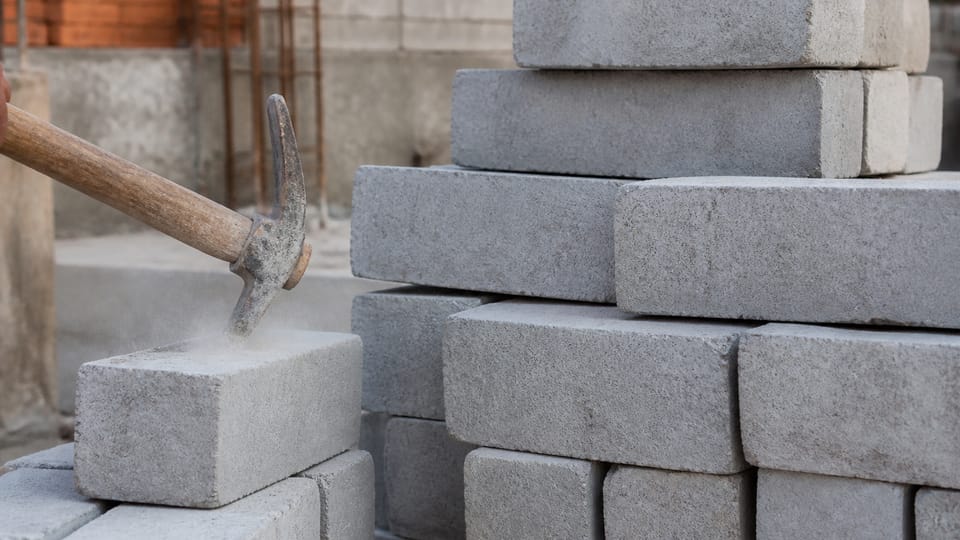
- A few bricks dropped or tapped, to listen for a dull sound that suggests a crack.
- The bricks kept under cover and off the wet ground before use.
What mistakes should I avoid?
This section is practice.
- Accepting a load without the test report and the marking.
- Using bricks with visible cracks or chipped corners in the wall.
- Mixing bricks from different lots without checking each one.
- Leaving the bricks in the rain before laying, with no protection.
- Assuming a fly ash brick is the same as a clay brick in every wall. The engineer decides where each brick is used.
Frequently asked questions
Is a fly ash brick as strong as a clay brick?
The standard says fly ash lime bricks are suitable for masonry like clay bricks, and it sets its own strength requirements. This guide gives no strength value. Compare the test reports for the bricks you are offered.
Can I test a brick on site for strength?
The standard does not give an on-site load test. The strength is tested in the laboratory under the methods the standard names. Ask the supplier for the report, and ask the engineer whether a test on your site is needed.
What does the Standard Mark mean?
The Standard Mark shows that the bricks are certified under the BIS system. The standard says the bricks may carry it, and it is governed by the BIS Act. Ask the supplier to show the certificate.
Related guides
This guide is general information. Read the disclaimer. Your engineer decides the brick and the wall for your house.
Sources
General information only. It is not a structural design or professional advice. Ask a licensed structural engineer or architect to check your plans and site.