
Short answer
What does IS 383 cover? IS 383 is the Indian standard for coarse and fine aggregate for concrete. The 2016 third revision covers aggregates from natural sources and manufactured aggregates from other sources. It defines natural sand, crushed stone sand, mixed sand and manufactured fine aggregate. It does not allow manufactured aggregate in prestressed concrete. Ask the supplier which standard the sand and stone meet, and for a test report.
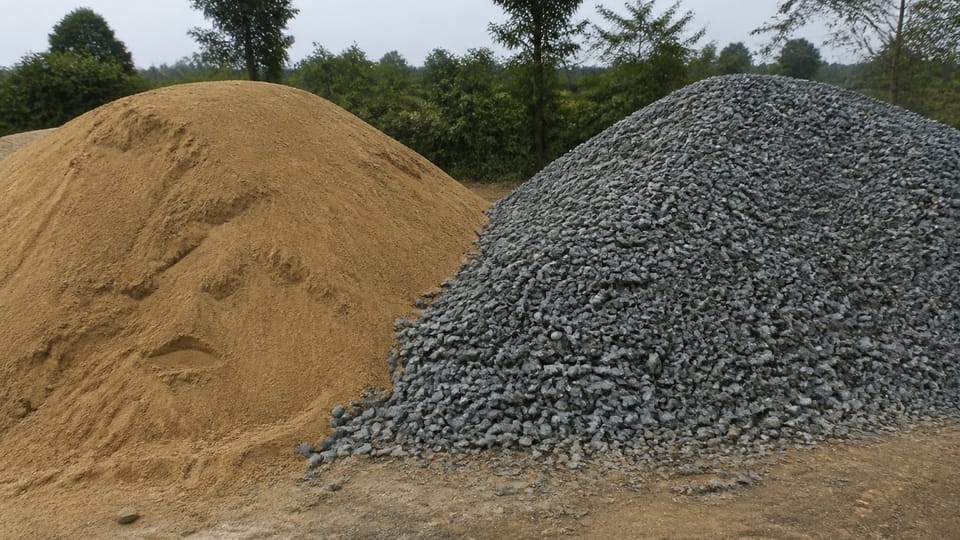
On this page (11)
Sand and stone make up most of the volume of concrete and plaster. The Indian standard for them is IS 383. Many people have seen the name on a test report or a supplier’s bill but do not know what it covers. This page explains the 2016 edition, the names it gives to each sand and aggregate, and what to ask the supplier. It gives no grading limits, no silt or dust limits and no mix ratios. Those are in the standard’s tables and in the engineer’s design.
What is IS 383?
IS 383 is the Indian standard for coarse and fine aggregate for concrete. The foreword says it was first published in 1952, revised in 1963 and 1970, and revised again in the 2016 third revision. A report that cites an older edition should be asked which edition it followed.
The 2016 edition covers two kinds of aggregate. Clause 1 says it covers “aggregates, crushed or uncrushed, derived from natural sources”, and “manufactured aggregates produced from other than natural sources”, for concrete for normal structural purposes, including mass concrete works.
What are the sand types?
Clause 3 of IS 383 gives the names. These are the main ones.
| Name | What the standard says |
|---|---|
| Natural sand | Fine aggregate resulting from the natural disintegration of rock and deposited by streams or glacial agencies (cl 3.1.1) |
| Crushed stone sand | Fine aggregate produced by crushing hard stone (cl 3.1.2.1) |
| Crushed gravel sand | Fine aggregate produced by crushing natural gravel (cl 3.1.2.2) |
| Mixed sand | Natural sand blended with crushed stone sand or crushed gravel sand (cl 3.1.3) |
| Manufactured fine aggregate | Fine aggregate made from other than natural sources by processing, using thermal or other processes such as separation, washing, crushing and scrubbing (cl 3.1.4) |
The standard calls manufactured fine aggregate “manufactured sand” in brackets (cl 3.1.4). It does not use the short form M-sand. Ask the supplier which of the names above the material matches.
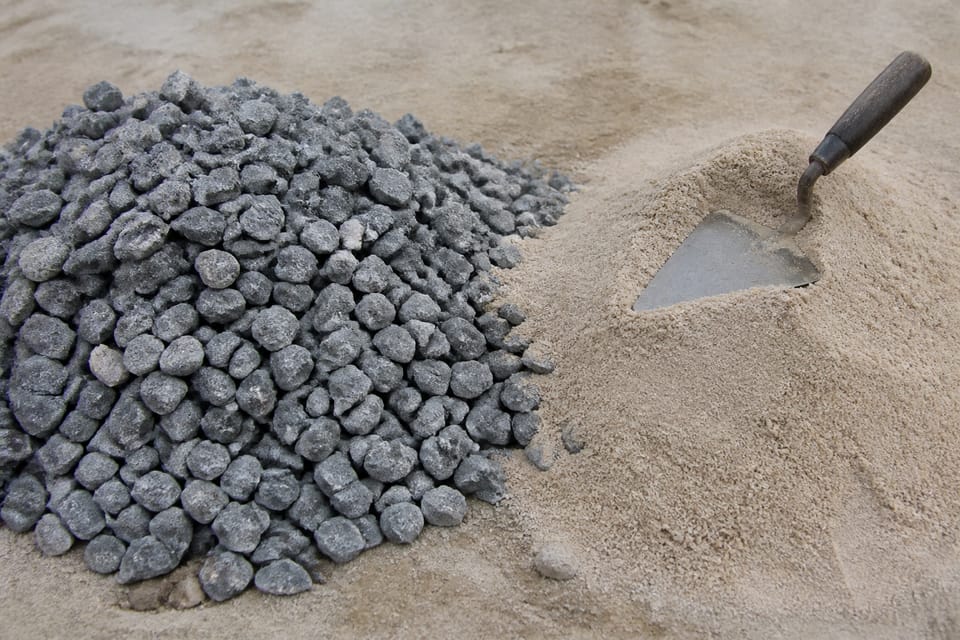
What about crusher dust?
The foreword says that crusher dust, also called quarry dust, from the fine screening of quarry crushing cannot be called crushed sand as per clause 3.1.2. Ask whether a bag labelled crushed sand is crushed sand or the screenings from the quarry.
What about coarse aggregate?
Clause 3.2 defines coarse aggregate as aggregate most of which is retained on the 4.75 mm sieve. The note to clause 3.2 names uncrushed gravel or stone, crushed gravel or stone, partially crushed gravel or stone, and manufactured coarse aggregate. Recycled concrete and recycled aggregate are covered in Annex A, which gives brief information on aggregates from other than natural sources.
What are the limits on use?
- Prestressed concrete. Clause 4.2.2 says manufactured aggregates shall not be permitted for use in prestressed concrete.
- Sea sand. CPWD Specifications 2019 cl 3.1.3.4 says the use of sea sand is not allowed unless otherwise specified.
- Other uses. Clause 1 limits the scope to concrete for normal structural purposes, including mass concrete works. Practice point: any other use needs the engineer’s decision.
How is the aggregate tested?
IS 383 refers test methods to IS 2386 (Parts 1 to 8), listed in its references (cl 2). Clause 6.1 cites IS 2386 (Part 1). So a test report that names IS 2386 is following the family the standard uses. The test limits themselves are in the standard and are not repeated here.
What should I ask the supplier?
These are practice points, not standard clauses.
- Which name in IS 383 does this sand or stone match?
- Which standard and edition does the material meet?
- Can I have a test report for this batch?
- Where was the material taken from? A quarry, a river bed, or a crushing unit?
- Is this sea sand? CPWD does not allow it unless the specification says so.
What mistakes should I avoid?
These are practice points, not standard clauses.
- Calling quarry dust crushed sand. The foreword says it cannot be called crushed sand under clause 3.1.2.
- Using a manufactured aggregate in prestressed concrete. Clause 4.2.2 does not permit it.
- Quoting the 1970 edition as current. The 2016 third revision is the edition to check.
- Accepting a bag without a test report. Ask for one before the concrete is mixed.
Frequently asked questions
Is M-sand allowed in concrete?
IS 383 defines manufactured fine aggregate in clause 3.1.4. Clause 4.2.1 permits it in plain and reinforced concrete up to a share set in Table 1, and the Table 1 values are not repeated here. It does not allow it in prestressed concrete (cl 4.2.2). Ask the engineer which sand the design allows.
Does IS 383 cover recycled aggregate?
Annex A gives brief information on aggregates from other than natural sources, including recycled concrete and recycled aggregate. Ask the engineer whether recycled aggregate is allowed in the design, and check the current amendments on the BIS portal.
Is there a newer edition of IS 383?
The copy read is the 2016 third revision, with Amendment No. 1 (August 2017). Check the BIS portal for any later amendment before you rely on it.
Related guides
- Sand grading zones I to IV: what they mean on a sand test report
- Coarse aggregate for a house: sizes, shapes and simple checks
- Silt in sand: lab test and rough jar check
This guide is general information. Read the disclaimer. A qualified engineer decides the aggregate for your house.
Sources
- IS 383:2016, Coarse and Fine Aggregate for Concrete, Specification (Third Revision, January 2016), cl 1, 2, 3.1 to 3.3, 4.2.2, 6.1 and the foreword. The copy read carries Amendment No. 1 (August 2017).
- IS 383 cl 3.1.4, 4.2.1 and Table 1 (share only), Annex A (brief information). CPWD Specifications 2019, Vol 1, cl 3.1.3.4 (sea sand) and cl 4.1.1.1(a) (aggregates from other than natural resources), and preface item 6.2.
General information only. It is not a structural design or professional advice. Ask a licensed structural engineer or architect to check your plans and site.