
Short answer
What is coarse aggregate, and how is its maximum size chosen for a house? Coarse aggregate is the stone in concrete that is mostly retained on a 4.75 mm sieve. IS 456 says its maximum size should be as large as possible, but not more than one-fourth of the thinnest part of the member, and that 20 mm suits most work. Smaller sizes are used for thin or closely reinforced sections. Your engineer chooses the size for each part of the house, and the supplier must give the stone to IS 383.
On this page (8)
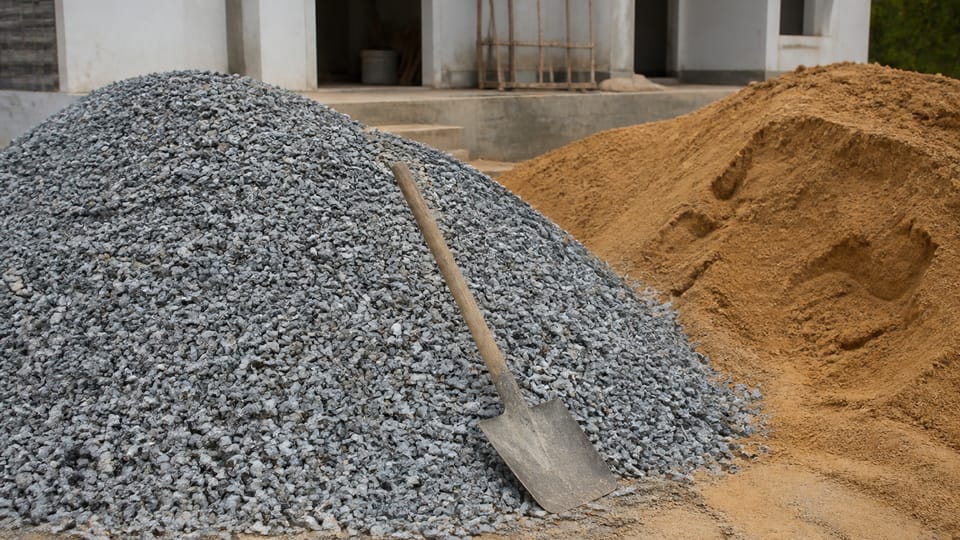
Coarse aggregate is the crushed stone or gravel in concrete. It makes up most of the concrete’s volume, so its size and quality affect the strength, how the concrete flows into the shuttering, and how well it fills round the steel. This page explains what the code says about the stone and its size, and what an owner should ask. It gives no prices, no quantities and no sizes for particular members. Those are for the engineer and the supplier.
What is coarse aggregate?
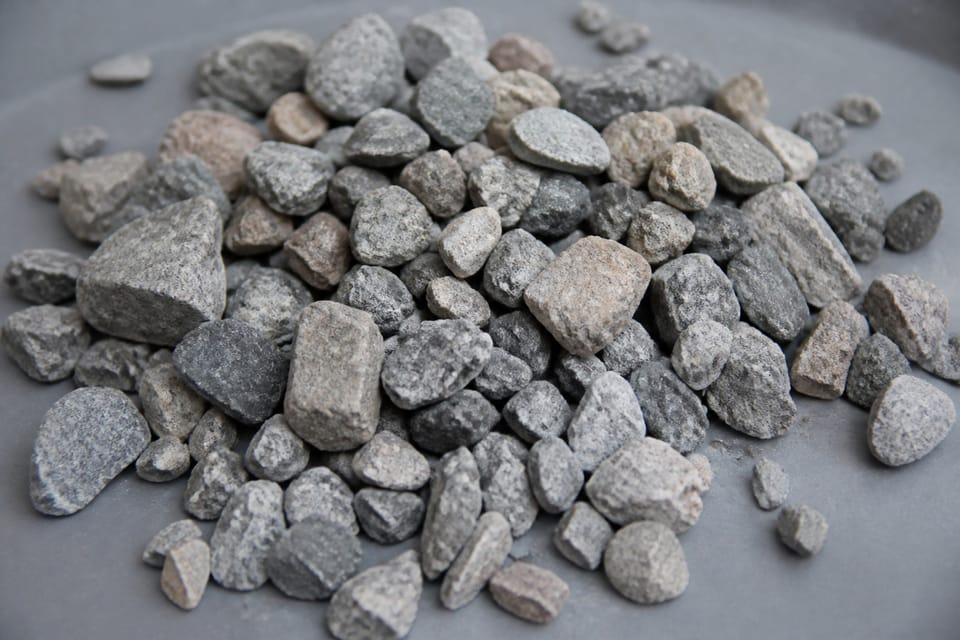
IS 383 defines coarse aggregate as aggregate most of which is retained on a 4.75 mm IS sieve, with only so much finer material as the standard allows (clause 2.2 of the 1970 edition). Stone that passes the 4.75 mm sieve is fine aggregate, which is sand.
The standard asks that the stone be hard, strong, dense, durable and clear, and free from adherent coating. It asks that harmful material is not present in an amount that affects the strength or durability of the concrete. Flaky, scoriaceous and elongated pieces should be avoided as far as possible (clauses 3.1 and 3.2, 1970 edition).
The later revision is IS 383:2016 (third revision, per BIS listings). Its numeric limits were not read for this page, so none are given here. Check the BIS status of the 1970 edition before relying on this page.
What does IS 456 say about the maximum size?
IS 456 says aggregates must comply with IS 383, and that natural aggregates are preferred as far as possible (clause 5.3). Its clause 5.3.3 is the rule on size:
- The maximum size should be as large as possible within the limits, but in no case more than one-fourth of the minimum thickness of the member.
- The concrete must still be placeable, so that it surrounds all the reinforcement thoroughly and fills the corners of the form.
- For most work, 20 mm aggregate is suitable.
- Where there is no restriction to the flow of concrete into sections, 40 mm or a larger size may be permitted.
- For thin sections, closely spaced reinforcement or small cover, consider a 10 mm maximum size.
Clause 5.3.3.1 adds that for heavily reinforced members, such as the ribs of main beams, the maximum size should usually be restricted to 5 mm less than the minimum clear distance between the main bars, or 5 mm less than the minimum cover to the reinforcement, whichever is smaller. This clause is for the engineer to apply to each member. This page does not give a size for any particular member.
What do these rules mean for a house?
The clause sets conditions, not sizes for particular members. The table shows what each condition points to:
| Condition in the clause | What the clause points to | Clause |
|---|---|---|
| Limit set by the member | Not more than one-fourth of the minimum thickness of the member | 5.3.3 |
| Most work | 20 mm aggregate is suitable | 5.3.3 |
| No restriction to the flow of concrete | 40 mm or a larger size may be permitted | 5.3.3 |
| Thin sections, closely spaced steel or small cover | Consider a 10 mm maximum size | 5.3.3 |
| Heavily reinforced members | Restricted to 5 mm less than the minimum clear bar spacing, or 5 mm less than the minimum cover, whichever is smaller. The engineer applies this to each member. | 5.3.3.1 |
In practice:
- The size depends on the member. The same stone may not suit a thin slab and a thick footing. Ask the engineer for the size on the drawing or the specification.
- The supplier must give the stone to IS 383. Ask the supplier for the test certificate or the grading for the stone you receive.
What simple checks can an owner make?
These are practice points, not code tests:
- Look for clean stone, without a dusty or muddy coating. Rinse a few pieces in a bucket and look at the water.
- Look for stone that is mostly even in shape, and not many thin or long flat pieces.
- Check that the stone sizes match what was ordered, and that the bag or the load is not mostly fine material.
- Ask whether the supplier has tested the stone, and ask for the report.
For the tests a laboratory runs on aggregates, the Indian methods are in IS 2386. The 1963 Part I covers particle size and shape tests, and it defines the flakiness and elongation indices. It does not set pass limits. For limits, check the current IS 383.
What mistakes should I avoid?
These are practice points, not code rules:
- Ordering one size of stone for every part of the house without asking the engineer.
- Buying stone from a heap that has been left in the rain and mixed with mud.
- Taking the size of stone from another house, without the engineer’s drawing.
- Mixing sizes in the same mix without knowing the grading.
Frequently asked questions
Is 20 mm the best size for a house?
No size is best for every house. IS 456 says 20 mm suits most work. The engineer chooses the size for each member, taking into account its thickness, the steel and the flow of the concrete.
Can I use river gravel instead of crushed stone?
IS 456 says aggregate must comply with IS 383, and that natural aggregate is preferred as far as possible. Ask the engineer and the supplier which stone suits the mix and the local supply. For the sand, see M-sand vs river sand.
How do I know if the stone is too fine?
The stone is coarse aggregate only if most of it is retained on the 4.75 mm sieve. A simple look is not a test. Ask for the grading from the supplier or a laboratory test, using IS 2386.
These answers are practice guidance, not code quotes.
This guide is general information. Read the disclaimer. Your engineer decides the size and mix for each part of your house.
Related guides
- M-sand vs river sand: which one for concrete, plaster, brickwork?
- Silt in sand: the lab test and a rough jar check
- Water-cement ratio: why extra water weakens concrete
Sources
- IS 456:2000, Plain and Reinforced Concrete, Code of Practice (Fourth Revision), clauses 5.3, 5.3.3 and 5.3.3.1. Read from an OCR copy; check the printed text before publishing.
- IS 383:1970, Coarse and Fine Aggregates from Natural Sources for Concrete (Second Revision), clauses 2.2, 3.1 and 3.2. This is the 1970 edition, read for the definition and the cleanliness and shape wording only. IS 383:2016 is the later revision and was not read for this page.
General information only. It is not a structural design or professional advice. Ask a licensed structural engineer or architect to check your plans and site.