
Short answer
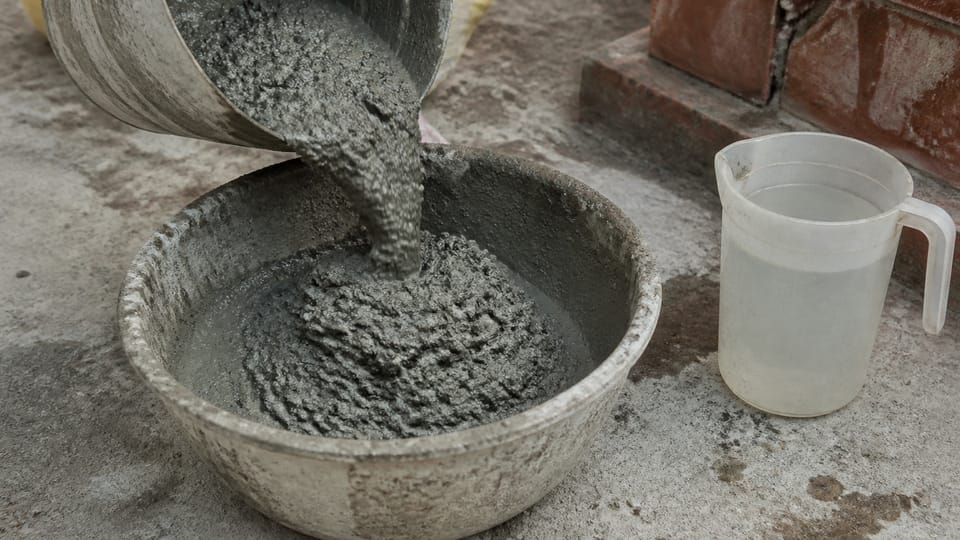
Why does adding water to concrete on site weaken it? The water-cement ratio is the amount of free water compared with the cement. IS 456 says the free water-cement ratio is an important factor in the durability of concrete and should always be the lowest value. Extra water on site makes the concrete easier to place but raises that ratio. Ask the engineer before any water is added, and never add water to finish the surface.
On this page (10)
Adding a little water to concrete on site makes it easier to pour and to level. It also makes the concrete weaker and less durable. This guide explains what the Indian concrete code IS 456 says about the water-cement ratio, why extra water on site is a problem, and what to do instead. It gives no quantity of water per bag and no mix proportion. Those come from the engineer’s mix design.
What is the water-cement ratio?
The water-cement ratio is the amount of water in the mix compared with the amount of cement. IS 456 uses the free water-cement ratio. Free water is the mixing water not held by the aggregates; the clauses checked do not define the term. The code gives a maximum free water-cement ratio for each exposure in its Table 5 (for 20 mm aggregate), and the engineer selects the value for your house from that table.
Why does the ratio matter?
IS 456 says that “The free water-cement ratio is an important factor in governing the durability of concrete and should always be the lowest value” (clause 8.2.4.1). Clause 8.1 links the permeability of the concrete to “an adequate cement content, sufficiently low free water/cement ratio” (clause 8.1).
The standard also says that the mix “shall have the required strength, durability and surface finish” (clause 9.1). So the ratio serves the strength, the durability and the surface. The code does not give a single formula that turns the ratio into a strength, and the strength is tested on samples.
What happens when extra water is added?
Extra water makes the mix wetter and easier to move. But it also raises the water-cement ratio, and the concrete that sets is more porous and weaker. The code is clear on this point. It says that “the addition of water/cement to aid in finishing should be avoided; the resulting laitance will have impaired strength and durability” (clause 8.2.7). Laitance is the weak layer of cement and water that rises to the surface.
For nominal mix concrete of M20 or lower, clause 9.3.1 says that if the water must be increased to overcome difficulties of placing and compaction, the cement content is increased in proportion, so that the water-cement ratio “as specified is not exceeded”.
What does the standard say about keeping the ratio?
The code asks that the ratio be kept steady. It says that “It is important to maintain the water-cement ratio constant at its correct value” (clause 10.2.5). It also says that the added water “shall be adjusted to compensate for any observed variations in the moisture contents” of the aggregate (clause 10.2.5). So if the sand or the stone is wetter than usual, the water is reduced, not increased.
The code also says that any change to the established proportions, other than the adjustments allowed in clauses 10.2.4 and 10.2.5, needs “additional tests to show that the quality and strength of concrete are satisfactory” (clause 10.2.6).
Why does curing matter too?
Water in the concrete is also needed after the pour, while it cures. The code says that moisture loss “is particularly important if the water-cement ratio is low” (clause 13.5.1). A low ratio needs the curing that keeps the water in the concrete.
What should I check?
This section is practice, not a code rule.
- The mix on the drawing and the mix the site is using are the same. Ask the engineer if they differ.
- The sand and the stone are not wetter than the mix assumes. A wet sand heap can carry enough water to change the mix.
- No water is added at the mixer or at the pour to make the concrete easier to place, unless the engineer agrees.
- The concrete is placed and compacted in the time the engineer sets, so that water is not needed to make it workable.
- The curing is started and kept up after the pour, as the engineer asks.
What mistakes should I avoid?
This section is practice.
- Adding water at the pour because the concrete looks stiff.
- Sprinkling water on the surface to help the finish. The code says this should be avoided.
- Leaving wet sand uncovered and then using it without allowing for the water in it.
- Pouring a slow mix and then adding water to speed it up.
- Stopping the curing early after a mix with a low ratio.
Frequently asked questions
Can I add a little water if the concrete is stiff?
Ask the engineer first. IS 456 does not allow the established proportions to be changed without additional tests (clause 10.2.6). For nominal mix concrete of M20 or lower, clause 9.3.1 allows more water only with a proportionate increase in cement, so that the ratio is not exceeded. Adding water on your own makes the concrete weaker.
Is a wetter concrete always weaker?
The code links the ratio with durability and strength, and extra water raises the ratio. The exact effect depends on the mix and its tests. The engineer decides what the site may do.
Does the standard give the water quantity per bag of cement?
IS 456 gives a water figure only for nominal mix concrete of M20 or lower (Table 9), as a maximum per 50 kg of cement. It prefers design mix concrete. This guide does not quote the figures; the engineer sets the water for the actual mix.
Related guides
This guide is general information. Read the disclaimer. Your engineer decides the mix and the water for your house.
Sources
General information only. It is not a structural design or professional advice. Ask a licensed structural engineer or architect to check your plans and site.