
Short answer
What should I do when concrete is poured in an Indian summer? Indian code IS 7861 (Part 1) calls it hot weather concreting when the air is above 40 C or the concrete will be placed above 40 C. Keep the materials cool, plan the pour for the cool part of the day, protect the surface straight after finishing, and keep it wet for at least 10 days. Your engineer and the supplier decide the mix and any admixture.
On this page (14)
- When does a pour count as hot weather?
- What does the code ask you to keep cool?
- Can I add admixtures for a summer pour?
- When should the pour happen?
- What do I do before the concrete arrives?
- What protects the surface after finishing?
- Wind matters as much as sun
- How long do I keep it wet?
- How do I know if the pour is at risk?
- What should I ask the supplier and the engineer?
- What mistakes should I avoid?
- Frequently asked questions
- Related guides
- Sources
Concrete sets faster in heat, the surface dries before it hardens, and small cracks can start within hours. The fixes are simple, but they have to be planned before the truck arrives. This guide follows IS 7861 (Part 1), the Indian code for hot weather concreting, and says what the code asks for and what is practice. It gives no mix proportions, no prices and no brand names. Your engineer decides the mix, any admixture and the curing plan for your slab.
When does a pour count as hot weather?
IS 7861 (Part 1) clause 2.1 says hot weather concreting is any concreting at air temperatures above 40 C. It also covers any pour where the concrete is expected to be above 40 C when it is placed, other than steam curing. So the test is the concrete temperature too, not only the air.
What does the code ask you to keep cool?
The code asks that the materials be kept as cool as practical so that the concrete is below 40 C when it is placed (clause 7.1). It also asks that concrete reaching the forms is not higher than 40 C (clause 8.1.3). The practical levers are:
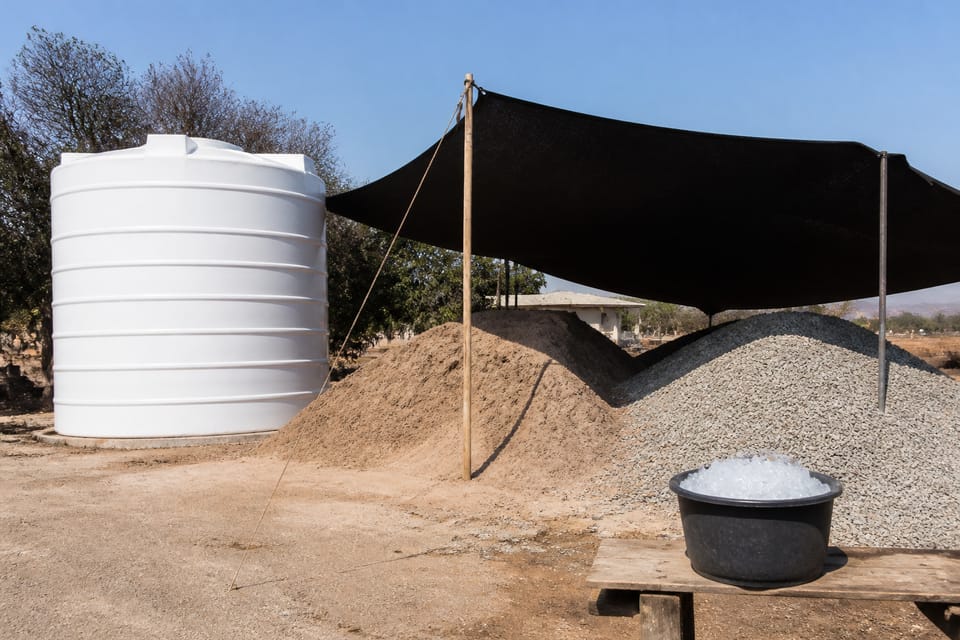
- Mixing water. The code asks for cold water where it can be had, and for water tanks and pipes to be protected from the sun.
- Ice. Ice may be used in the mixing water, but it must be completely melted by the time mixing is finished (clause 4.3.2). Ice that melts after the concrete is placed can leave hollow pockets.
- Aggregate. Shade the stockpiles from direct sun. Sprinkle coarse aggregate with water to cool it by evaporation, but do not sprinkle it haphazardly, because uneven surface water makes the mix uneven (clause 4.2).
| Lever | What IS 7861 Part 1 says | Your check |
|---|---|---|
| Mixing water | Keep it as cold as practical | Is the water tank shaded or covered? |
| Ice | Must be fully melted by the end of mixing | Who checks the ice has melted? |
| Aggregate | Shade the stockpiles; sprinkle evenly | Is the stockpile in shade and damp? |
| Admixtures | Retarders and water reducers may help; use on competent advice or a trial | Is there a written approval from the engineer? |
Can I add admixtures for a summer pour?
IS 7861 Part 1 clause 5.2 says that when heat is increasing the mixing water needed or cutting workability significantly, water-reducing and set-retarding admixtures may be used to offset the faster setting that heat causes and to lessen the need for extra mixing water. Clause 5.3 says any admixture should be used only on competent technical advice or, where practical, after an advance test with the cement and other materials. Ask the engineer to approve the admixture in writing. An admixture helps, but it does not make a hot pour safe by itself.
When should the pour happen?
When temperatures are critical, clause 8.1 says placing may be restricted to the evenings or night, when it is cooler and evaporation is less. The code gives no hour range, so the pour time is for your engineer and your supplier to set for your site and day. Practice: plan the pour for the cool part of the day, and have the people, the truck and the pump ready before the concrete leaves the plant.
Delays cost you. Clause 8.1.1 says delays lead to loss of workability, and the crew then add water to make the mix workable again. So the pour needs enough people to place and finish the concrete as soon as it arrives. Ask the supplier how long the trip from the plant to your site takes, and what happens if the truck is held up.
What do I do before the concrete arrives?
- Sprinkle the forms, the reinforcement and the subgrade with cool water just before placing. Clause 8.1 asks for this. Do not leave standing water on the subgrade (practice).
- Keep the area around the work wet to cool the air (clause 8.1).
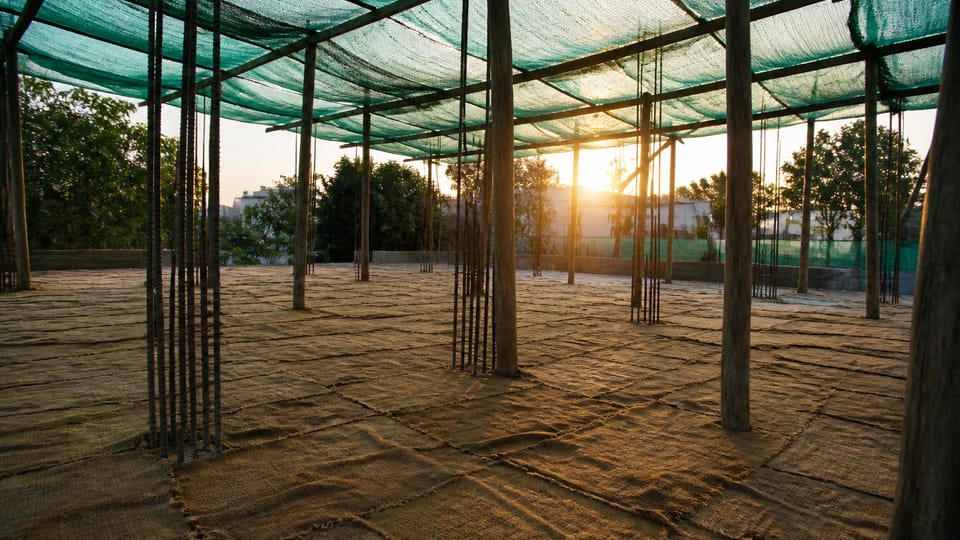
- Set up wind breakers and sunshades. Clause 9.1 lists sunshades and wind screens among the things the inspector should plan for.
What protects the surface after finishing?
Clause 8.2 says that immediately after the concrete is compacted and finished, it must be protected from evaporation without letting in outside water. The code names wet (not dripping) gunny bags, hessian cloth or similar. Fog spray is also useful, applied after placing and before finishing. Clause 8.1.2 says fog spray has been found particularly effective against plastic shrinkage cracks, when other means have failed.
Do not rely on the forms to protect the concrete. Clause 8.2.1 says reliance shall not be placed on the protection that forms give for curing in hot weather.
Wind matters as much as sun
Clause 8.2.2 says that on exposed, unformed surfaces such as pavement slabs, a gentle wind of 15 km/h causes four or more times as much evaporation as still air, other things being equal. It says wind breakers should be provided as far as possible. Shade and wind breaks protect the top surface, which is the part most likely to crack.
How long do I keep it wet?
Clause 8.2 of IS 7861 Part 1 says moist curing starts once the concrete is hard enough to withstand surface damage, about 12 hours after mixing. It then says the curing period depends on the mix, the size of the member and the weather, but in any case shall not be less than 10 days.
IS 456:2000 clause 13.5.1 gives the same minimum for concrete in dry and hot weather. It also says at least 7 days for ordinary Portland cement, and at least 10 days where mineral admixtures or blended cements are used. Your engineer may ask for longer. For the curing methods and day counts, see the curing guide.
Clause 8.2.3 says curing water should not be much cooler than the concrete on hardened flat surfaces, because a big temperature gap can cause cracking. So spraying very cold water on a hot slab is a mistake (practice).
How do I know if the pour is at risk?
IS 7861 Part 1, Appendix A (clause A-3.1), says that when the rate of evaporation is estimated to be approaching 1.0 kg/m2/hr, precautions against plastic shrinkage cracking should be taken. The appendix gives a chart for the estimate, which your engineer can use. This is a trigger for precautions, not a code limit.
What should I ask the supplier and the engineer?
These questions come from the code’s own list of checks (clauses 8.1 and 9):
- How long from batching to pour, and what if the truck is held up?
- Is any water added on site to the mix? Who approves it, and is it recorded?
- Is any ice in the mix, and will it be fully melted by the end of mixing?
- Is an admixture planned? Is there a written approval?
- Who records the concrete temperature when it is delivered and after placing? Clause 9.2 asks for these checks and for the protection and curing time to be recorded.
- What is the curing plan, and who checks it each day for the first 10 days?
What mistakes should I avoid?
- Adding water on site because the mix has stiffened. Extra water lowers strength and raises drying shrinkage (practice).
- Pouring in full midday sun with no shade or wind break (practice).
- Leaving the top surface open after finishing, or using dry sacks (clause 8.2).
- Stopping the wet cover after a few days. The minimum is 10 days.
- Relying on the forms to keep the concrete wet (clause 8.2.1).
- Spraying cold water on a hot slab, which can crack it (clause 8.2.3).
Frequently asked questions
Is a summer pour allowed?
IS 7861 Part 1 does not ban it. It asks for the precautions in this guide. The engineer decides whether the pour goes ahead on the day.
Does ice in the mix make a pour safe?
Ice helps cool the mix, but it must be fully melted by the end of mixing. Unmelted ice can leave hollow pockets in the concrete.
Do blended cements need a different curing period?
IS 456 clause 13.5.1 gives at least 10 days for blended cements and mineral admixtures, against 7 days for ordinary Portland cement. The cement types guide explains the blended cements.
Who decides the timing and the mix?
Your engineer and the supplier decide the mix, the admixture, the timing and the curing plan for your slab. This page explains what the code asks.
Related guides
- How many days to cure concrete slab
- Cold weather concreting for a slab in winter
- Best time to build a house in Delhi
This guide is general information. Read the disclaimer. Your engineer decides the mix, the admixture, the timing and the curing for your slab.
Sources
- IS 7861 (Part 1):1975, Code of Practice for Extreme Weather Concreting, Part 1: Recommended Practice for Hot Weather Concreting. Reaffirmed 2011 (cover); BIS listing shows it in force (valid to 2031). Clauses 2.1, 4.2, 4.3.2, 5.2, 5.3, 7.1, 8.1 to 8.2.3, 9.2 and Appendix A (A-3.1) read.
- IS 456:2000, Plain and Reinforced Concrete: Code of Practice, clauses 13.5.1 (curing periods) and 14.1 (hot and cold weather). Read.
General information only. It is not a structural design or professional advice. Ask a licensed structural engineer or architect to check your plans and site.