
Short answer
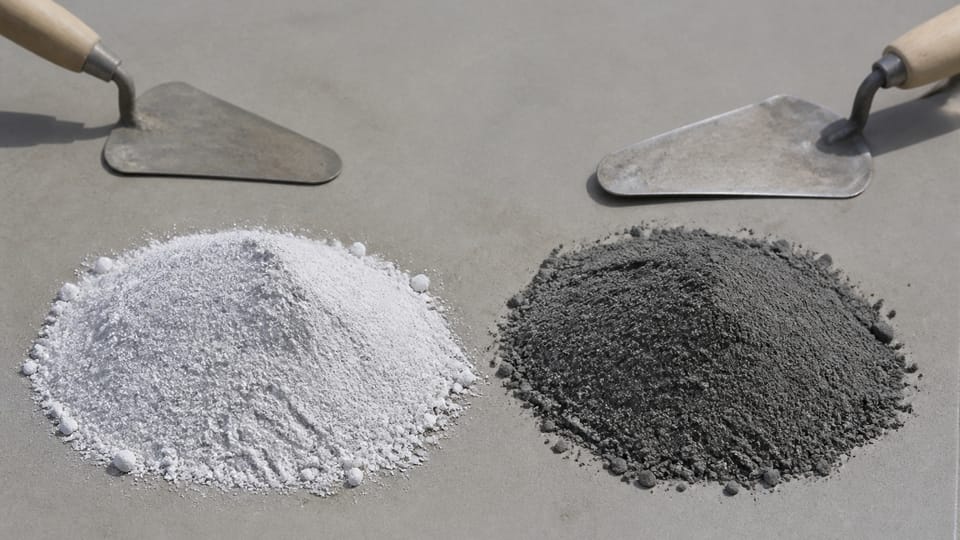
What is the difference between white cement and grey cement? White cement is a Portland cement made to its own standard, IS 8042:2015, with a whiteness requirement tested on a reflectometer, and nothing may be added after burning that harms the whiteness. Grey OPC is made to IS 269. The 2015 standard says nothing on structural use; the withdrawn 1989 edition called it generally meant for non-structural use. The engineer decides where it is used.
On this page (10)
White cement is not grey cement with the colour taken out, and it is not wall putty. It is a Portland cement with its own Indian Standard, and the differences are in how it is made, a test for whiteness, the marking and the uses. This page keeps to what IS 8042 says. It gives no brand, price, strength figure or chemical limit. The putty comparison is in wall putty vs POP vs white cement: which goes where, and the list of cement types and their codes is on the types page, so this page stays on the white-versus-grey question.
What does IS 8042:2015 say about how it is made?
Clause 1 says the standard “covers the manufacture and chemical and physical requirements of white Portland cement”, in the same words as IS 269 uses for ordinary Portland cement. Clause 4.1 says white Portland cement “shall be manufactured by intimately grinding the Portland cement clinker with appropriate proportion of natural or chemical gypsum”, and that “[n]o material shall be added after burning, other than gypsum …, water, and not more than a total of 1.0 percent of air-entraining agents or other agents, which have proved not to be harmful and don’t have any negative influence on the degree of whiteness of cement”. The 2015 edition also allows performance improvers in grinding, within a limit, and requires them to be marked on the bag (4.1.1 and 10.1). So the standard treats whiteness as something the maker must protect: it lists what may be added after burning and requires that none of it harms the whiteness.
The 2015 text does not say why the cement is white. The withdrawn 1989 foreword does: white Portland cement “is made from raw materials containing very little iron oxide and manganese [sic] oxide”. Table 1 of the 2015 standard lists an iron oxide requirement among the chemical requirements, by name.
How is whiteness tested?
Table 2 lists the physical requirements by name: fineness, soundness, setting time, compressive strength at three ages, an optional transverse strength, and “degree of whiteness in terms of reflectance of neat cement ring”. The whiteness method is in Annex B. Dry neat cement is pressed flat into a small ring on glass, and its reflectance is compared with magnesium oxide blocks of certified reflectivity using a reflectometer or a spectrophotometer, on two specimens. Grey OPC has no such test. The standard has no grades, unlike the 33, 43 and 53 grades of OPC: white cement is one product with one table of requirements. We print no limit. The 2015 edition sets its own strength figures and the 1989 edition tied strength to 33 grade OPC, so figures quoted from older pages may be out of date.
Which standard applies to which?
| Question | White cement | Grey OPC |
|---|---|---|
| Standard | IS 8042:2015 | IS 269 (2015 edition in force; we read the 2013 edition) |
| Scope wording | “manufacture and chemical and physical requirements of white Portland cement” | The 2013 edition: “manufacture and chemical and physical requirements of 33 grade ordinary Portland cement” |
| Whiteness test | Yes, in Annex B | No |
| Grades | None | 33 grade in IS 269:2013; 43 and 53 grade were in IS 8112 and IS 12269 (both withdrawn); IS 269:2015 is in force and was not readable |
| Marking | Maker, name and designation, net quantity, “Use no Hooks”, batch, best-before three months from packing, and type and percentage of improvers | Similar items; see checking cement on site: bag marks, licence and lab tests |
The 2015 edition adds a best-before date of three months from packing and a marking note on testing cement older than that. Bagged cement held by a vendor for more than three months must be retested before use (clause 13.2). See cement shelf life: how long can cement be stored on site?.
Where is white cement used?
IS 8042:2015 has no statement of use. The withdrawn 1989 foreword said that for architectural purposes a pastel finish is sometimes wanted for finishing and decorative work in concrete, that it is advisable to use white Portland cement with a suitable fine aggregate, that this cement “is not liable to cause staining, since it has low content of soluble alkalis”, and that it “is generally meant for non-structural use”. That wording is from a withdrawn edition, and “generally” is not a prohibition. NBCS 2026, Part C Section 5, Annex A, clause A-2.1 lists the cements for general use in plain, reinforced and prestressed concrete and does not include white cement; clause A-2.2 lists white cement among “other cements” that “can be used for specific applications”, conforming to IS 8042:2015, without saying which applications. Neither IS 8042:2015 nor NBCS says white cement can or cannot be used structurally. That is for the engineer to decide, with the structural design.
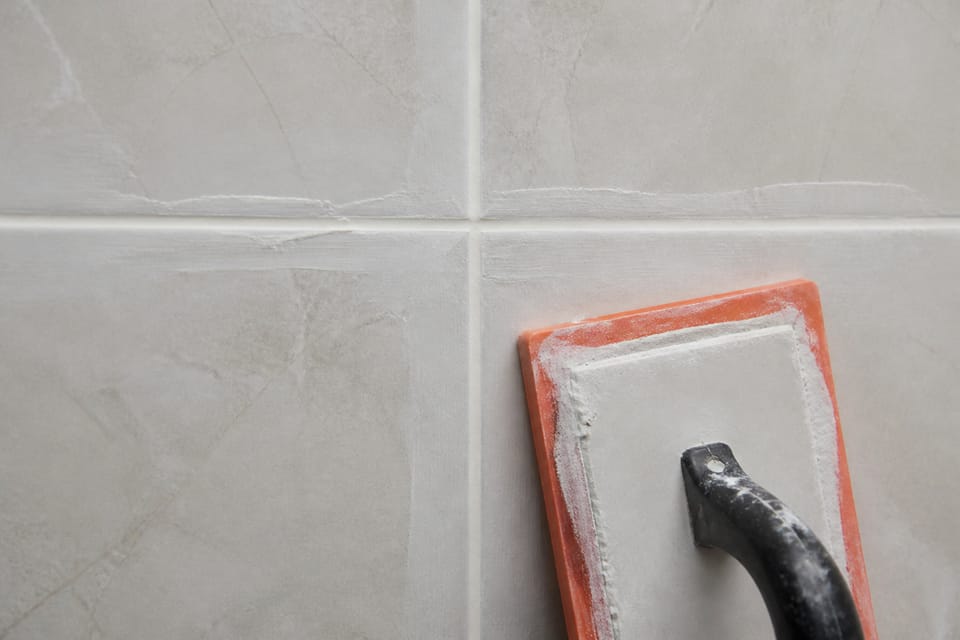
In practice, it is used for jobs where colour matters: grouting tile joints, cement wash, filling gaps, terrazzo and decorative work, and as a base for white-cement products such as putty. The published putty page notes that IS 17545 names white cement as a key ingredient of putty. We did not read the tile grout standard, IS 17190, so we do not say what it requires.
Can white cement replace grey?
This is practice, apart from the standards named. There is no standard that says white can replace grey, and none says it cannot. The choice is about the job:
- Structure. The engineer’s decision, as above. Do not swap the cement in a drawing’s concrete.
- Plaster and masonry. White cement is chosen for colour, not as a like-for-like swap for grey. Ask the engineer or the maker.
- Putty or skim coat. Plain white cement is not putty. See the putty page.
- Mixed use. No standard we read covers mixing white and grey cement. Keep them separate.
- Pigment. No standard we read covers pigments. Ask the maker which pigments suit the cement and try a patch before the whole area.
What should I do on site?
This is practice.
- Buy bags with the maker’s marking and the IS 8042 designation, and check the packing date: see the bag checks page.
- Store white cement separately from grey, dry and off the floor.
- Use clean tools, trays, sand and water. Rust and soil show as brown or grey streaks: see Water for construction: what water is fit for concrete and curing.
- Treat it as a cement: cure the work as the engineer or maker says, since grout, wash and terrazzo can dust or crack if they dry too fast.
- Make a sample patch to approve the colour, and mix each area from the same batch.
What mistakes should I avoid?
These are practice unless a standard is named.
- Using the 1989 “non-structural” line as if it were current text. It is from the withdrawn edition.
- Believing white cement is bleached or painted grey cement. IS 8042 lists what may be added after burning and requires that it must not harm whiteness.
- Using white cement as a putty or as POP.
- Mixing batches or using a rusty mixing tray, which streaks the colour.
- Storing open or damp bags.
- Swapping white for grey in a structural member on a contractor’s say-so.
- Assuming any pigment gives the colour you saw on the sample.
- Taking strength or chemical figures from websites for the 1989 standard.
Frequently asked questions
What is the difference between cement and white cement?
White cement is a Portland cement made to IS 8042:2015, with a whiteness test and a rule that nothing harming whiteness is added after burning. Grey OPC is made to IS 269.
Can white cement be used instead of grey cement?
No standard we read says so either way. For anything structural, the engineer decides. For finishes, the choice is about colour.
Is white cement weaker?
We do not print a comparison. IS 8042:2015 sets its own strength requirements, and the 1989 edition tied them to 33 grade OPC. Site strength depends on the mix, water and curing.
Is white cement the same as wall putty?
No. See the putty page.
Does white cement need curing?
It is a cement, so cure the work as the engineer or maker says. Putty is a different product.
Related guides
- Wall putty vs POP vs white cement: which goes where
- Checking cement on site: bag marks, licence and lab tests
- Cement shelf life: how long can cement be stored on site?
This guide is general information. Read the disclaimer. Your engineer or architect decides where white cement is used in your house.
Sources
- IS 8042:2015, White Portland Cement, Specification (third revision): clauses 1, 4.1, 4.1.1, 5, 9, 10 and 13.2, Tables 1 and 2 and Annex B (page images read for the first page and Tables 1 and 2). BIS lists it as in force, valid to 2030-12-31.
- IS 8042:1989, White Portland Cement, Specification (second revision), withdrawn: Foreword (page image read). It carries the wording on architectural use and non-structural use that the 2015 edition does not.
- IS 269:2013, Ordinary Portland Cement, 33 Grade, Specification (fifth revision, withdrawn): clause 1 (text layer read), for the scope wording only. IS 269:2015 is in force and was not readable. SP 7:2026, National Building Construction Standards (NBCS) 2026, Part C Section 5, Annex A, clause A-2.2 (text layer read). From an unofficial archive.org copy.
General information only. It is not a structural design or professional advice. Ask a licensed structural engineer or architect to check your plans and site.