
Short answer
Which paint goes on which surface: distemper, emulsion or enamel? Distemper (IS 427, IS 428) is an interior finish for building surfaces. Plastic emulsion (IS 15489, 2013 edition read) has interior and exterior types and assumes surface preparation and priming. Enamel finishes are glossy, and the code's schedule puts gloss paint on an alkali-resistant primer. IS 2395 sets which schedule suits plaster, concrete and masonry.
On this page (10)
“Distemper or emulsion?” is the first question a painter asks, and the answer depends on the wall, the room and what is already on it. This page sorts distemper, emulsion, cement paint and enamel by what the Indian Standards say each is for, explains what a primer is, and lists what to ask for. It gives no price, no brand, no coverage figure and no number of days to wait; the paint maker’s data sheet and your painter’s inspection decide those. For the order of work in a new house, see painting interior walls in a new house: the steps, in order.
What does each paint type mean?
| Paint | Standard | What the standard says |
|---|---|---|
| Dry distemper | IS 427:2013 | A fine dry powder with water-soluble binders, mixed with water; “a flat finish for protection and interior decoration”; its foreword describes it as non-washable distemper |
| Washable distemper | IS 428:2013 | A paste for use “where frequent washing may become necessary”; Type 1 “oil emulsion”, Type 2 “plastic (synthetic polymer emulsion based)”; smooth, matt finish; thinned with water |
| Plastic emulsion | IS 15489 | A synthetic polymer emulsion in water; the 2013 edition (since superseded by 2024, which we could not read) covers interior (Type 1) and exterior (Type 2) in matt, satin, semi-gloss and gloss classes, “after surface preparation and priming” |
| Cement paint | IS 5410:2013 | A powder of Portland cement and other materials, for walls and ceilings inside and outside, on porous surfaces such as masonry, concrete and rough plaster, except gypsum plaster |
| Enamel, interior | IS 133:2023 | Enamel undercoating and finishing for brushing, thinned up to a set limit, the finishing coat being glossy; the standard does not say which surfaces it is for |
| Plaster primer | IS 109:2017 | A priming paint used “as a sealer on plaster, brickwork” and similar surfaces |
Names have shifted over time. Older documents, including CPWD, call washable distemper “oil-bound”, while the 2013 standard calls Type 1 an oil emulsion and Type 2 a polymer emulsion. So the label on the tin matters less than the standard on it and the surface it is meant for.
Which paint goes on which surface?
IS 2395 (Part 2) gives schedules for new plaster, concrete and masonry. Table 1 is for new interior surfaces and Table 2 for new exterior surfaces. The paint standards the 1994 schedule cites are older editions; the surface logic is what matters here.
| Surface and paint | What the schedule shows |
|---|---|
| Interior, dry distemper | One clear coat or size, filler if needed, then two coats of dry distemper |
| Interior, washable distemper | One coat of alkali-resistant primer, filler if needed, then two coats |
| Interior, emulsion | One coat of emulsion paint as the primer, filler if needed, then two coats |
| Interior, gloss or semi-gloss paint | One coat of alkali-resistant primer, an undercoat as required, filler if needed, then two coats |
| Interior or exterior, cement paint | One coat of cement paint, then two coats |
| Exterior, emulsion | One coat of emulsion paint as the primer, then two coats |
| Exterior, gloss or semi-gloss paint | Alkali-resistant primer, an undercoat as required, then two coats |
| Exterior, distemper | Not listed in Table 2 |
Three points:
- The coat counts are those of the 1994 code. A maker’s system may differ, so ask for the data sheet, and your engineer or painter decides the number of coats.
- Table 2 lists no distemper for exteriors, and IS 427 and IS 428 are written for interior surfaces. The standards do not say “never outdoors” in words, but distemper is an interior finish.
- IS 5410 says cement paint is for porous surfaces of masonry, concrete and rough plaster, except gypsum plaster.
What is a primer, and is it paint?
Generally, a primer is the first coat: it seals the surface, evens out how much paint the wall soaks up, and gives the next coat something to grip (practice; IS 2395 5.4 deals with high or variable suction). IS 2395 (Part 1, clause 5.4.1) says that where suction is high or variable, the pretreatment depends on the paint: for emulsion, “a coat of the same paint thinned with water or sealers recommended by the manufacturer”; for solvent-based paint, a primer or primer-sealer, preferably chosen with the paint maker. New cement and lime plaster is alkaline (IS 2395 Part 1, 5.1), and the schedule puts alkali-resistant primer under distemper (washable) and under gloss paints. The primer should suit both the surface and the topcoat; the maker’s data sheet for the pair says which.
What goes wrong when I repaint?
IS 2395 Part 1 says dry distempers and lime wash “shall be totally removed prior to repainting” (clause 7.1.3.4), while sound water-based paint or washable distemper need not be removed if similar coatings follow, after washing and light sanding (7.1.3.6). The standard gives no reason. The usual practice explanation is that emulsion over loose, chalky distemper has no firm surface to grip, and the water in it can lift the old coat. These clauses are written for lime plaster, with cement plaster and concrete in 7.2 and brickwork in 7.4. Ask the painter how the old coat will be dealt with. See why wall paint peels, bubbles or flakes, and how to fix it.
Enamel is a gloss film. IS 2395 says gloss paint is not used until drying is complete (clause 5.2.3), and that emulsion and water paints grip impervious surfaces less well than solvent paints, while gloss shows every irregularity in the plaster; those Annex A-2 remarks are made about gypsum plaster. In practice, enamel on a wall is not the usual choice, and gloss paint goes on a well-prepared, dry, primed surface.
Which paint for doors, windows and grills?
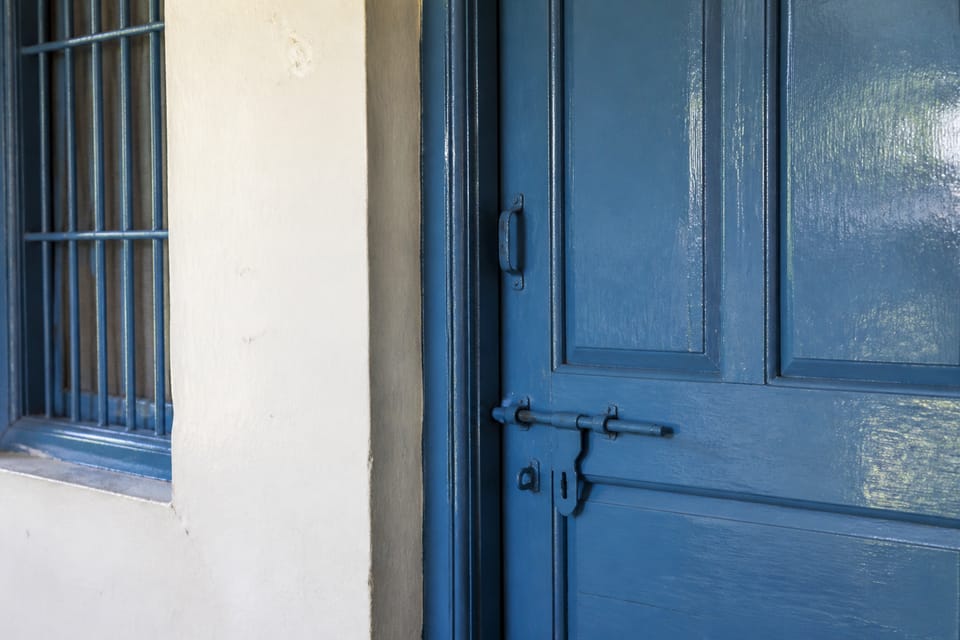
- Steel. IS 1477 (Part 2) says primers on steelwork are applied to inhibit corrosion and are called anti-corrosive primers, and that no all-purpose paint finish exists. In practice, remove rust and scale first and use a primer made for metal, then the finish the maker pairs with it.
- Wood. Ask for the wood primer and the enamel or varnish system from the same maker’s data sheet. We did not read the wood schedule (IS 2338).
- Epoxy paint. We found no Indian Standard for building epoxy paint. CPWD describes a two-part system with a base and a hardener, used within its pot life. Ask your painter for the data sheet instead of a claim on the tin.
What do I ask the painter?
This is practice, unless a clause is named.
- Get the product name, type and the standard on the tin, in writing, for primer and topcoat.
- Ask which surfaces each product is for: wall, ceiling, wood or steel.
- Confirm the wall is dry, cured and free of damp or salts, and that old distemper or flaking paint is dealt with: see painting interior walls in a new house and, for outside, painting exterior walls: preparation, primer and coats.
- Ask for the number of coats and the recoat time from the maker’s data sheet, written in the quote.
- Keep the tins and batch numbers, and try a test patch on the real wall.
- Do not paint in rain or damp weather.
What mistakes should I avoid?
These are practice, not code rules, unless a clause is named.
- Painting over damp or new plaster before it has dried, or sealing it under a gloss film (IS 2395 5.2.3).
- Emulsion over loose or chalky distemper.
- Enamel on a wall because it “washes”.
- Cement paint on gypsum plaster (IS 5410 excludes it).
- No primer, or the wrong primer, on steel, and painting over rust.
- Treating “washable” as “suits a damp wall”: paint does not stop a leak.
- Mixing batches so the shade differs.
- Believing more coats fix a bad base.
Frequently asked questions
Is distemper better than emulsion?
Neither is better in general. Distemper (IS 427, IS 428) is an interior finish. Emulsion (IS 15489, 2013 edition) is a water-based polymer paint with interior and exterior types. The choice depends on the room, the wall and what is on it.
Do I need a primer under emulsion?
IS 15489 assumes surface preparation and priming, and IS 2395 gives a thinned coat of the same paint or a maker’s sealer where suction is high or variable. Follow the maker’s data sheet.
Can I use enamel on a wall?
The code’s schedule lists gloss paint for plaster with an alkali-resistant primer; in practice, enamel is mostly used on wood and steel. For a wall, ask the painter and the maker’s data sheet.
Is epoxy paint the same as enamel?
They are different systems. We found no Indian Standard for building epoxy paint; CPWD describes a two-part product. Ask for the data sheet.
Can emulsion be used outside?
IS 15489:2013 has an exterior type (the 2024 edition was not readable), and IS 2395 lists exterior emulsion. CPWD’s emulsion item says its plastic emulsion is for internal surfaces. Check the tin for the exterior type.
Related guides
- Painting interior walls in a new house: the steps, in order
- Painting exterior walls: preparation, primer and coats
- Why wall paint peels, bubbles or flakes, and how to fix it
- Whitewash, colour wash and cement paint: what each is, how to apply
This guide is general information. Read the disclaimer. Your painter and the paint maker’s data sheet decide the system for your walls.
Sources
- IS 2395 (Part 1):1994 and (Part 2):1994, Painting of Concrete, Masonry and Plaster Surfaces, Code of Practice (Part 1 Operations and Workmanship; Part 2 Schedules): Part 1 clauses 5.1, 5.2.3, 5.4.1, 7.1.3.4 and 7.1.3.6 and Annex A-2, Part 2 Tables 1 and 2 (page images read). BIS lists both as in force, valid to 2029-09-30. The paint standards named inside the code are older editions.
- IS 428:2013 Washable Distemper (page images read): scope, types and finish. BIS lists it as in force.
- IS 427:2013 Distemper, Dry (page images read): scope and foreword. BIS lists it as in force.
- IS 2395 (Part 1):1994 Operations and Workmanship (page images read).
- IS 15489:2013 Paint, Plastic Emulsion (first revision, page images read). BIS shows it superseded by IS 15489:2024, which is in force and was not readable.
- IS 133:2023 Enamel, Interior, Undercoating and Finishing (page image read for the scope).
- IS 5410:2013 Cement Paint (page images read for the scope and clause 4.2).
- IS 109:2017 Ready Mixed Paint, Priming, Plaster (scope read).
- IS 1477 (Part 2):1971 Painting of Ferrous Metals in Buildings, clauses 3.3 and 4.1 (page images read). CPWD Specifications 2019 Vol 2, items 13.19, 13.24A and 13.31 (practice for government works).
Change log
- : Added Related guides link to newly published article(s): whitewash-colour-wash-and-cement-paint-what-each-is-and-how-it-is-applied. No other text changed. Approved by the reviewing engineer.
General information only. It is not a structural design or professional advice. Ask a licensed structural engineer or architect to check your plans and site.