
Short answer
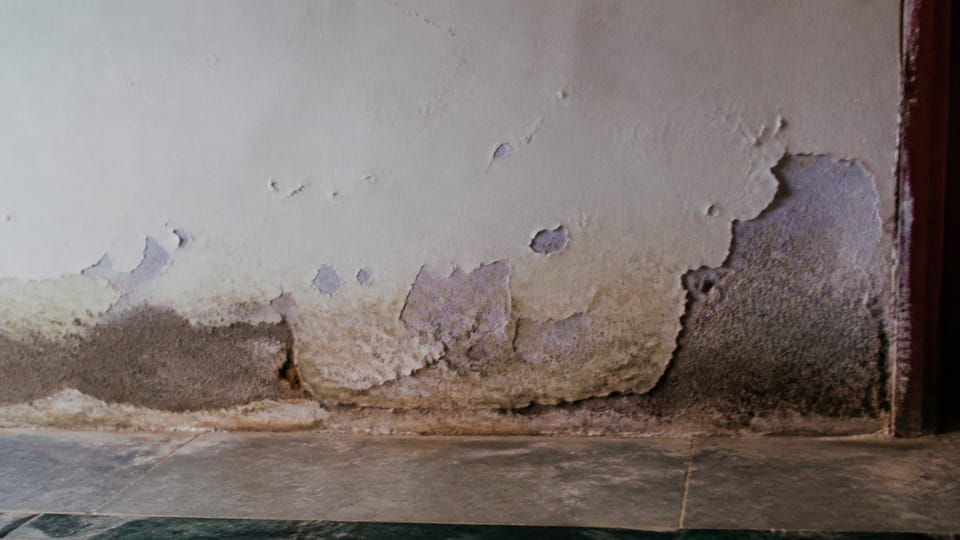
Why does wall paint peel, bubble or flake? Paint peels when moisture or salts are behind it, when the surface is not sound, or when the wrong primer or paint is used. IS 2395 Part 1 says a surface must be dry before painting, that a film paint should not seal in moisture, and that loose or flaking paint must be removed. The standard does not list every cause. Find and stop the moisture first, then scrape, prime and repaint.
On this page (9)
Paint that peels, bubbles or flakes is almost always telling you something about the wall behind it. The paint is the last layer. The cause is usually moisture, salts, a surface that was not sound, or a primer that did not suit the paint. This guide explains what the Indian painting code, IS 2395 Part 1, says about these causes and the repair, and what it does not say. It names no brand and gives no price.
Is the wall dry?
IS 2395 says that painting may be done “when the surface has properly set and cured and when all excess moisture has dried out from it and from the backing” (clause 5.2.2). The code says that solvent-based paint should not be applied “until there is every reason to believe that the walls are thoroughly dry” (clause 7.1.1(c)).
If the surface stays damp, the code is firm. It says that “If a surface remains persistently damp, the cause shall be examined and the surface suitably treated before attempting to decorate” (clause 5.2.3). A paint layer over a damp wall will lift, because the moisture has nowhere to go.
The code also warns against sealing new walls. It says that “When painting new walls, any type of paint system which will seal in the moisture shall be avoided” (clause 5.2). The standard describes the same risk for retarded hemi-hydrate gypsum plaster: moisture “is sealed into the plaster by the premature application of an impervious paint film” (Annex A-2(e)).
Are salts or efflorescence the cause?
White salt on the wall, called efflorescence, shows that water is moving through the wall. IS 2395 says that “Local areas affected by efflorescence (see Annex C) shall be cut out and replastered, or treated with metal foil” (clause 5.2.3).
The standard also says that “Sealing coats may not effectively hold back strong efflorescence. Dry brushing of the growth as it appears is the only remedy” (Annex C, clause C-3.1). The standard treats these differently: a hydrofuge silicone treatment of an old wall “will frequently stop the efflorescence” because it blocks the movement of moisture, so the engineer or the painter should decide which fits your wall.
For efflorescence caused by salt solutions rising from the sub-soil, the annex says that “the only remedy is to provide bitumen or metallic seals in the walls above the ground level” (Annex C). If the damp comes from below, paint will not fix it. The damp must be stopped first.
Does the primer matter?
Yes. For solvent-based paint the standard says the primer “at least shall be of the alkali resistant type” (clause 7.1.3.5), and it says the primer must suit the porosity of the surface (clause 5.2.2). Lime plaster is alkaline, and the standard warns that until it is “thoroughly dried and matured”, it can cause “alkali attack on solvent based paints and distempers” (Annex A-1(a)).
Where suction is so high or variable that a normal paint job is unlikely to give a good finish, the code says that for emulsion paint, “A coat of the same paint thinned with water or sealers recommended by the manufacturer” (clause 5.4.1). The standard also says that treating a surface with “acids or salts such as zinc sulphate is not advisable as the risk of alkali attack is not reduced appreciably and efflorescence may be increased” (clause 7.2).
How is the loose paint removed?
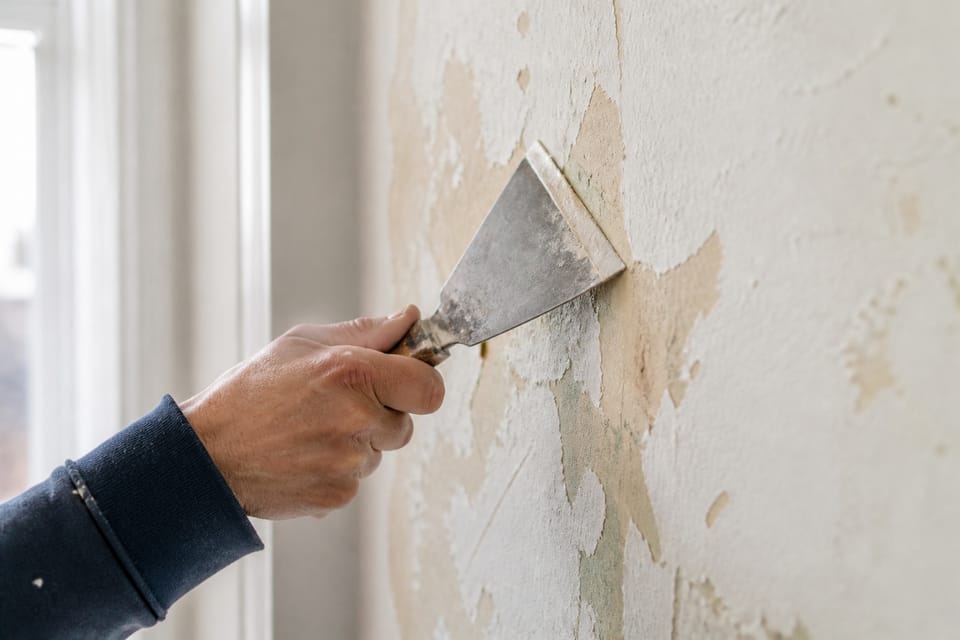
The code says that “Any existing paint showing extensive flaking, bleaching, or saponification (as shown by stickiness or the presence of yellow soapy runs) shall be removed by scraping and washing and the surface allowed to dry completely” (clause 7.1.3.2). It also asks for “removing all loose or softened paint and bringing forward the treated patches with primer and undercoating before applying a fresh coating over the whole area” (clause 7.1.3.3).
Cracks and uneven areas must be made good first. The code says that loose or uneven areas or any major cracks “shall be cut out in V shape and made good” (clause 7.2).
What should I check?
This section is practice, not a code rule.
- The wall is dry, and the damp source has been found and stopped, before any paint goes on.
- Any salt is brushed off, and the source of the water is found, before the repair.
- The loose paint is scraped off and the wall is washed and dried.
- The primer suits the paint and the surface, as the paint maker’s instructions say.
- The new coats go over the whole area, not only the patch.
What mistakes should I avoid?
This section is practice.
- Painting over a damp patch and expecting the paint to hold.
- Sealing a new wall with a film paint that traps the moisture.
- Scraping one patch and leaving the flaking paint round it.
- Skipping the primer on a lime surface, or using a primer that does not suit the paint.
- Painting too early after plaster or brickwork. The standard sets waiting periods for new brickwork and for cement paint, and the painter should follow them.
Frequently asked questions
How long should I wait before painting new plaster?
For new lime plaster, IS 2395 says it should, where possible, be left unpainted for the first few months (clause 7.1.1(a)). IS 2395 sets waiting periods for new brickwork and for cement paint, and says that solvent paints should not be used until several months have passed on some surfaces (Annex A-3). It gives no single figure for every wall. Ask the painter to check the wall’s dryness rather than the calendar.
Can paint alone fix peeling paint?
No. If the cause is moisture or salts, the paint will peel again. Find the cause, then repair and repaint.
Does the standard list every cause of peeling?
No. The code covers the surface, the moisture, the salts and the primer. It does not list every cause of peeling or give a repair method beyond scraping, cutting out, priming and painting. Ask the painter and, for a damp wall, an engineer.
Related guides
This guide is general information. Read the disclaimer. Your painter and engineer decide the repair for your wall.
Sources
General information only. It is not a structural design or professional advice. Ask a licensed structural engineer or architect to check your plans and site.