
Short answer
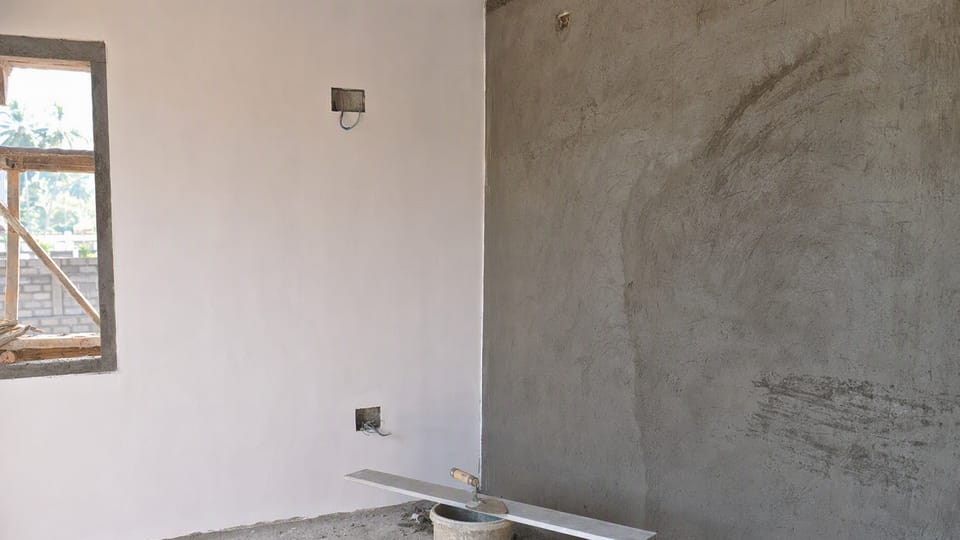
Should I use gypsum plaster or cement plaster? Use gypsum plaster only on dry inside walls and ceilings. It gives a smooth surface fast and the makers say it needs no water curing, but an Indian Standard says it is not suitable for external walls, and constant damp makes it fail. Use cement plaster outside, in bathrooms and on any wall that may get wet, and cure it with water. Your engineer decides each wall.
On this page (10)
- What is the difference between gypsum plaster and cement plaster?
- Where can each be used?
- How thick is gypsum plaster?
- Does gypsum plaster need curing?
- Why does damp matter so much for gypsum?
- Which paint and putty go on gypsum plaster?
- What mistakes should I avoid?
- Frequently asked questions
- Related guides
- Sources
More Indian homes now get white gypsum plaster on the inside walls instead of grey cement plaster. Contractors like it because it is quick and smooth. Owners worry about bathrooms, outside walls and cracks. This page compares the two from what the Indian Standards and the makers’ own data sheets say, explains where each one suits a house, and lists the mistakes that cause trouble. It gives no prices and ranks no brand. Thickness figures are quoted only from named data sheets, because no Indian Standard sets a thickness for gypsum wall plaster.
What is the difference between gypsum plaster and cement plaster?
Cement plaster is cement, sand and water mixed on site. IS 1661, the Indian code for cement and cement-lime plaster, covers it on brick, stone and concrete walls, and its table of plaster types lists them for both internal and external use. It hardens slowly and must be kept wet (cured) for days.
Gypsum plaster is factory-made powder based on gypsum, mixed with water on site. IS 2547 is the Indian Standard for the material. Part 1 covers gypsum plasters such as plaster of paris, and Part 2 covers premixed lightweight plasters made of gypsum plaster and a lightweight aggregate. The bagged one-coat wall plasters we checked are of this premixed type. It sets in minutes, not days.
Plaster of paris (POP), used for punning and ceilings, is one class of gypsum plaster in IS 2547 (Part 1). So POP is a gypsum plaster, but not every gypsum plaster is POP.
Where can each be used?
| Question | Gypsum plaster | Cement plaster |
|---|---|---|
| Inside walls and ceilings in dry rooms | Yes. Makers describe it for internal walls and ceilings | Yes |
| External walls | No. IS 3630 says gypsum plaster is not suitable for external walls, protected or not | Yes. IS 1661 lists it for internal and external use |
| Walls that stay damp (leaks, rising damp) | No. IS 2395 warns it can fail to harden or break down when kept damp | Yes, but fix the damp first |
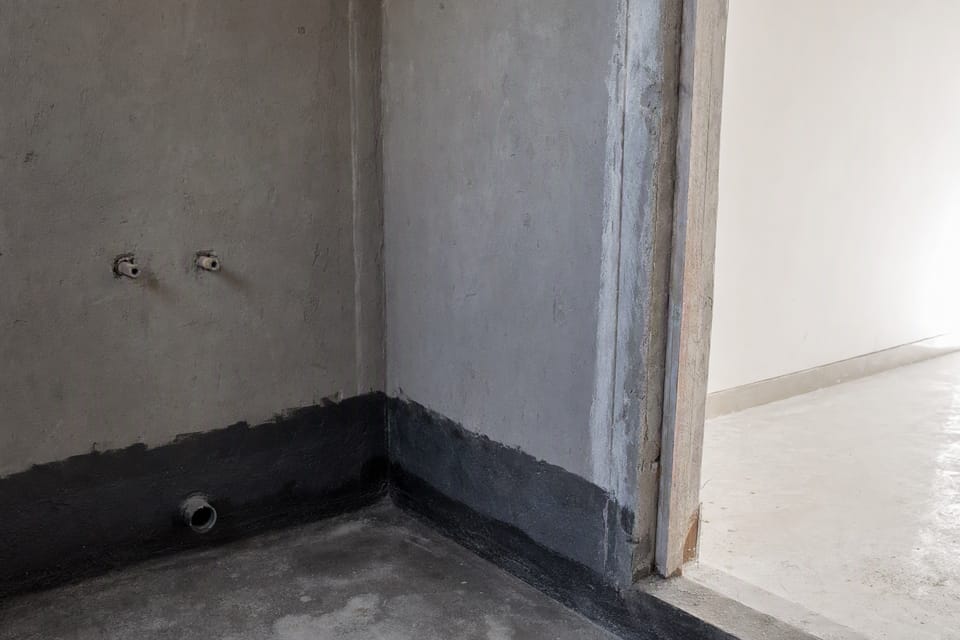
| Bathrooms, wash areas | Ordinary grades: no. One maker sells a moisture resistant grade but still says it is not for long, continuously damp surfaces | Yes; in common practice it is the base for waterproofing and tiles |
| Water curing | Makers say none is needed | Needed: IS 1661 asks for the finishing coat to be kept wet for at least seven days |
| Time before painting | Gyproc, JK and Birla White say about 72 hours of drying | Only after at least seven days of curing (IS 1661) and drying |
IS 3630 is the Indian code for gypsum block partitions. Its clause 6.1.1 says “Gypsum blocks, gypsum plaster-board and gypsum plaster are not suitable for use in external walls, whether protected or unprotected.” No Indian Standard we found sets out how to apply gypsum wall plaster, so the rest of the guidance comes from the makers and from the painting code, IS 2395.
How thick is gypsum plaster?
No Indian Standard gives a thickness for gypsum wall plaster. These are the makers’ own figures from their published sheets:
| Product and sheet | One coat on walls | Ceilings | Most in total |
|---|---|---|---|
| Gyproc Elite 90 (data sheet, 2021) | 6 to 15 mm (average) | up to 10 mm | 30 mm on walls, 20 mm on ceilings, in two coats |
| JK PlastoMaxX90 (brochure) | 6 to 13 mm (average) | up to 10 mm | 30 mm on walls, 20 mm on ceilings, in two coats |
| Birla White Zypcote (brochure) | 8 to 10 mm | not stated | not stated |
Thicker is not better. If the wall is so uneven that it needs more than the one-coat range, the sheets ask for two coats, and very uneven walls are a sign the masonry needs correcting first. The CPWD specification for gypsum lightweight plaster takes the thickness from the item in the contract, so ask your engineer to write it there. For cement plaster thickness and quantities, see our guide to plaster quantity.
Does gypsum plaster need curing?
Not with water, the makers say. That is a big part of why it is faster.
But it must not dry too fast either. IS 2395 describes a defect called “dry out”: a soft, powdery surface that forms when the plaster loses its water before it has set, for example over a very absorbent wall, in fast-drying weather or with artificial heat. That is why Gyproc and JK ask for the wall to be dampened with clean water 5 to 10 minutes before plastering, to control suction.
Cement plaster is the opposite. IS 1661 says the finishing coat should be kept wet for at least seven days and protected from extremes of weather. CPWD says the same.
Why does damp matter so much for gypsum?
IS 2395 says retarded hemihydrate plasters (the type used for walls) that are exposed continuously to damp are liable to “sweat out”: they fail to harden or they break down. It happens when the wall behind is permanently damp, or when a paint that does not breathe is put on before the plaster has dried.
So check the wall first. Fix leaks, seepage and rising damp before any plaster goes on. Our guide to damp walls explains how to tell the causes apart.
Which paint and putty go on gypsum plaster?
IS 2395 says that once gypsum plaster has set, hardened and dried, it can take almost any type of paint except cement paint. CPWD also says waterproof cement paint must not be applied on gypsum.
One maker’s brochure (JK, for PlastoMaxX) says paint can go directly on the plaster with no other layer. The other sheets say only that the dried surface is ready for painting. Follow the paint maker’s system, and ask your engineer whether putty is needed. For putty itself, see our guide to wall putty coverage and coats.
What mistakes should I avoid?
These come from the codes, the makers’ sheets and site practice:
- Using gypsum plaster on an outside wall, a parapet or a wall exposed to rain (IS 3630).
- Using an ordinary grade in a bathroom, wash area or on a wall that stays damp (IS 2395, makers).
- Plastering over a wet wall, fresh (“green”) masonry or visible water (makers).
- Skipping the light wetting before plastering, or the bonding agent on very smooth concrete (makers).
- Skipping the glass fibre mesh that Gyproc recommends where concrete beams or columns meet brickwork, to reduce cracks at that joint (maker). IS 1661 notes that reinforcing plaster over such a joint “is not always successful”, so the mesh reduces the risk rather than removing it.
- Adding water to a batch that has started to set (makers).
- Storing bags in a damp place. Gyproc and JK say bags must be stored dry, and IS 2547 (Part 1) asks for gypsum plasters to be packed in watertight bags.
- Painting before the plaster is fully dry, or using cement paint on it (IS 2395).
- Assuming gypsum plaster never cracks. Cracks at joints between concrete and brick have causes in the structure behind the plaster. Our guide to hairline cracks in plaster explains them.
Frequently asked questions
What is the thickness of gypsum plaster?
No Indian Standard sets it. The makers’ sheets we read give one coat of about 6 to 15 mm on walls and up to 10 mm on ceilings, with different ranges for different products. Your engineer should write the thickness into the work order.
Can gypsum plaster be used in a bathroom?
Ordinary gypsum plaster should not be used where walls get wet. One maker sells a moisture resistant grade for wet areas but still says it is not for long, continuously damp surfaces. In common site practice, bathrooms get cement plaster as the base for waterproofing and tiles. Ask your engineer.
Can gypsum plaster be used on external walls?
No. IS 3630 says gypsum plaster is not suitable for external walls, whether protected or unprotected. Use cement plaster outside.
Does gypsum plaster need water curing?
The makers say no water curing is needed. It must still not dry too fast, so the wall is dampened lightly before plastering.
Are POP and gypsum plaster the same?
Plaster of paris is one class of gypsum plaster under IS 2547. The bagged wall plasters sold for one-coat work are usually premixed lightweight gypsum plasters, a different product with a slower set.
Is gypsum plaster stronger than cement plaster?
The sources we read make no such claim, and we found no standard comparing them on strength. Gypsum plaster is chosen for speed and a smooth finish on dry inside walls, not for strength.
Related guides
- Plaster quantity: cement and sand per sq ft, with a calculator
- Hairline cracks in plaster: causes and what to do
- False ceiling vs POP ceiling: differences, damp problems and repair
- Wall putty vs POP vs white cement: which goes where
- Plaster curing: how many days and how to do it
This guide is general information. Read the disclaimer. Your engineer decides which plaster goes on each wall, its thickness and the paint system, and the maker’s current data sheet decides how its product is applied.
Sources
- IS 3630:1992, Construction of Non-load Bearing Gypsum Block Partitions - Code of Practice (First Revision). Clause 6.1.1.
- IS 2395 (Part 1):1994, Painting of Concrete, Masonry and Plaster Surfaces - Code of Practice, Part 1: Operations and Workmanship (First Revision). Annex A-2 (gypsum plasters).
- IS 2547 (Part 1):1976, Gypsum Building Plaster, Part 1: Excluding Premixed Lightweight Plasters (First Revision). Clauses 1, 3.1, 7.1.
- IS 2547 (Part 2):1976, Gypsum Building Plasters, Part 2: Premixed Lightweight Plasters (First Revision). Clauses 1, 2.1, 6.1.
- IS 1661:1972, Code of Practice for Application of Cement and Cement-Lime Plaster Finishes (First Revision). Clauses 1.1, 12.1.6, 12.1.7, 16 and Table 2.
- CPWD Specifications 2019, Volume 2, Sub Head 13 Finishing: 13.1.6 (curing of cement plaster), 13.21.5 and 13.43 (gypsum light weight plaster). Copy hosted by Puducherry PWD.
- Saint-Gobain Gyproc India, product data sheet: Gyproc Elite 90 One Coat Gypsum Plaster (20 October 2021).
- Saint-Gobain Gyproc India, product data sheet: Gyproc Elite MR moisture resistant gypsum plaster (24 May 2021).
- JK Cement, PlastoMaxX gypsum plaster brochure (PlastoMaxX90 technical data).
- Birla White (UltraTech), Zypcote gypsum plaster brochure.
General information only. It is not a structural design or professional advice. Ask a licensed structural engineer or architect to check your plans and site.