
Short answer
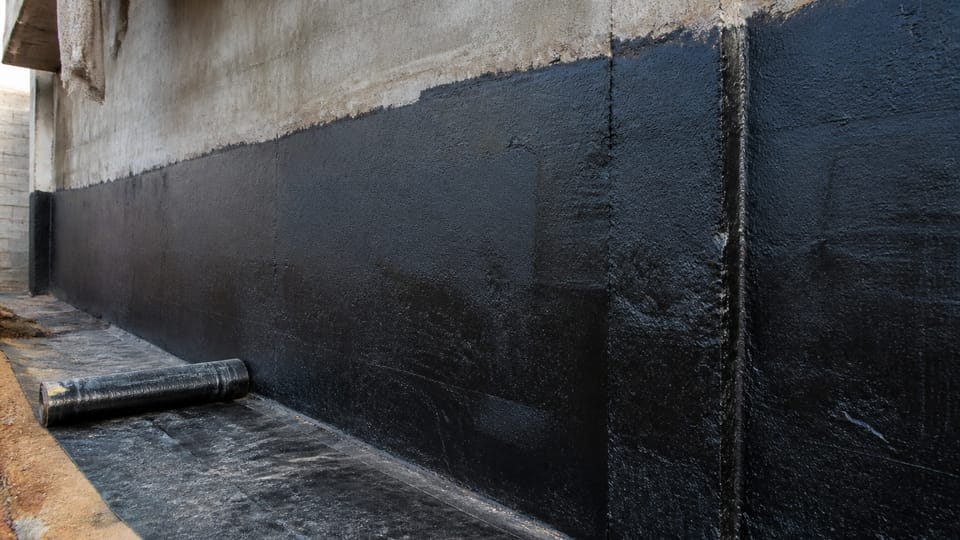
What is IS 3067? IS 3067 is the Indian code of practice for the design details and preparatory work for damp-proofing and waterproofing of buildings. It covers basements and roofs, and how to prepare the surface before a coating. It does not give roof slopes, ponding depths or test durations. Ask your engineer and the applicator which material standard the work follows.
On this page (12)
- What is IS 3067?
- What does it cover?
- When does basement work happen?
- What does it say about surface preparation?
- What does it not say?
- What do the companion standards cover?
- Waterproofing or damp-proofing?
- What should I ask the applicator?
- What mistakes should I avoid?
- Frequently asked questions
- Related guides
- Sources
Damp in a house is often blamed on the wrong thing. A wall that wicks water from the ground needs a different fix from a roof that lets rain through, and both need a coating that is put on a properly prepared surface. IS 3067 is the Indian code that sets out the design details and the preparation for this work. This page explains what it covers, what it leaves to other standards, and what it does not say. It gives no roof slopes, no ponding depths, no test durations and no thicknesses.
What is IS 3067?
IS 3067 is the code of practice for the general design details and preparatory work for damp-proofing and waterproofing of buildings. The copy read is the first revision, adopted by the Bureau of Indian Standards on 22 March 1988, with reaffirmation noted on the cover as 2000.
The foreword says the code gives guidance for preparing the surfaces of a building before damp-proofing or waterproofing, and that it is “an essential adjunct to the standards on damp-proofing and water-proofing of buildings” (cl 0.2). In other words, it is the preparation and design code that sits beside the material standards.
What does it cover?
Clause 1.1 says it covers the essential design details of damp-proofing and waterproofing of new and existing buildings, and the preparatory work before the treatment is applied, such as dewatering and surface preparation. Clause 1.1.1 says it applies to treatments using bitumen felts, bitumen mastic, lime concrete and similar materials.
The main headings are:
| Clause | What it deals with |
|---|---|
| 2 | The information needed for design: for basements, the water levels and the subsoil water; for roofs, the roof shape, finish and drainage |
| 3 | Design considerations, for basements and for roofs |
| 4 | Planning in relation to subsoil drainage |
| 5 | The time schedule for the work |
| 6.1 | Damp-proofing of basements, above and below ground, internal and external tanking, and gunite |
| 6.2 | Waterproofing of roofs, concrete and masonry roofs, and timber roofs |
The table names the headings in the standard. The numbers for thickness, height and slope are not in this page, and the copy read does not give them.
When does basement work happen?
Clause 2.1 says basement damp-proofing “shall be taken up only when the subsoil water level is at its lowest, that is, in dry season”. The design needs the highest water level expected, the water table in the rainy season, and the chemical and bacteriological effects of the subsoil water. Clause 4.1 says the water level has to be kept below the level of the work in progress, and that standing water in a basement should be drained out.
What does it say about surface preparation?
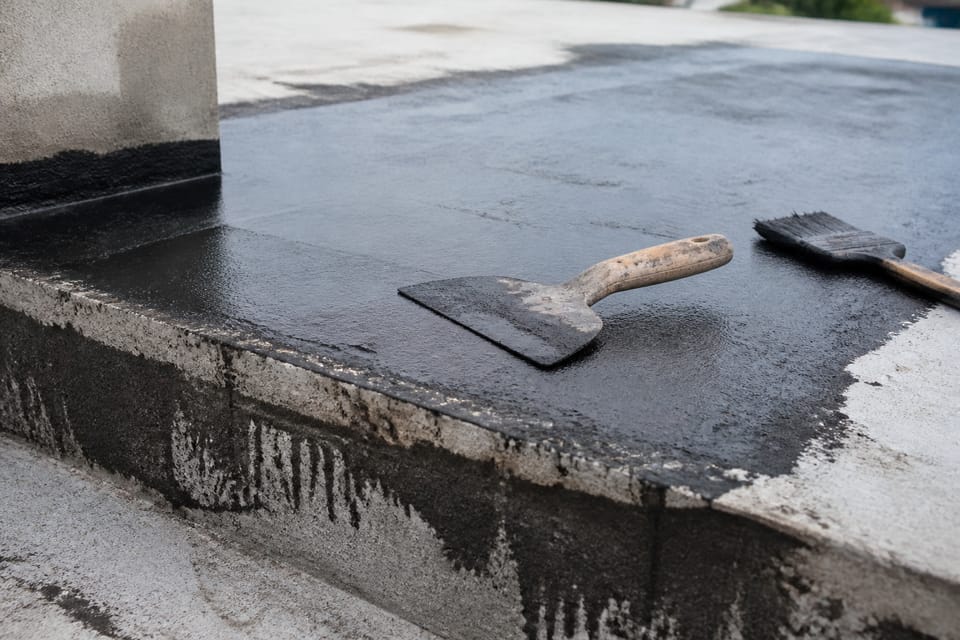
Clause 6.2.1 says cracks other than hair cracks are cut to a V section, cleaned and filled. It says roof surfaces are cleaned of fungus, moss and dust by wire brushing and dusting.
What does it not say?
This matters as much as what it says.
- No definitions. IS 3067 does not define damp-proofing or waterproofing. It has no definitions clause.
- No roof slope. The code does not give a gradient for a roof or terrace. It says drain outlets must prevent local accumulation of water on the roof surface, but it gives no fall.
- No ponding or flood test. The code has no test of a finished roof by flooding it, and no duration or depth for one.
- No wet areas. Bathrooms, kitchens and toilets are dealt with in IS 13182, not IS 3067.
- No guarantee. The code gives no guarantee period.
For the roof fall and the flood test, ask the engineer and the applicator for their written method. For the wet areas, the relevant code is IS 13182.
What do the companion standards cover?
Clause 0.5 lists the related standards, which are the material and product standards. They include IS 1346 (bitumen felts for roofs), IS 1609 (damp-proofing with bitumen felts), IS 3036 (lime concrete for a waterproofed roof finish), IS 4365 (bitumen mastic for roofs), IS 6494 (underground reservoirs), IS 7198 (damp-proofing with bitumen mastic) and IS 9918 (glass-fibre tissue reinforced bitumen). Their current editions are not checked here. Ask the applicator which of them the work follows.
Waterproofing or damp-proofing?
BMTPC’s house-building digest on dampness gives a plain split. Treatments given to prevent leakage in a house are generally termed waterproofing. Treatments given to keep the walls, floors and basements dry are termed damp-proofing. The digest advises the owner to seek the help of the architect or engineer. Practice point: both words are used loosely in trade, so ask which one the work is.
What should I ask the applicator?
These are practice points, not standard clauses.
- Which code, and which material standard, does the work follow?
- Was the surface sound, clean and dry before the coating went on?
- How are cracks prepared?
- What test is done on the finished surface, and when? Put it in writing.
- What does the written guarantee cover, and for how long?
What mistakes should I avoid?
These are practice points, not standard clauses.
- Treating the code as a roof-fall rule. It does not give one. Ask the engineer for the fall.
- Coating a damp surface. Check that the surface is dry, as CPWD cl 12.10.1 says for hot-bitumen roof painting.
- Skipping the crack preparation. Cracks must be cut and filled before the coating (cl 6.2.1).
- Confusing the wet-area code. Bathrooms and kitchens follow IS 13182.
Frequently asked questions
Is IS 3067 the code for bathroom waterproofing?
No. Wet areas are covered by IS 13182. IS 3067 covers basements and roofs.
Does IS 3067 give a roof slope?
No. Ask the engineer for the fall to the outlets.
Is there a flood test in IS 3067?
No. The code has no ponding or flood test. Ask the applicator for the test method and put it in writing.
Related guides
- Types of waterproofing for a house in India
- Waterproofing vs damp-proofing: the difference and where each is used
- Terrace leakage and waterproofing methods
- Guniting, shotcrete and grouting: what each is and where it is used
This guide is general information. Read the disclaimer. A qualified engineer and applicator decide the waterproofing for your house.
Sources
- IS 3067:1988, Code of Practice for General Design Details and Preparatory Work for Damp-Proofing and Water-Proofing of Buildings (first revision, reaffirmed 2000), cl 0.1, 0.2, 0.5, 1.1, 1.1.1, 2.1, 4.1, 6.1, 6.2. Read from an archive copy.
- BMTPC House Building Digest 12, Prevention of Dampness (government guidance, not a code).
- IS 13182 (2020), waterproofing and damp-proofing of wet areas, referred to only as the code for wet areas (not read here).
- CPWD Specifications 2019, Vol 1, cl 12.10.1 (roof bitumen painting, dry surface).
Change log
- : Added Related guides link to newly published article(s): guniting-shotcrete-and-grouting-what-each-is-and-where-it-is-used. No other text changed. Approved by the reviewing engineer (owner report, 2026-10-31).
General information only. It is not a structural design or professional advice. Ask a licensed structural engineer or architect to check your plans and site.