
Short answer
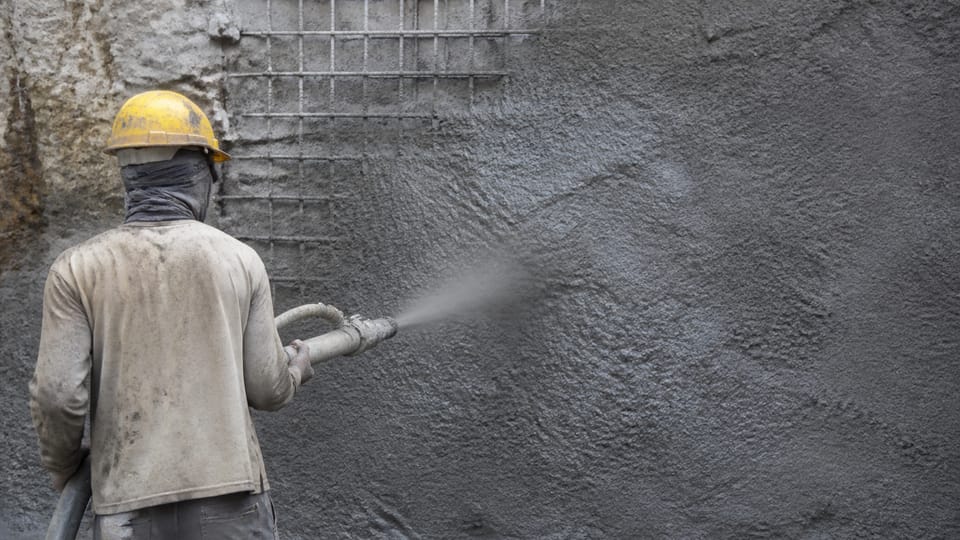
What is the difference between guniting, shotcrete and grouting? Shotcrete is mortar or concrete sprayed through a hose at high speed onto a surface. IS 9012 calls gunite a trade name for the dry-mix method of applying shotcrete. Grouting is injecting a fluid cement or resin into cracks. Each is used for different work on a house, and the engineer decides which suits the crack or the wall.
On this page (11)
Three words come up when a wall or slab needs repair: guniting, shotcrete and grouting. They sound alike, but they are different jobs. This page explains what each means in the Indian codes, where each is used on a house, and what to ask before the work starts.
It gives no mix, pressure, thickness, nozzle distance or crack-width limit. Those are design and workmanship values, and your engineer and the specialist set them.
What is shotcrete?
IS 9012 defines shotcrete (clause 2.1) as “mortar or concrete conveyed through a hose and projected at high velocity on to a surface”. The standard adds that the force of the jet compacts the material, so the mix can stand on a vertical or overhead surface without sagging (foreword 0.2). It covers two processes: the dry-mix process, where most of the water is added at the nozzle, and the wet-mix process, where all the water is mixed before the hose (clauses 2.2 and 2.4).
IS 9012 says shotcrete is suitable for new construction and for repair work, but that its properties depend a great deal on the conditions under which it is placed (foreword 0.4).
What is guniting?
Guniting is an older word for the same work. IS 9012 lists “gunite” among the informal names for shotcrete (foreword 0.3). It also defines “Gunite (Trade Name)” as “method of applying dry-mix shotcrete” (clause 2.3). So the standard treats gunite as a trade name for a method, not as a separate material. The two clauses are not identical, and the code keeps the word shotcrete throughout.
IS 3067, the damp-proofing and waterproofing code, uses gunite for the process, without defining it. It allows concrete and masonry surfaces, above and below ground, to be gunited for damp-proofing. It asks that loose and disintegrated material be removed and the surface cleaned with compressed air and water before guniting (clause 6.1.3).
What is grouting?
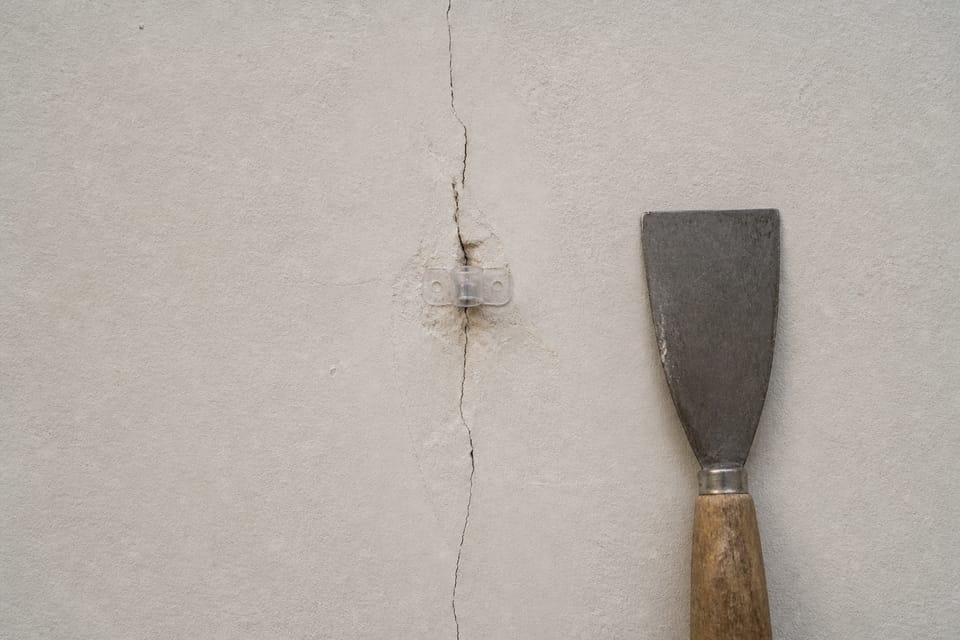
Grouting is injecting a fluid material into a crack or void. IS 13935 lists injection of cement, polymer-cement mixture or epoxy materials into the cracks in walls (clause 4.2.2). It says that cracks in load-bearing unreinforced members reduce their resistance, and that the critical ones are to be fully repaired structurally, either by injecting strong cement or chemical grout or by an external bandage (clause 6.1).
For minor and medium cracks, the same code describes pressure injection of a non-shrink polymer grout to restore the tensile strength of the cracked element (clause 6.2). Clause 5.2 notes that ready non-shrink grouts with a polymer are available, and that the polymer improves adhesion. Clause 5.4 notes that low-viscosity epoxy can be injected into fine cracks, and that higher-viscosity epoxy can be used for surface coating or for filling larger cracks.
Grouting is not tile grout. Tile grout is the joint filler between tiles. The two words are unrelated in the codes.
Where is each used on a house?
| Work | What the code says | Where it is used |
|---|---|---|
| Shotcrete (dry or wet mix) | Suitable for new and repair work; the standard’s named example is canal lining against earth (clause 8.1). Repair surfaces are prepared first (clauses 8.1.1 and 8.1.2). | Repair of a damaged concrete element, and lining of a surface |
| Gunite (dry-mix method) | A trade name for the dry-mix method (clause 2.3). Used for damp-proofing surfaces above and below ground (IS 3067 clause 6.1.3). | Damp-proofing or waterproofing a surface |
| Injection grouting | Cement, polymer-cement or epoxy into cracks; non-shrink polymer grout for minor and medium cracks (IS 13935 clauses 4.2.2, 6.2) | Narrow cracks in walls and in cracked concrete members |
| Grouting an existing wall | One way to improve the lateral strength of existing walls, but it cannot be relied on to improve or make new connections between walls at right angles (IS 13935 clauses 9 and 9.1) | Strengthening an old masonry wall, with the engineer’s design |
Source: IS 9012:1978, IS 13935:2009 and IS 3067:1988, as listed. The table gives the code’s words only. The choice on a particular crack or wall is the engineer’s.
Inline image
Why does preparation matter?
IS 9012 says that improper preparatory work is more often responsible for the failure of shotcrete in repair work than any other single factor (clause 8.1.1). It asks that the surface be cleaned of all loose and foreign material (clause 8.1.2), and that exposed reinforcement be cleaned of rust (clause 8.1.2), and that reinforcement in repair work be wired to nails in the existing masonry or concrete (clause 8.3.3).
The same preparation applies to a grout injection. Find and fix the cause of the crack first, remove loose or debonded material, and clean the crack before the injection. These are practice points that follow from the codes, not steps the codes list.
What should I ask before the work starts?
These questions are practice. They are not steps in the codes.
- What is the cause of the crack or the damage? Ask the engineer to find it before the repair is chosen. A grout cannot fix a settlement or a failed lintel.
- Is the repair designed by an engineer? Ask for the design note for a structural element, a load-bearing wall or a water tank.
- Who does the work, and who checks it? Ask for the name of the specialist firm and the site engineer’s inspection record.
- What is the method statement and the material data sheet? Ask for both in writing before the work starts.
- How will the result be checked? Ask for a written check, such as a test, a photograph record or a leak test.
What mistakes should I avoid?
These are practice points, not rules in the codes:
- Treating guniting as a cosmetic skin. Shotcrete has to be built to the full depth of the repair.
- Injecting grout without fixing the cause. The crack may open again.
- Expecting grout to restore a wide crack or a damaged lintel. A wide crack needs the engineer’s assessment.
- Skipping the surface cleaning before an injection. The grout will not bond properly.
- Confusing grouting with tile grout. They are different products and jobs.
- Accepting a tank repair without a leak test after the work. A staged test shows whether the repair holds.
Frequently asked questions
Is guniting the same as shotcrete?
In practice, the same process is usually meant. IS 9012 treats gunite as a trade name for the dry-mix method. Ask the contractor which process will be used.
Is grouting the same as plastering a crack?
No. Plastering fills a surface. Grouting fills a crack or void by injection. The code asks the engineer to choose the material for each crack.
Can grouting make an old wall earthquake-safe?
It can add to the strength of an existing wall, but IS 13935 says it cannot be relied on to improve or make new connections between walls at right angles. Any strengthening is the engineer’s design, not a single product.
Related guides
- IS 3067 explained: the code for damp-proofing and waterproofing
- Basement waterproofing: tanking from outside and inside
- Hairline cracks in plaster: causes and what to do
- Types of cracks in house walls: names, causes and who must judge
- How wall cracks are repaired: filling, injection and stitching
- Grout vs mortar: what each is made of and where each is used
This guide is general information. Read the disclaimer. Your structural engineer decides which repair is used for your wall, slab or tank.
Sources
- IS 9012:1978, Recommended Practice for Shotcreting (dry-mix and wet-mix). Foreword 0.2 to 0.5, clauses 1.1, 2.1 to 2.4, 4.3, 5.3, 5.4, 8.1, 8.1.1, 8.1.2 and 8.11 read. BIS record valid to 2031-03-27.
- IS 13935:2009, Seismic Evaluation, Repair and Strengthening of Masonry Buildings: Guidelines. Clauses 4.2.2, 5.2, 5.3, 5.4, 6.1, 6.2 and 9 read. BIS record valid to 2029-08-31.
- IS 3067:1988, Code of Practice for Damp-proofing and Water-proofing of Buildings (First Revision). Clauses 3.1 and 6.1.3 read for the use of gunite.
Change log
- : Added Related guides link to newly published article(s): how-wall-cracks-are-repaired-filling-grout-or-epoxy-injection-and-stitching. No other text changed. Approved by the reviewing engineer.
- : Added Related guides link to newly published article(s): grout-vs-mortar-what-each-is-made-of-and-where-each-is-used. No other text changed. Approved by the reviewing engineer.
General information only. It is not a structural design or professional advice. Ask a licensed structural engineer or architect to check your plans and site.