
Short answer
What is the difference between waterproofing and damp proofing? IS 4911 defines damp-proofing as resisting the passage of water in the absence of hydrostatic pressure, and waterproofing as preventing it under hydrostatic pressure. Indian codes use the two words loosely: IS 3067 covers both and calls basement treatment damp-proofing. A damp-proof course is one separate layer in a wall. DPM is UK usage with no IS definition.
On this page (9)
“Waterproofing” and “damp proofing” are used as if they were one thing, and contractors’ quotes often mix them. They are related, and the Indian standards themselves are not strict about the words. This page says what the two definitions in the Indian glossary are, where each word is used in the standards, what a damp-proof course is, and where the “DPM” in web pages comes from. It gives no prices, brands or lifespans. For the method for each place, it links to the guides that already give it.
What is the difference?
IS 4911 is the Indian glossary for this subject, though its scope is “bituminous waterproofing and damp-proofing materials”. Clause 2 defines:
- Damp-proofing: “Treatment of a surface or structure to resist the passage of water in the absence of hydrostatic pressure.”
- Waterproofing: “The treatment of a surface or structure to prevent the passage of water under hydrostatic pressure.”
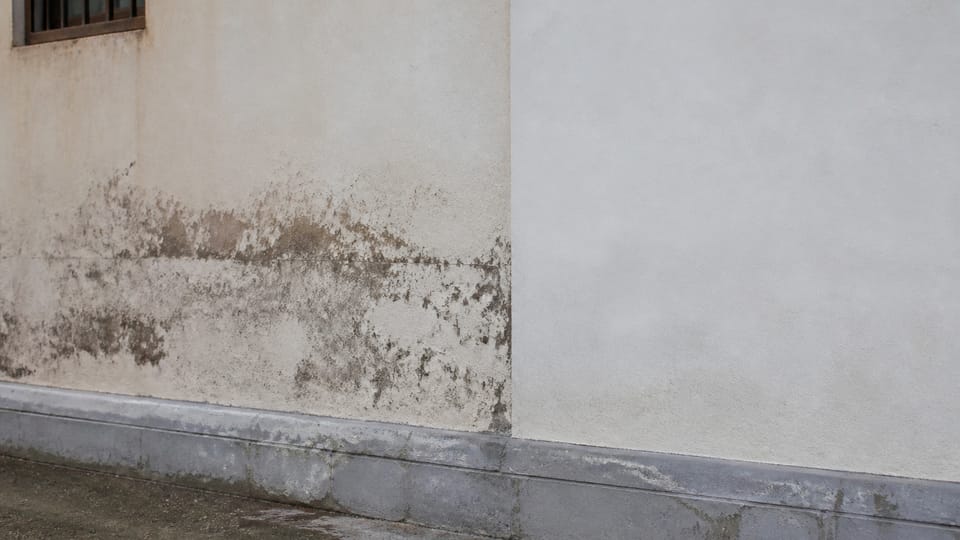
In plain words, the test is whether the water is under pressure. Moisture that rises by capillary action through a wall or floor is damp. Water that stands on a terrace, or presses against a basement wall or a tank, is under pressure. Our own reading is that this is a useful rule of thumb, not a clean legal line, as the next section shows.
Do the standards use the words strictly?
No. IS 3067:1988 covers both in one title and says it applies to “several types of damp-proofing and water-proofing treatment”. It does not define either term. It calls the basement treatment “damp-proofing”, although among the information to be collected for the design it lists the maximum water pressure and the water table in the rainy season (clause 2.1). IS 7198, the code for damp-proofing with bitumen mastic, says in clause 1.1 that it applies to the portion of buildings below ground to “provide a vapour seal against hydrostatic pressure” and to walls and floors above ground to prevent water rising by capillary action. IS 13182:2020 is titled “Waterproofing and Damp-Proofing of Wet Areas in Buildings” and writes “waterproofing/damp-proofing” in its scope, without defining damp-proofing.
So the codes’ usage follows the place more than the pressure test: damp-proofing is the word for walls, floors and basements, and waterproofing for roofs and wet areas. That reading is ours. Ask a contractor which layer is being quoted, and where.
What is a damp-proof course, and what is a DPM?
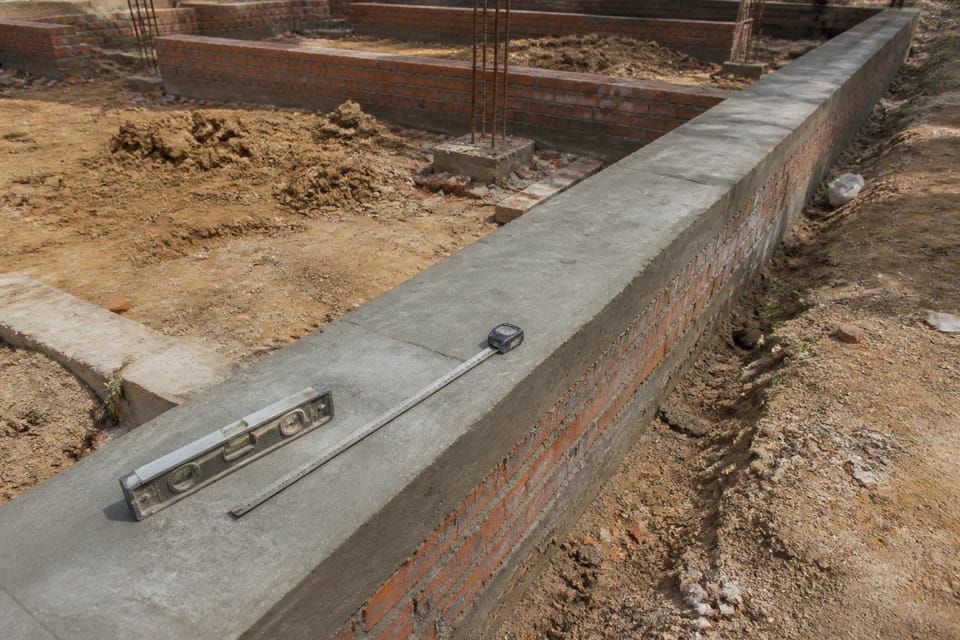
IS 2212 defines a damp-proof course as “A layer of impervious material laid or inserted in a structure to arrest the permeation of dampness.” Its clause 6.8.1 says the function is “to prevent the passage of water from an external source into a structure or from one part of a structure to another”. A DPC is one element of the wall. See damp-proof course: what it is and where it goes for where it sits and how to check it.
“DPM” (damp-proof membrane) is a term from UK practice: England’s Approved Document C, for example, uses “damp-proof membrane” for floors. In that practice it is usually a sheet under a ground floor slab joined to the wall DPC. We found no Indian Standard that defines a damp-proof membrane, and none aimed at the floor of an ordinary house. IS 3067 clause 6.1.1, inside its basement clause, deals with moisture rising by capillary action above ground level, and gives points for flooring in buildings like godowns and factories and where the rise of the sub-soil water table is severe. If a seller or drawing shows a “DPM”, ask which material and which standard it follows. IS 4911 defines a membrane as “any functionally continuous flexible structure of felt or fabric and bituminous cemeting [sic] material used for roofing or waterproofing”, which is a bitumen-felt meaning. Some Indian product standards, such as IS 16532 for APP membranes, carry “waterproofing and damp-proofing membrane” in their titles, but they specify bituminous sheet products and do not define a damp-proof membrane for floors.
Where is each used?
| Place | Word the standards use | What the standard says | Where to read more |
|---|---|---|---|
| Wall base, plinth | Damp-proof course | IS 2212 6.8: a layer of impervious material to stop water rising or passing between parts of a structure | DPC guide |
| Basement | Damp-proofing | IS 3067 3.1(d): “Damp-proofing treatment shall be external for all new structures”; IS 1609 covers bitumen felt for foundations, basements and walls | Engineer’s design |
| Floors and walls above ground level | Damp-proofing | IS 7198 1.1(b): walls and floors above ground, to prevent water rising by capillary action | Damp walls guide |
| Terrace and roof | Water-proofing | IS 3067 covers roofs; IS 1346 covers bitumen felt on roofs | Terrace guide |
| Bathroom, kitchen, balcony, overhead tank | Waterproofing/damp-proofing | IS 13182:2020 covers these wet areas | Bathroom guide |
IS 3067 also says the basement damp-proofing work shall be taken up only when the sub-soil water level is at its lowest, in the dry season (clause 2.1). A damp-proof course in a wall can itself be a layer of dense concrete with a waterproofing treatment (IS 2212 6.8.1.1), so the two words can describe one element. We give no thicknesses or mixes here.
Which one do I need?
That is a question about where the water comes from, and an engineer decides it. A useful order, as practice and not a code rule:
- Find the source: ground moisture, rain on a wall, water on a roof or floor, or condensation. See damp walls: rising damp, seepage or condensation.
- Fix the cause first: a leaking pipe, a blocked outlet, a missing plinth apron.
- Then choose the treatment for the place from the table, not a product by its label.
- Ask for the layer, the place and the standard in the quote, and for a test where one applies, such as the ponding test on terraces and bathrooms.
A waterproof coating on the inside face does not replace a DPC. Integral waterproofing compound in mortar is a material tested to IS 2645, and it is not a DPC or a membrane: see integral waterproofing compound: what IS 2645 says.
What mistakes should I avoid?
These are practice, not code rules.
- Treating the words as interchangeable, so the quote covers the wrong layer.
- Painting waterproof paint over a damp wall without finding the source.
- Expecting a DPC to cure a roof leak, a pipe leak or condensation.
- Skipping slope, outlets and drainage and relying on a coating or compound.
- Taking “DPM” from a web page as an Indian requirement.
- Believing a seller’s promise of “permanent” protection.
Frequently asked questions
Is waterproofing the same as damp proofing?
No, in the glossary. IS 4911 separates them by hydrostatic pressure. In use, the Indian codes are looser, and IS 3067 covers both.
What is the difference between DPC and DPM?
A DPC is a layer of impervious material in a wall (IS 2212). “DPM” is a UK term, usually for a sheet under a ground floor, and we found no Indian Standard that defines it.
Does waterproofing stop rising damp?
The standards we read do not say so. They treat water rising by capillary action as a damp-proofing matter (IS 7198 1.1(b), IS 2212 6.8). In practice, a coating on the face can hide a stain without stopping the water, so find the source first and ask your engineer.
Is damp proofing only for basements?
No. IS 2212 places a damp-proof course in ordinary walls above ground, and IS 7198 covers walls and floors above ground as well as below.
Which is better, waterproofing or damp proofing?
Neither is better. They are for different places and different water. The standards do not rank them.
Related guides
- Damp-proof course: what it is and where it goes
- Damp walls: rising damp, seepage or condensation
- Terrace leakage and waterproofing methods
This guide is general information. Read the disclaimer. Your engineer decides the treatment for each part of your house.
Sources
- IS 4911:1986, Glossary of Terms relating to Bituminous Waterproofing and Damp-Proofing of Buildings (first revision): clause 1.1 and clause 2 definitions of damp-proofing, waterproofing and membrane. BIS lists it as not withdrawn.
- IS 3067:1988, General Design Details and Preparatory Work for Damp-Proofing and Water-Proofing of Buildings (first revision): clauses 1.1, 1.1.1, 2.1, 3.1(d) and 6.1.1.
- IS 2212:1991, Brick Works, Code of Practice (first revision): clause 2 (damp-proof course), clauses 6.8.1 and 6.8.1.1.
- IS 1609:1991 (damp-proofing treatment using bitumen felts) clause 1.1; IS 7198:1974 (damp-proofing using bitumen mastic) clause 1.1; IS 13182:2020 (waterproofing and damp-proofing of wet areas) title and clause 1.1; IS 16532:2017 (APP membrane) title.
- Approved Document C, Site Preparation and Resistance to Contaminants and Moisture (England, 2013), for the UK use of the term damp-proof membrane. A foreign document, used only to explain the term.
General information only. It is not a structural design or professional advice. Ask a licensed structural engineer or architect to check your plans and site.