
Short answer
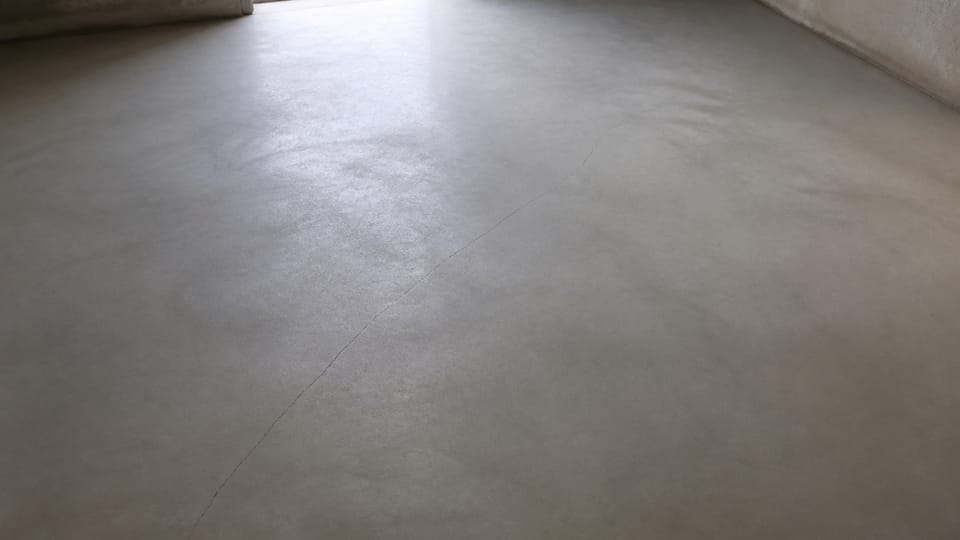
Why does a cement (IPS) floor crack and how is it repaired? IS 2571:1970 ties cracking and failure to drying shrinkage from too much water, poor bond between topping and base and a settling sub-base, and asks for panels to reduce the risk of cracking. It has no crack repair method. Where a floor is judged unsatisfactory, it says the topping is cut out and renewed, preferably by whole panels.
On this page (10)
- What is an IPS floor?
- Why does a cement floor crack?
- What does the code say about panels and curing?
- How does the code say to check a floor?
- How do I sort a crack before it is repaired? (practice)
- How are cracks repaired? (practice)
- What mistakes should I avoid? (practice)
- Frequently asked questions
- Related guides
- Sources
A crack in a cement floor is one of the most common worries after a house is handed over, and it can mean anything from a shrinkage line that never changes to a sign that the filling below has settled. The Indian code for this floor, IS 2571, is a 1970 code of practice for laying it. It names the causes and the checks. It does not give a crack repair method, so this page says that plainly and sorts the rest as practice. It gives no crack width, no filler product and no price. A crack in the structural slab below the floor is a different matter and goes to the engineer.
What is an IPS floor?
IPS stands for in-situ cement concrete flooring: a topping of cement concrete laid on a base, finished by trowel, usually in panels. IS 2571 clause 1.1 covers “laying and finishing of in-situ cement concrete flooring for non-industrial and light industrial buildings”; heavy duty floors and acid or alkali resisting finishes are not dealt with. The floor can be laid monolithically with the base, or as a separate topping on a hardened base (bonded construction). This guide is about cracks, not about how to lay the floor.
Why does a cement floor crack?
IS 2571 gives these points. Some clauses link them to cracking and some to wear or finish, as the table says.
| Cause | What IS 2571:1970 says |
|---|---|
| Too much water | Clause 7.2.1: “High water-cement ratio will increase the drying shrinkage and decrease the strength, water-tightness and abrasive resistance of the concrete.” The concrete is to be as stiff as possible. See water-cement ratio: why extra water weakens concrete |
| Water or laitance rising at the surface | Clause 8.1.3.1: this “indicates that too much of water has been used”; the concrete should preferably be scraped and replaced, and the water “should on no account be absorbed by spreading dry cement” |
| Weak bond between topping and base | Clause 5.1.2: where a topping is laid separately on a set base, the difference in composition, temperature and moisture between base and topping “will cause cracking, curling and warping of the floor finish” unless good bond is produced |
| Settlement of the sub-base | Clause 8.1.1.1: “a settlement in the sub-base may cause the failure of the whole floor”. Clause 8.1.1.3, for expansive soils such as black cotton soil: settlement of the sub-base may cause cracking of the whole floor |
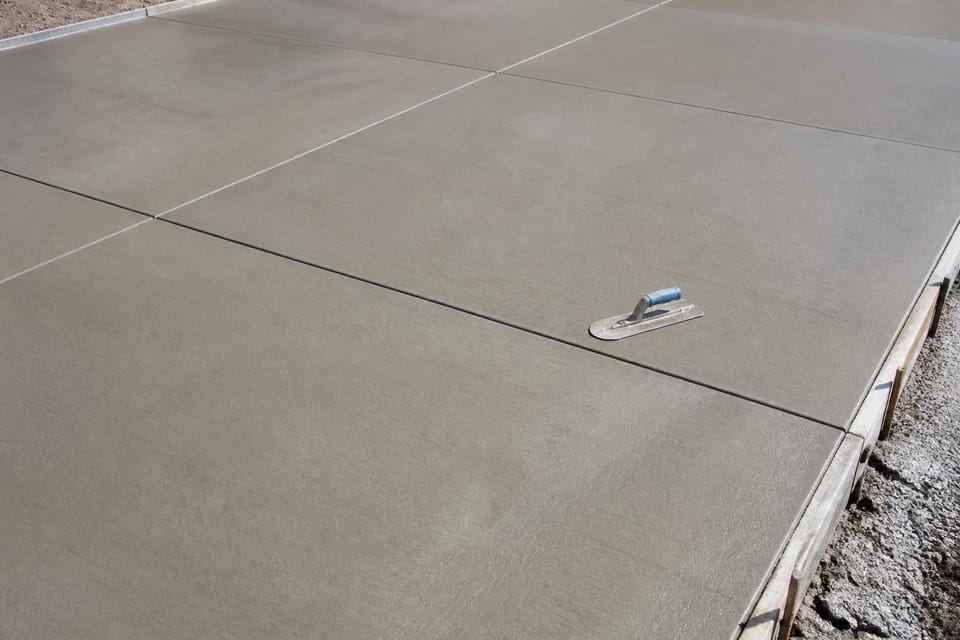
| No panels | Clause 5.7: the floor finish “shall be divided into suitable panels so as to reduce the risk of cracking” |
| Poor finishing | Clause 8.1.3.2: excessive trowelling early on works a cement-rich layer to the surface; trowelling dry cement on is not permitted. The clause is about the surface; the link to cracking is practice |
| Poor curing | Clause 5.3(d): adequate curing is “very essential to ensure good wear resistance”; clause 11.1 below. The clause speaks of wear; the link to cracking is practice |
What does the code say about panels and curing?
Clause 5.7 says the size of a panel depends on the thickness of the floor finish, whether it is monolithic or bonded, the temperature, the humidity and the season; panels are smaller in exposed situations or in hot and dry climates. It adds that “generally” no dimension of a panel shall exceed 4 m for a finish laid monolithically with the base, and 2 m for a finish laid separately on a hardened base, and that the length of a panel shall not exceed one and a half times its breadth. Your engineer or contractor decides the panel plan for your floor; these are limits from a 1970 code, not a design. For how joints and gaps are placed in a house, see expansion joints in a house: where walls and slabs need a gap.
Clause 11.1 on curing says the finished surface is protected from rapid drying by barriers against wind and strong sunlight, and, once hardened enough, “kept continuously moist for at least fifteen days”, with no traffic, and that regular traffic is allowed only after 28 days. These are the figures of the 1970 code, quoted as printed. If your contractor’s plan differs, ask why.
How does the code say to check a floor?
- Tap test (clause 12.1): adhesion between topping and base “may be examined by tapping the surface with the end of a rod or a hammer. A hollow sound indicates poor adhesion.”
- Does a hollow sound matter? (clause 12.2): “Loss of adhesion does not necessarily mean that the floor finish is unsuitable except when it is accompanied by visible curling of the edges of panels or cracks.” Where there is no visible lipping but the panel edges are noticeably higher than the centres, the floor “may deflect and break under the loads likely to be imposed in use and must be considered unsuitable”.
- Renewal (clause 12.2): where the flooring is unsatisfactory, the topping and any loose concrete in the base shall be cut out and the base keyed for a sound renewal, and it is “preferable” and will probably be necessary, owing to the possible loosening of adjacent work by vibration, to renew “the whole of the panel or panels where such defects occur”.
IS 2571 does not give a crack repair method, a crack width limit, a filler, a sealant or an injection. It does not define a crack. The only remedy it states is to cut out and renew the panel. Anything else on this page is practice.
How do I sort a crack before it is repaired? (practice)
This is practice, apart from the clauses named.
- Hairline map or crazing on the surface: usually shrinkage in the topping. Watch it.
- A straight crack along panel or joint lines: the floor cracking where the joints are meant to be.
- A crack following a wall line, plinth beam or column: two materials moving differently where they meet.
- A crack with a step, one side higher or lower: possible settlement of the filling or movement of the slab. Call the engineer.
- A damp or wet crack: a leak, rising damp or a pipe may be the cause. Find it first.
To look: does the crack grow over weeks? Mark its ends with a dated pencil line, as on the hairline cracks in plaster page. Is there a hollow sound? Does it continue into the walls? Do doors and windows stick? A growing crack, a step or matching cracks in walls and beams go to the engineer, not to the mason.
How are cracks repaired? (practice)
Find the cause first. A stable, dry crack is usually cleaned out, widened slightly and filled with a suitable repair material by a competent person, and the repair is cured. A hollow or sunken area is cut out and re-laid, as clause 12.2 describes for renewal. Plain cement slurry poured into a moving crack does not stop it, and it cracks again. A black cotton soil floor needs the engineer: see black cotton soil: why houses crack and what the engineer checks. We give no product names and no widths, because no standard we read does.
What mistakes should I avoid? (practice)
- Filling a crack with cement slurry and ignoring the cause.
- Tiling over a crack that is still moving.
- Ignoring a damp crack.
- A floor laid with no panels or joints.
- Extra water in the topping, or dry cement sprinkled to soak up water.
- Skipping the curing, on the floor and on the repair.
- Loading or parking on the new floor early.
- Calling every floor crack structural, or every floor crack harmless.
Frequently asked questions
Is a crack in a cement floor dangerous?
Often it is shrinkage and cosmetic. A crack that grows, has a step, matches cracks in walls or beams, or comes with a sagging floor needs the engineer.
Can I fill a floor crack with cement?
Plain cement slurry in a moving crack does not stop it. IS 2571 gives no crack filling method. Find the cause first.
What does a hollow sound under the floor mean?
IS 2571 clause 12.1 says a hollow sound indicates poor adhesion between topping and base. Clause 12.2 says it is not necessarily unsuitable unless there is curling or cracks.
How long should a new cement floor be cured?
IS 2571:1970 clause 11.1 says continuously moist for at least fifteen days, with regular traffic only after 28 days.
Related guides
- Expansion joints in a house: where walls and slabs need a gap
- Water-cement ratio: why extra water weakens concrete
- Black cotton soil: why houses crack and what the engineer checks
This guide is general information. Read the disclaimer. Your engineer decides whether a crack is structural and how it is repaired.
Sources
General information only. It is not a structural design or professional advice. Ask a licensed structural engineer or architect to check your plans and site.