
Short answer
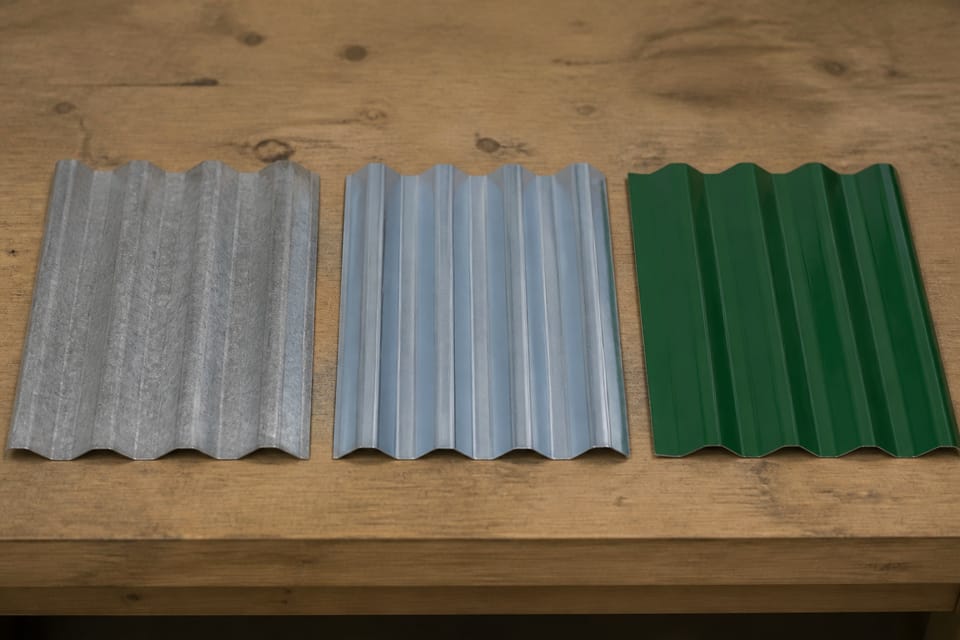
What is the difference between GI, galvalume and colour-coated roof sheets? GI sheet is steel with a zinc coating. Galvalume is steel with an aluminium-zinc coating. Colour-coated sheet is either of these with a paint layer added at the factory. As one manufacturer defines them, TCT is the thickness after the metal coating and BMT is the bare steel thickness. Ask the supplier for the standard, the coating and the thickness type in writing. Your engineer decides the sheet and the roof frame.
On this page (13)
- What is GI sheet?
- What is galvalume?
- What is colour-coated sheet?
- What do TCT and BMT mean?
- Which standards cover these sheets?
- GI, galvalume or colour-coated: which should you choose?
- What should you ask the supplier for in writing?
- How should sheets be stored on site?
- What is not on this page, and why
- What mistakes should I avoid?
- Frequently asked questions
- Related guides
- Sources
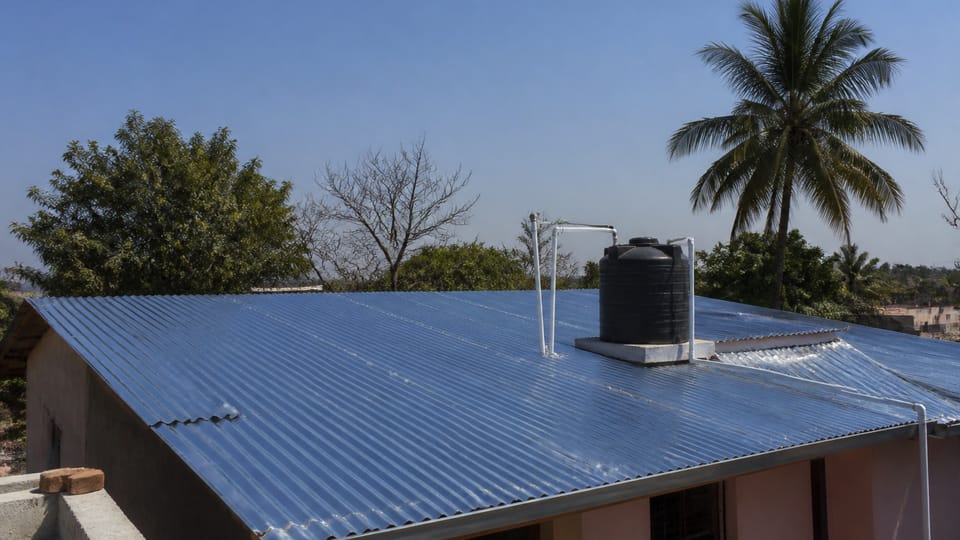
A metal roof is cheap to put up, light to carry and quick to finish. The choice of sheet still matters. Most sellers name a sheet by its coating or its “thickness”, and the two names can mean different things. This guide explains the three common types, what TCT and BMT mean, which Indian standards cover the sheets, and what to ask for in writing. It gives no prices and no brand ranking. It also gives no coating weight, paint thickness or sheet thickness that you should buy to, because those figures come from the standard text and the test certificate for your batch, not from a web page.
What is GI sheet?
GI means galvanised iron. In India the name is used for steel sheet with a zinc coating. IS 277:2018 covers galvanised steel strips and sheets, plain and corrugated. The BIS summary of that standard says galvanised sheets are used for “panelling, roofing, applications requiring lock forming etc.”, and that corrugated sheets are commonly used for roofing because corrugations add strength and make the sheets easier to handle and install.
The same summary says IS 277 covers steel galvanised by the hot-dip process only. Electro-galvanised sheet is a different standard.
The standard sets a minimum mass of zinc coating so the sheet resists rust. The summary does not give the minimum figures, so this page does not either. Ask your supplier for the coating class and the test result for the sheets you are buying.
What is galvalume?
Galvalume is the trade name many sellers use for steel coated with an aluminium-zinc alloy. The Indian standard for this coating is IS 15961. The 2012 edition has been withdrawn; the 2025 revision is the one in force.
The coating is different from zinc, so the two are not interchangeable. Sellers often say galvalume keeps its finish better when the sheet is bent or cut. That is a manufacturer claim. Test data behind it was not found for Indian conditions, so treat it as practice and check it against the supplier’s own test report.
What is colour-coated sheet?
Colour-coated sheet, also called pre-painted sheet, is a metal sheet with a paint layer applied on the factory coil. It can be made on a galvanised base or on an aluminium-zinc base.
The Indian standards are:
- IS 14246:2024 for continuously pre-painted galvanised sheet, and
- IS 15965:2012 for pre-painted aluminium-zinc coated sheet.
The paint layer adds a thickness of its own, which is why the thickness names below matter. The standards name the paint requirements; ask your supplier for the paint test results for the sheets you buy.
What do TCT and BMT mean?
These two names are trade terms. The BIS summary of IS 277 does not define them. The manufacturer NS BlueScope Malaysia uses them as follows:
| Term | Full name | What it measures |
|---|---|---|
| BMT | Base Metal Thickness | The thickness of the bare steel |
| TCT | Total Coated Thickness | The bare steel plus the metal coating |
| APT | After Painted Thickness | The TCT plus the paint layer |
So a sheet sold as “X mm TCT” can have thinner bare steel than a sheet sold as “X mm BMT”. Two sheets with the same number on the quote can differ in the steel they contain. Always ask which term the number refers to.
A public tender from BHEL Trichy (2019) asked for colour-coated sheet stated as “0.5 mm TCT / 0.45 mm BMT”. That tender is one buyer’s example of how the order was written. It is not a rule for your house.
Which standards cover these sheets?
| Sheet | Indian standard | Status (BIS listing, checked 2026-10-26) |
|---|---|---|
| Galvanised (GI), plain and corrugated | IS 277:2018 | In force |
| Aluminium-zinc coated steel (galvalume type) | IS 15961:2025 | In force; the 2012 edition is withdrawn |
| Pre-painted galvanised | IS 14246:2024 | In force; the 2013 edition is withdrawn |
| Pre-painted aluminium-zinc | IS 15965:2012 (amendment 1) | In force |
Standards are revised. Before you order, check the edition your supplier names with the Bureau of Indian Standards.
GI, galvalume or colour-coated: which should you choose?
There is no single answer, and this page does not rank the three. The choice depends on your site and your budget. These are practice points, not standard rules:
- Dry inland areas: many houses use plain GI with a good coating. Ask for the coating in writing.
- Coastal and salty air: sellers and writers disagree. Some say galvalume is the better choice, others say aluminium or a heavier coating is safer. I found no Indian test data on this. Ask for a salt-spray test report for the exact sheet, and ask your engineer.
- Look: colour-coated sheets come in many colours. The paint decides the finish, not the base metal.
- Cut edges and fixings: cut edges and screw holes are where rust starts. Protect them and use the fixings your supplier recommends.
What should you ask the supplier for in writing?
These points are practice, drawn from a public tender:
- The standard the sheet was made to, with the edition (for example, IS 277:2018 for GI).
- The coating type and the coating class or mass, with the test method.
- The TCT and BMT thickness, both in millimetres, stated by name.
- The paint thickness on both faces, for colour-coated sheet.
- The manufacturer’s test certificate for each delivery.
- The maker’s name and batch marking printed on the back of each sheet.
- For coastal sites, a salt-spray test report, with the test hours and the pass limit.
How should sheets be stored on site?
CPWD’s specification (2019, Volume 1, clause 1.16.3) says corrugated galvanised and aluminium sheets should be stacked flat on firm, level ground, with timber or other packing underneath. The stack should be no higher than 0.5 m. The sheets should be covered with tarpaulin or polyethylene against dust and rainwater. This is storage advice. It is not a rule for the roof.
What is not on this page, and why
- Coating weights, paint thickness and sheet thicknesses you should buy to. Use the standard text and the test certificate for the batch.
- Purlin and truss spacing, roof slope and load. These are structural decisions. Your engineer makes them for your roof.
- Prices and brand rankings. Prices change by city and season, and a brand ranking is not a test.
- Lifespan figures. Claims such as “lasts several times longer” come from sellers. No Indian test result was found to support a number.
What mistakes should I avoid?
- Asking for a sheet thickness without saying TCT or BMT.
- Comparing a GI sheet and a galvalume sheet by their coating numbers as if they were the same grade. They are different coatings.
- Buying colour-coated sheet without checking the paint on both faces.
- Leaving cut edges and screw holes unprotected.
- Choosing a sheet by price alone, without a test certificate.
Frequently asked questions
Is galvalume better than GI?
It depends on the site and on what the supplier can show. Galvalume is a different coating, not a simple upgrade. Ask for test results for your conditions and ask your engineer.
Is colour-coated sheet a different metal?
No. It is a coated metal sheet with a paint layer added. The paint is on top of a galvanised or aluminium-zinc base.
Does TCT mean thicker steel?
Not necessarily. Per the manufacturer’s definition, TCT is the thickness including the metal coating, and BMT is the bare steel. Ask which one your quote means.
Do I need an engineer for a metal roof?
Yes, for the roof frame, purlins and fixings. The sheet is only one part of the roof. Your engineer or structural designer decides those parts.
Related guides
- Terrace leakage and waterproofing methods
- What is RCC construction?
- Pre-monsoon checklist for house and site
This guide is general information. Read the disclaimer. Your engineer decides the sheet, the coating, the thickness and the roof frame for your house.
Sources
- IS 277:2018, Galvanized Steel Strips and Sheets (Plain and Corrugated), seventh revision, in force (BIS listing). Read: the BIS summary of IS 277:2018 (wording on roofing use, hot-dip process and minimum zinc mass). The clause text and the coating mass table were not read for this page.
- IS 15961:2025, Hot Dip Aluminium-Zinc Alloy Metallic Coated Steel Strip and Sheet, first revision (BIS listing; the 2012 edition is withdrawn). Title and status read; the text was not read for this page.
- IS 14246:2024, Continuously Pre-Painted Galvanized Steel Sheets and Strips, second revision, amendment 1 (BIS listing; the 2013 edition is withdrawn). Title and status read; the text was not read for this page.
- IS 15965:2012, Pre-Painted Aluminium Zinc Alloy Metallic Coated Steel Strip and Sheet (Plain), amendment 1 (BIS listing). Title and status read; the text was not read for this page.
- NS BlueScope Malaysia, Does the Thickness Add Up? (2025). Manufacturer document, used for the meaning of BMT, TCT and APT only. Not an Indian standard.
- CPWD Specifications 2019, Volume 1, clause 1.16.3 (storage of corrugated sheets on site). Used for the storage advice only.
- BHEL Trichy, tender enquiry 2001900117 (2019), colour-coated roofing sheet specification. Used only as one buyer's example of how TCT and BMT figures were written.
General information only. It is not a structural design or professional advice. Ask a licensed structural engineer or architect to check your plans and site.