
Short answer
How do I check whether a plot is in an approved layout before I buy it? The model bye-laws say no one may sub-divide land without the authority's approval of the layout plan. Ask the seller for the approved layout plan and the authority's approval, and check the plot is on it. RERA says a promoter selling plots in a real estate project must register it. The rules differ by state, so ask the local authority and a lawyer before you pay.
On this page (9)
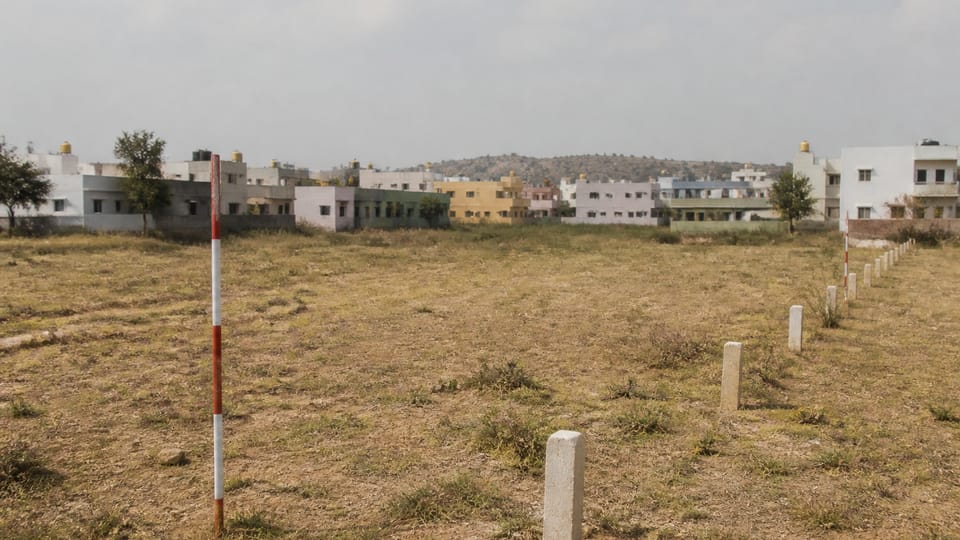
Plots are sold in many Indian towns with a layout drawn on a map and a brochure, and some of them are not approved. An unapproved plot can be hard to build on, and it can be hard to get a building permit later. This guide sets out what the model bye-laws say about layouts, what the real estate law RERA says about selling plots, and what to check before you pay. It names no state, no agency and no fee. The rules for your plot come from the local authority.
What does the model bye-law say about a layout?
The model bye-laws say that “No person shall carry out any development or redevelopment including sub-division on any plot or land (not forming part of any approved layout plan or scheme) or cause to be done without obtaining approval from the Authority for the layout plan” (clause 2.8.1). The layout plan “shall be formulated as per the norms of Master Plan and shall be approved as per the procedure followed by the Authority, under the provisions of relevant Act” (clause 2.10.3).
So the question for a buyer is whether the plot forms part of an approved layout plan. The model says that a plot that is not part of an approved layout cannot be sub-divided or developed without approval.
Does the model bye-law say who may sell a plot?
No. The model bye-laws do not give a rule that a plot may or may not be sold. The word “selling” appears only in the definition of a public garage. “Sale” appears in the document list (clause 2.9.4, “sale-deed”) and in clause 12.18, which says sale and purchase of listed heritage buildings needs no permission. Neither is a rule on selling plots. So a plot’s sale is governed by other law, including RERA for a plot in a real estate project.
What does RERA say about selling plots?
The Real Estate (Regulation and Development) Act, 2016 says that “No promoter shall advertise, market, book, sell or offer for sale, or invite persons to purchase in any manner any plot, apartment or building, as the case may be, in any real estate project or part of it, in any planning area, without registering the real estate project with the Real Estate Regulatory Authority” (section 3(1)). The rule covers advertising and booking as well as sale. The Act’s OCR copy needs checking against the official Gazette, and it has exemptions for small projects (section 3(2)).
Practice: when a promoter sells plots, ask whether the project is registered. Section 3(1) bars a promoter from selling or offering plots in a real estate project before it is registered. Check the registration number on the state authority’s website.
What is the owner’s duty?
The model bye-laws put the duty on the owner and the professional. Layout plans must be signed by the owner and by an architect (plots up to 1 hectare) or a registered town planner (beyond 1 hectare) (clause 2.11.2). The model also says that “Neither the granting of the permission nor the approval of the drawings… shall in any way relieve the Owner… from full responsibility” (clause 2.15.1(a)). So the approval does not remove the owner’s responsibility for the work.
Under clause 2.14.2(e)(iii), if the owner or professional violates the Master Plan, bye-laws, architectural controls or lease conditions, the model says “any construction so raised shall be deemed to be unauthorized and shall be liable for action”. Under clause 2.14.7 the authority “shall take suitable action, which may include demolition of unauthorized works, sealing of premises, prosecution”. Practice: an unapproved plot carries this risk for any house built on it.
What should I check before I buy?
This section is practice, not a code rule. The model bye-laws give no buyer’s checklist, so the checks below are practice.
- The approved layout plan from the local authority, with the plot number on it, and the seller’s copy checked against the authority’s copy.
- The sale deed and the title, and whether the plot is in the approved area of the layout.
- Whether the land is registered in a real estate project, and whether the project has a registration number, if the promoter is selling plots.
- Whether the roads, the drains and the open spaces on the approved layout are in place, and who will maintain them.
- Written confirmation from the local authority that the plot is in an approved layout, and whether it allows a building on it.
- A lawyer’s opinion before any money is paid. The rules are state rules, and this guide is not legal advice.
What mistakes should I avoid?
This section is practice.
- Paying a token amount on a brochure before checking the layout plan.
- Assuming the seller’s copy is the approved plan without checking the authority’s copy.
- Buying a plot that is not on an approved layout because the price is low.
- Building before the authority’s approval for the house on the plot.
- Accepting a promise that the layout will be approved later, without a written date and remedy.
Frequently asked questions
Can I buy an unapproved plot and get it approved later?
The model bye-laws require approval of the layout before sub-division or development (clause 2.8.1). Whether a plot can be approved later depends on the state’s rules, which this guide does not describe. Ask the local authority in writing.
Does RERA apply to every plot?
RERA applies to plots in a real estate project as the Act defines it, subject to its exemptions. Ask a lawyer whether the plot you are buying is covered.
What if the seller says the layout is approved?
Ask for the approval document from the local authority, and check it yourself. A statement from the seller is not the approval.
Related guides
This guide is general information, not legal advice. Read the disclaimer. Your lawyer and the local authority decide whether a plot is approved for your purchase.
Sources
General information only. It is not a structural design or professional advice. Ask a licensed structural engineer or architect to check your plans and site.