
Short answer
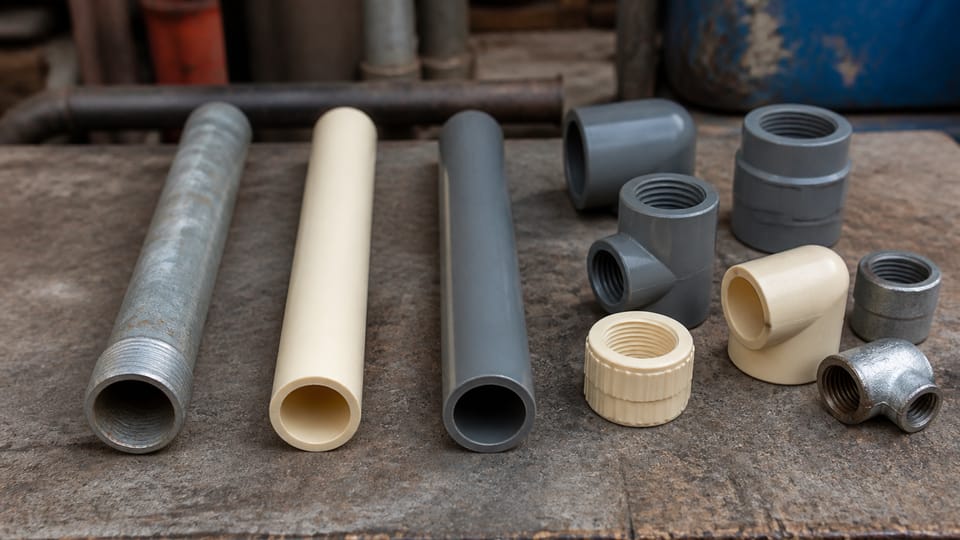
Should I use GI, CPVC or UPVC pipe for house plumbing? IS 1239 covers galvanised steel tube for water, gas, air and steam. IS 15778 covers CPVC pipe for potable hot and cold water up to 82°C, and IS 4985 covers UPVC pipe for water from +1 to +45°C. NBCS 2026 lists all three as permitted materials. No standard ranks them, so your plumber and engineer choose each line, and you check the markings.
On this page (9)
For years the plumber’s default was GI, and now most new houses use CPVC and UPVC. The owner is then asked to approve a choice that sounds technical: which material on which line. The standards do not rank the three, but they do say what each is made of, what water each is meant for and what must be marked on it, and that is what an owner can check. This page sets that out in plain words. It gives no pressure rating, wall thickness, life in years or price, because the standards give none of the claims that sales talk makes. For the CPVC and UPVC difference, see CPVC vs UPVC pipes: which one to use for home plumbing.
What is each pipe made of?
| GI pipe | CPVC pipe | UPVC pipe | |
|---|---|---|---|
| Standard | IS 1239 (Part 1):2004 | IS 15778:2007 | IS 4985:2021 |
| Material | Steel tube, black or galvanised; light, medium and heavy by wall thickness | “Chlorinated polyvinyl chloride” with only the additives needed to make the pipe (clause 6.1) | “Unplasticized polyvinyl chloride” with only the additives needed to make the pipe (clause 6.1) |
| Intended for | “Water, non-hazardous gas, air and steam” (clause 1.1) | Hot and cold water distribution supplies up to and including 82°C (clause 1); “potable” is in the title | “Potable water supplies” (clause 1.1); a note under clause 5.1 recommends it for water from +1 to +45°C |
| Joints | Screwed, with pipe threads to IS 554 and sockets to IS 1239 (Part 2) (clause 10.1 as amended) | Solvent cement or mechanical fittings; fittings are covered by IS 17546 | Solvent cement or rubber sealing ring (clauses 1.1, 9.1, 9.2) |
| Colour in the standard | No colour requirement for the tube; class bands only | Off-white (clause 9.1) | Light grey, or another colour agreed with the seller (clause 10.1) |
Zinc coating on GI is “in accordance with IS 4736”, and a tube that is to be screwed is galvanised before screwing (clause 12). IS 1239 does not mention “potable” or “drinking” water at all, and it says nothing about rust, scale or life. CPVC fittings are covered by IS 17546, which says they are for connection to CPVC pipes covered by IS 15778.
What do the codes say about choosing?
NBCS 2026 (Part E Section 1, clause 4.6.2) lists the materials pipes may be made of, and it includes galvanized mild steel tubes, unplasticized PVC and chlorinated PVC, among others. It gives no hot and cold split and no ranking. Clause 4.6.2.1 asks that the material be “resistant to corrosion, both inside and outside or shall be suitably protected against corrosion”, and clause 4.6.2.2 asks that polyethylene and unplasticized PVC pipes not be installed near hot water pipes or other heat sources. IS 2065:1983 advises the same of PVC pipes (clause 6.2.6), and asks that mild steel tubes in plumbing be of medium class (clause 6.2.5), which cites an old edition of IS 1239.
For domestic hot water installations NBCS clause 4.14.6.1 says “under no circumstances” shall ungalvanized (black) mild steel pipes be used, that each installation be restricted to one type of metal, and that where the water has appreciable salt content, galvanized iron pipes shall not be used.
What is marked on each pipe?
| Pipe | What the standard asks to be marked |
|---|---|
| GI | Manufacturer’s name or trade-mark, “IS 1239 (Part 1)” and the class letter L, M or H; a colour band: yellow for light, blue for medium, red for heavy (clause 17) |
| CPVC | Manufacturer’s name or trade-mark, outside diameter, class and pressure rating, and batch or lot number, at intervals of not more than 3 m (clause 12.1); fittings carry the word “CPVC” (IS 17546) |
| UPVC | Manufacturer’s name or trade-mark, outside diameter, class and pressure rating, and batch or lot number; the class is shown by the marking colour or an end colour band; water supply (Type A) pipes also carry a blue strip; plumbing pipes carry the word “plumbing” (clause 13.1) |
Only IS 1239 lists the IS number among the markings. For CPVC and UPVC the standard marks list does not include it, and the BIS Standard Mark is something the pipe “may” carry. We did not read any quality control order, so we cannot say whether the BIS mark is compulsory for these pipes; ask the supplier for the licence.
What does no standard say?
- No standard we read says GI is better or worse than plastic, or gives a life in years for any of the three.
- IS 1239 says nothing about rust or scaling inside the tube. The salt-water caution on GI that we found is in the hot water clause 4.14.6.1; we did not use the NBCS tank clause 4.14.6.2.
- No standard we read ranks the three for a house, and NBCS gives no hot or cold split by material.
- The CPVC standard’s temperature figure is 82°C in clause 1. Some copies of IS 15778 carry a higher figure in a Table 1 note, which Amendment 3 corrected, so go by clause 1.
- Prices, brands and the quality of any one maker are outside the standards.
How should I choose, and what should I check? (practice)
This is practice, apart from the clauses named.
- Who decides: the plumber and engineer choose the material line by line. Ask them to write it down.
- Hot lines: use a pipe that the standard rates for hot water, such as CPVC; never UPVC.
- Cold lines: UPVC or CPVC, matched with fittings from the same system.
- GI: keep it for a place that needs a metal pipe, such as an exposed run, and ask whether an old GI line is sound before reusing it.
- Check on site: the IS number and class on each GI length, the maker’s marking on each plastic length, fittings that match the pipe, and a pressure test with a written record before the walls are closed. See plumbing work during house construction: stages and inspection points.
What mistakes should I avoid? (practice)
- UPVC on a hot water line.
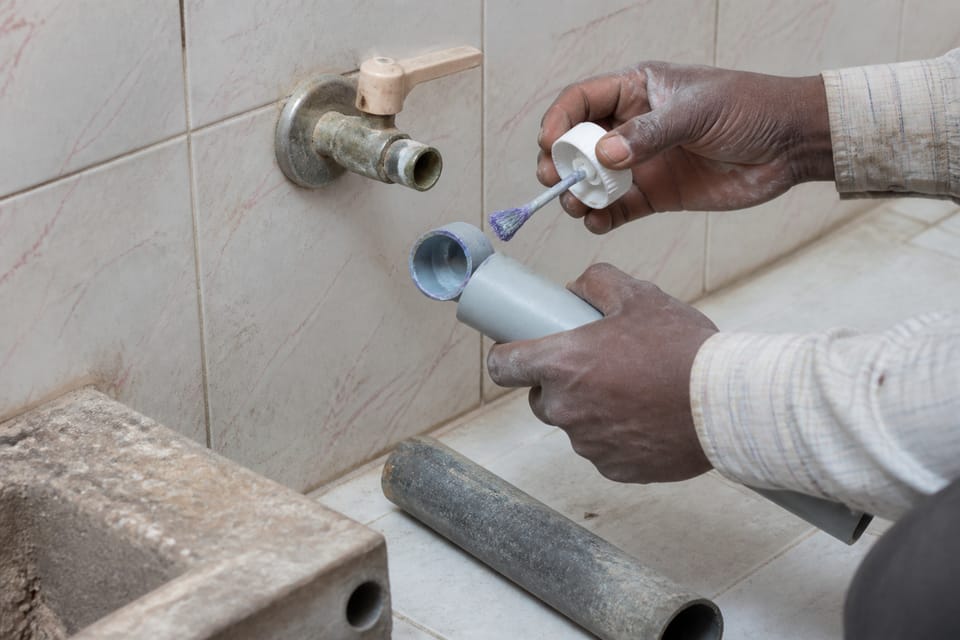
- Mixing GI and plastic without a proper transition fitting.
- Pipes with no marking, or a choice made by colour.
- Reusing old GI in a new house without testing it.
- Cutting and threading GI and leaving the cut bare.
- Plastic pipe left in direct sun or against a hot surface.
- Burying pipes in walls before a pressure test.
Frequently asked questions
Is GI pipe better than CPVC?
No standard we read says so. They are made for different jobs and joined differently. The plumber and engineer choose.
Can UPVC be used for hot water?
Not by the standard’s own note: IS 4985 recommends the pipe for water from +1 to +45°C, and its strength falls as the water warms. In practice, use CPVC, which IS 15778 covers for hot and cold water, for hot lines.
What is the IS number for GI, CPVC and UPVC pipes?
IS 1239 (Part 1) for GI tube, IS 15778 for CPVC pipe and IS 4985 for UPVC pipe.
Can I still use GI pipe in a house?
NBCS 2026 lists galvanized mild steel tubes among the permitted materials. For domestic hot water it warns against black steel, and against GI where the water is salty.
Is the BIS mark compulsory?
We could not confirm it. The standards say the pipe may carry the Standard Mark; ask for the supplier’s licence.
Related guides
- CPVC vs UPVC pipes: which one to use for home plumbing
- PVC pipe sizes in mm and inches: what the numbers mean
- Plumbing work during house construction: stages and inspection points
- Is UPVC pipe safe for drinking water? What IS 4985 requires
This guide is general information. Read the disclaimer. Your plumber and engineer decide the pipes for your house.
Sources
- IS 1239 (Part 1):2004, Steel Tubes, Tubulars and Other Wrought Steel Fittings, Part 1 Steel Tubes (sixth revision), with Amendments 1 to 6: clauses 1.1, 3.1, 4, 10.1, 12.1, 12.2, 17.1, 17.2 and 17.5 (page images read). BIS lists it as in force, valid to 2029-06-30.
- IS 15778:2007, Chlorinated Polyvinyl Chloride (CPVC) Pipes for Potable Hot and Cold Water Distribution Supplies, with Amendments 3 and 4: clauses 1, 6.1, 8, 9.1, 12.1 and 12.2 (page images read). BIS lists it as in force, valid to 2027-06-30.
- IS 4985:2021, Unplasticized PVC Pipes for Water Supplies, with Amendment 1: clauses 1.1, 5.1 (note), 6.1, 9.1, 9.2, 10.1, 13.1, 13.1.1, 13.1.2 and 13.2 (page images read; 13.2 text layer). BIS lists it as in force, valid to 2031-03-31.
- IS 17546:2021, Injection Moulded CPVC Fittings for Hot and Cold Water Distribution Supplies: clauses 1 and 11.3 (page images read). BIS lists it as in force, valid to 2031-06-01.
- SP 7:2026, National Building Construction Standards (NBCS) 2026, Part E Section 1, Water Supply: clauses 4.6.2, 4.6.2.1, 4.6.2.2 and 4.14.6.1 (page images read). From an unofficial archive.org copy.
- IS 2065:1983, Code of Practice for Water Supply in Buildings (second revision): clauses 6.2.5 and 6.2.6 (page images read). BIS lists it as in force, valid to 2027-02-28.
Change log
- : Added Related guides link to newly published article(s): is-upvc-pipe-safe-for-drinking-water-what-is-4985-and-is-15778-require. No other text changed. Approved by the reviewing engineer.
General information only. It is not a structural design or professional advice. Ask a licensed structural engineer or architect to check your plans and site.