
Short answer
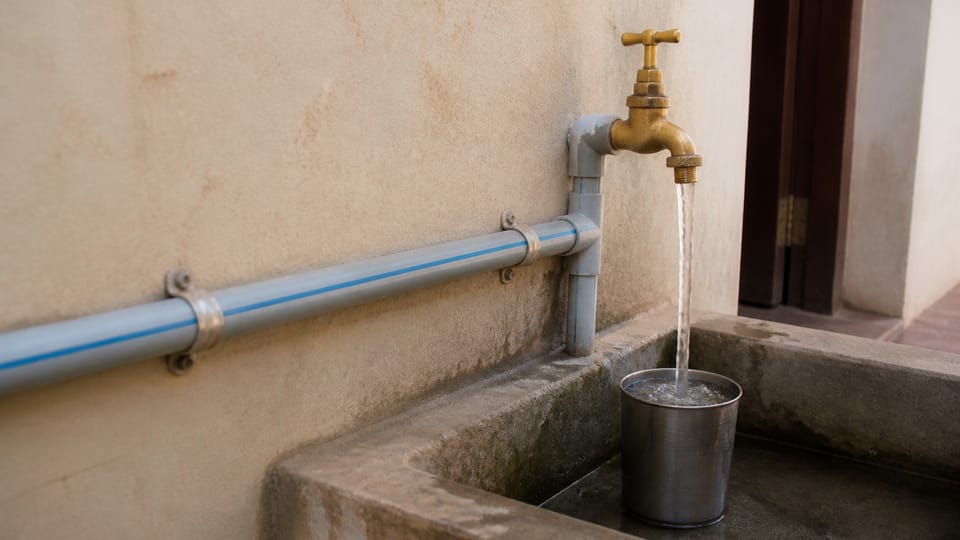
Is UPVC pipe safe for drinking water? A UPVC pipe made and marked for water supply is meant for drinking-water lines. IS 4985 says such pipes shall not have any detrimental effect on the water, and it checks this with a lab test. It does not call any pipe safe. Look for the blue strip, and ask about the LF mark. Only a sample taken at your tap shows what is in your water.
On this page (11)
- What does IS 4985 ask of a UPVC water pipe?
- What do the blue strip and the LF mark mean?
- What about lead in PVC pipes?
- What about vinyl chloride and cancer claims?
- Does the standard cover the whole line?
- What about heat and sunlight?
- How can I check my water?
- What mistakes should I avoid?
- Frequently asked questions
- Related guides
- Sources
You are about to run drinking water through plastic pipe, and you want to know whether that is all right. This page explains what the Indian Standards ask of a water pipe, what the marks on the pipe mean, what the lead rules say, and what a label cannot tell you. No standard calls a pipe “safe”, so we do not either. It gives no brand ranking. Note that IS 4985 is the UPVC standard, and IS 15778 is the CPVC one. For hot and cold use, read CPVC vs UPVC pipes.
What does IS 4985 ask of a UPVC water pipe?
IS 4985 covers UPVC pipes for potable water supplies, and also pipes for agriculture. Clause 10.3 says: “The pipes shall not have any detrimental effect on the composition of water flowing through them.”
That sentence is checked by a lab test. The standard limits what comes out of a sample of pipe into “the test solution”. So those limits are not limits for the water at your tap, and they should not be compared with one. We leave the figures off this page for that reason.
The test is run on sample pipes: “three samples of the smallest size”, not on each length. Clause 6.1 also says additives must not be used “in quantities sufficient to constitute a toxic, organoleptic or microbial growth hazard”.
IS 15778, for CPVC, uses the same sentence in clause 9.3 and takes its limits from “10.3 of IS 4985”. So on this test, the standard does not say that one is cleaner than the other.
What do the blue strip and the LF mark mean?
Four marks on a UPVC pipe matter here.
| Mark | What it means | What it does not mean |
|---|---|---|
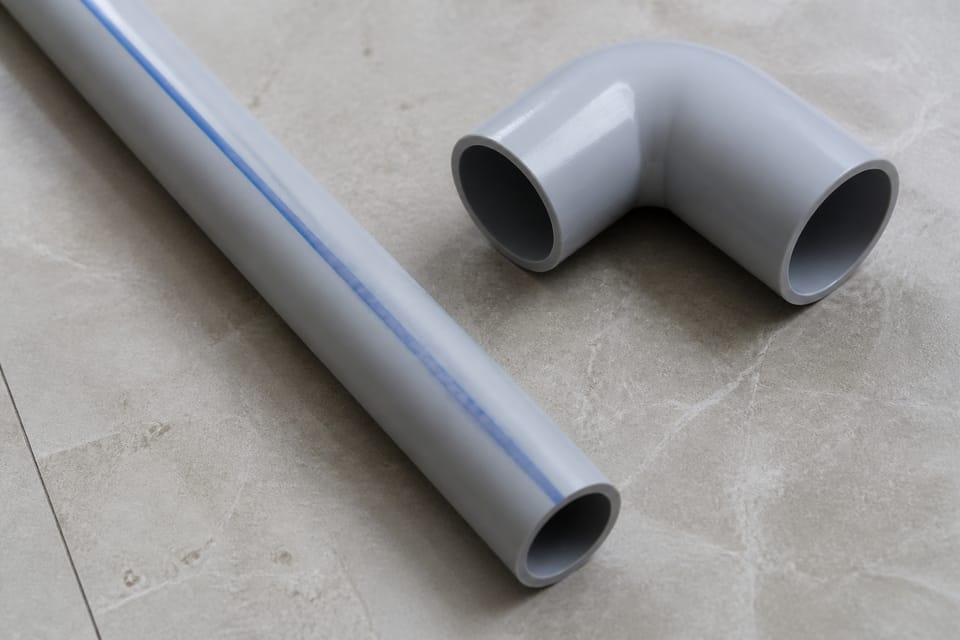
| Blue strip | IS 4985 clause 13.1.2: “The pipes for water supply, Type A shall additionally bear continuous longitudinal blue colour strip printing” | It does not show that the pipe is lead free |
| LF | “pipes manufactured without lead stabilizer, which are also termed as Lead-Free (LF)”, with a tighter lead limit in the test | It does not mean zero lead. No LF mark does not prove the pipe has lead |
| The word “plumbing” | One of the marks in clause 13.1 | It is not the same as the blue strip |
| Standard Mark and licence number | These should show that the maker holds a BIS licence for that product | It is not a test on your length of pipe |
Type B pipes are “Pipes for agricultural use”. They do not need the blue strip. So do not buy a farm pipe for a house drinking line because it says IS 4985. LF is optional for a BIS licensee, so not every good pipe will show it. Ask the seller, and read the print. The pipe body is usually light grey, so the mark to look for is a continuous lengthwise blue strip, not a blue pipe. The pipe marking guide covers the other marks.
What about lead in PVC pipes?
Lead compounds have been used as a stabiliser in PVC, which is why this question comes up. The World Health Organization lists “polyvinyl chloride (PVC) or unplasticized polyvinyl chloride (uPVC) with lead stabilizers” among lead sources in water systems. It says “only low-lead or lead-free water system parts should be used when constructing new water systems or rehabilitating old ones.”
India has a rule on this, separate from BIS. The Lead Stabilizer in Polyvinyl Chloride (PVC) Pipes and Fittings Rules, 2021 say the manufacturer “shall be prohibited to use lead or lead compounds as stabilizer”. For pipes for potable water, the Schedule says “After one year from the date of publication of these rules”. We read the 2021 notification, and the 2022 amendment in a legal database copy. We could not confirm the present status, so read this as a rule on makers and importers, not as a promise about any pipe in a shop or in your wall.
IS 10500, the drinking water standard, sets lead at 0.01 mg/l with “No relaxation”. That is a limit for water, not for pipes.
What about vinyl chloride and cancer claims?
Vinyl chloride is the raw material of PVC. WHO calls it “a known human carcinogen”. It says the evidence in humans comes from “industrial populations exposed to high concentrations via the inhalation route”. On water, it says vinyl chloride “is primarily of concern as a potential contaminant from some grades of PVC pipe and is best controlled by specification of material quality.” We read no source that says a finished water pipe causes cancer, and no source that proves zero risk. This page makes neither claim. If you have a health concern, ask a doctor or your local health authority.
Does the standard cover the whole line?
No. A pipe mark covers the pipe. These are separate:
- Fittings. IS 4985 does not cover them. Fabricated fittings have their own standard, IS 10124, and use pipe that “shall conform to IS 4985”.
- Solvent cement. IS 14182 has its own requirement for use in potable lines.
- Metal parts. Taps and brass inserts are not plastic. Check them too.
- Tanks. Dirty storage spoils clean water. See how to clean an overhead water tank.
- The water itself. No pipe standard speaks to your source water.
The wrong kind of pipe is also a common fault. IS 13592 pipe is for soil, waste, vent and rain water, so drinking water is outside its scope.
What about heat and sunlight?
UPVC is a cold water pipe. A note in IS 4985 says these pipes “are recommended for water temperatures ranging from +1 to + 45 °C.” NBCS 2026 says UPVC “shall not be installed near hot water pipes or near any other heat sources”. IS 7634 (Part 3) says pipe above ground “should be protected from direct sunlight”. That advice is about the pipe. We make no claim here about sun and water quality.
How can I check my water?
Test the water, not the label. WHO says “lead should be measured at the tap.” In practice, ask a water testing laboratory how it wants the sample taken, and take it from the tap you drink from. One result can mislead, so ask how to read it. Consider a test if the line is old and unmarked. WHO names “fetuses, infants and children” as most sensitive to lead, so also consider it if they are in the household. This is practice, not a code rule.
For a new line, NBCS 4.16.1 says pipes “shall be thoroughly and efficiently disinfected before being taken into use and also after every major repair.” It says the method is “subject to the approval of the Authority”, and clause 4.16.2 ends with the pipes “thoroughly flushed out before any water is used for domestic purposes”. Ask how this will be done. Clear water does not show that a line is clean. We print no time.
What mistakes should I avoid?
These are practice points unless a standard is named.
- Trusting the words “lead free” with no LF mark or paper to back them.
- Buying agricultural pipe for a house line.
- Using drainage pipe for drinking water.
- Reading “blue” as a blue pipe. The mark is a blue strip on a grey pipe.
- Checking the pipe but not the fittings.
- Assuming an old unmarked line is fine, or that it is bad. Test it.
- Running UPVC near a geyser or on hot lines.
Frequently asked questions
Is UPVC pipe lead free?
The label alone cannot always tell you. The LF mark means it is made without lead stabiliser and meets a tighter test. No LF mark does not prove that it has lead. Ask the maker.
Is CPVC safer than UPVC for drinking water?
The standards do not say so. IS 15778 takes its limits from the same clause of IS 4985.
What is the blue line on a UPVC pipe?
It marks Type A, the pipe for water supply, under IS 4985.
Can PVC pipe cause cancer?
We read no source that says a finished water pipe causes cancer. WHO names vinyl chloride as a potential contaminant from some grades of PVC pipe, best controlled by specifying material quality. Ask a doctor about health concerns.
Should I replace my old PVC line?
No standard we read sets a replacement age. In practice, test the water at the tap first, then ask your plumber and a health adviser if the result worries you.
Is BIS marking compulsory on UPVC pipes?
We could not confirm that it is. IS 4985 says pipes “may be certified”. Look for the mark anyway, and verify the licence number.
Related guides
- CPVC vs UPVC pipes: which one to use for home plumbing
- Types of pipes in a house: water, drainage, rainwater and gas
- Plumbing materials list for a house: pipes, valves, traps, IS marks
This guide is general information. Read the disclaimer. A doctor or health authority should advise on any health concern, and your plumber on the pipes in your house.
Sources
- IS 4985:2021, Unplasticized PVC pipes for water supplies, with Amendment 1 (2023): clauses 1.1, 5.1 Note, 5.2, 6.1, 10.1, 10.3, 13.1, 13.1.2, 13.2 and Annex D (page images read).
- IS 15778:2007, CPVC pipes for potable hot and cold water distribution supplies: clause 9.3 as changed by Amendment 4 (page images read). This is the CPVC standard, not the UPVC one.
- BIS circular on IS 4985, 19 May 2023 (the LF marking).
- Lead Stabilizer in Polyvinyl Chloride (PVC) Pipes and Fittings Rules, 2021, G.S.R. 228(E), Gazette No. 179, amended by G.S.R. 334(E), 2022 (the amendment read from a legal database copy). Current status not confirmed.
- Lead Stabilizer in PVC Pipes and Fittings (Amendment) Rules, 2022, G.S.R. 334(E): legal database copy.
- IS 10500:2012, Drinking water, specification: Table 3. Amendments not read.
- IS 13592:2013, UPVC pipes for soil and waste discharge systems: scope.
- IS 10124 (Part 1):2009, Fabricated PVC-U fittings for potable water supplies.
- IS 14182:1994, Solvent cement for UPVC pipe and fittings: clause 4.5 as amended.
- IS 7634 (Part 3):2003, Laying and jointing of UPVC pipes: clause 7.8.
- SP 7:2026, National Building Construction Standards (NBCS) 2026, Part E Section 1: clauses 4.6.2.2 and 4.16.1. From an unofficial archive.org copy.
- World Health Organization, Lead in drinking-water: health risks, monitoring and corrective actions, technical brief, 2022.
- World Health Organization, Guidelines for drinking-water quality: lead chemical fact sheet.
- World Health Organization, Guidelines for drinking-water quality: vinyl chloride chemical fact sheet.
General information only. It is not a structural design or professional advice. Ask a licensed structural engineer or architect to check your plans and site.