
Short answer
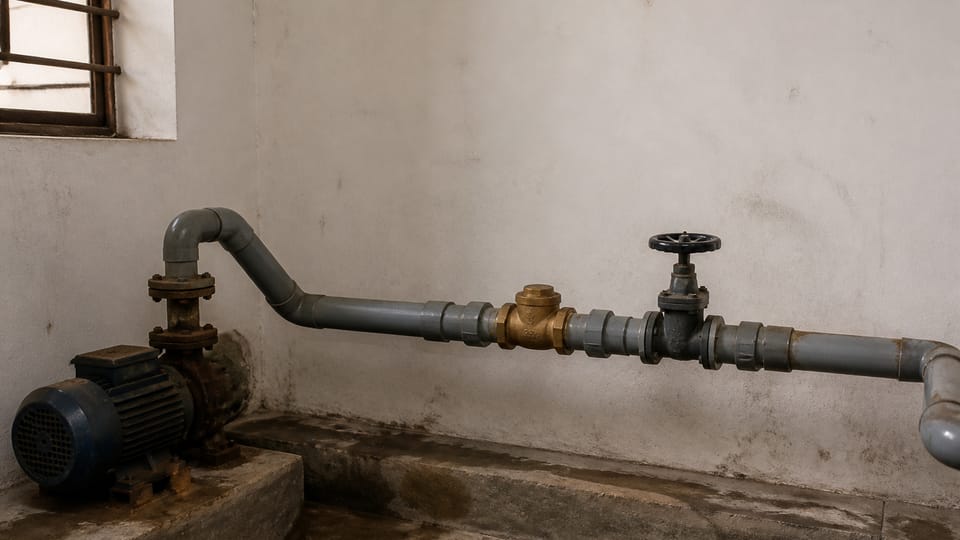
Where does a non-return valve go on a water pump line? A non-return valve lets water flow one way and stops it flowing back. The Indian standards read do not say where a house pump's valve goes. One pump maker says that on a high delivery head the valve goes in the delivery line, close to the pump outlet. The foot valve is at the bottom of the suction pipe. Ask your installer which valve your pump needs.
On this page (9)
A non-return valve, also called a check valve, is the valve that lets water flow in one direction and stops it flowing back. In a house, it is most often met with a pump, where it keeps water from draining back when the pump stops. This page explains what the valve does, what the Indian standards say, and where manufacturers say the valves go. It gives no sizes, no pressure ratings, no prices and no brands.
What does a non-return valve do?
IS 778 defines it. A check valve, or non-return valve, is “a valve which permits fluid to flow in one direction but checks all return flow. It is operated by pressure alone, having no external means of control” (cl 2.4). So it needs no handle. The flow itself opens it, and the return flow closes it.
The standards read are for waterworks, not for houses. IS 778 covers copper alloy gate, globe and check valves for waterworks. IS 5312 (Part 1) covers flanged single-door swing check valves for water works. It does not cover double disc or lift check valves (cl 1.2). IS 4038 covers foot valves for centrifugal pumps used for water works. None of them is written for a house pump, so use them for the principle, not the size.
What is a foot valve?
A foot valve is a check valve at the bottom of the suction pipe, under the water. Foreword clause 0.2 of IS 4038 says a foot valve “is generally placed at the lower end of the suction pipe of a centrifugal pump to prevent the suction pipe from emptying while the pump is at rest”. The clause adds that this lets the pump start promptly, without having to remove the air from the suction pipe first. The foreword is not a numbered requirement, so read it as the standard’s explanation of why the valve is used.
Where does the valve go on the pump line?
The standards read do not say where a house pump’s delivery valve goes. Two things are clear from them:
- A foot valve sits at the lower end of the suction pipe (IS 4038 foreword 0.2).
- A swing check valve in a vertical pipe must be built to close positively when the flow stops (IS 5312 cl 6.6). Swing check valves can be used in a vertical line when the flow is upward (note to IS 778 cl 5.4).
Manufacturer manuals go further. One Indian pump maker’s manual says that where the installation has a high static delivery head, a good quality check valve should be fitted in the delivery line, as close as possible to the pump delivery flange. This is manufacturer text for its monoblock pumps, not a code. Ask the installer whether your pump is on a high head before you accept that advice.
| Valve | Where it sits | What the source says |
|---|---|---|
| Foot valve | Lower end of the suction pipe | IS 4038 foreword cl 0.2 |
| Check valve on the delivery line | Pump outlet side, close to the flange on a high delivery head | A pump maker’s manual (manufacturer text) |
| Any valve in a vertical pipe line | Must close positively when the flow stops | IS 5312 cl 6.6 (a waterworks standard) |
What do the valve markings tell me?
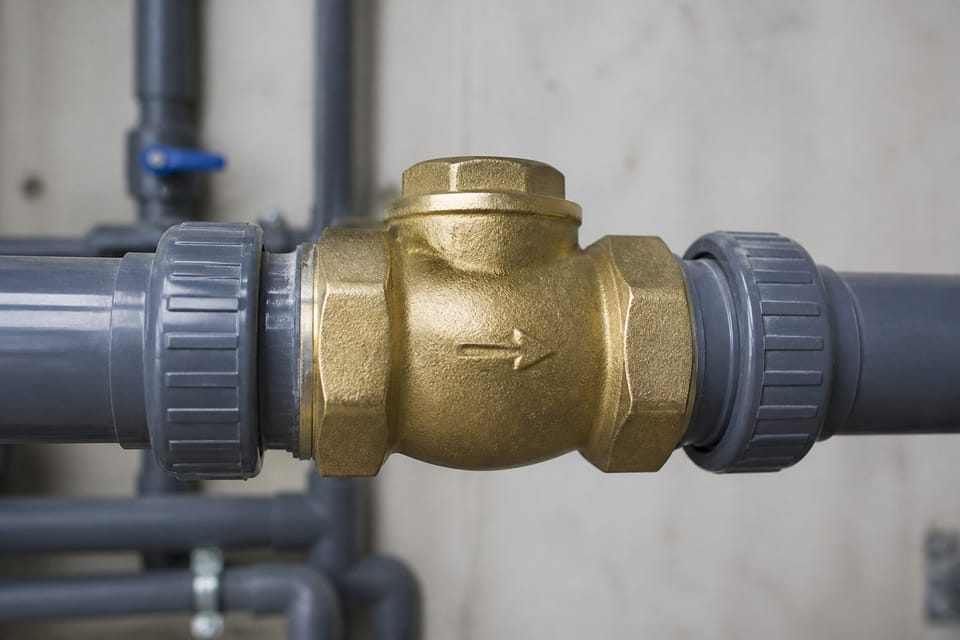
A check valve carries a flow-direction arrow (IS 778 cl 13.1(d), as amended in 2005). IS 5312 says the arrow shall be cast on the body and shall show the direction of flow (cl 6.8). Check the arrow against the pipe before you fit the valve. A valve maker says the arrow on the casing shows the direction of flow (manufacturer text).
What do the manufacturers say about faults?
These points come from manufacturer manuals and are practice, not standard clauses.
- A jammed valve. The pump maker’s troubleshooting table says a jammed check valve should be checked and replaced.
- A partly blocked valve. The pump maker says to clean it and replace it if needed.
- Air on the suction side. The pump maker says air leakage on the suction side should be corrected, because it stops the pump from holding water.
- Water hammer on closing. The valve maker says the valve should hold pressure when the flow stops, and that if water hammer occurs an anti-water-hammer system is needed.
- Debris in the new line. The valve maker says a new installation must be rinsed with the valve fully open, to remove solid matter that could damage the valve.
What mistakes should I avoid?
These are practice points, not standard clauses.
- Fitting the arrow the wrong way. Check the arrow against the flow before you tighten the flanges.
- Placing the foot valve on the bottom of the well or tank. The pump maker says not to place it right on the bottom, because solids can be drawn in with the water.
- Welding the flanges with the valve in place. The valve maker says never weld flanges with the valve in place, because the heat can burn its internal parts.
- Skipping the rinse on a new line. Debris can damage the valve.
Frequently asked questions
Do I need a check valve on my pump?
The standards read do not say you must have one on a house pump. A pump maker says a check valve on the delivery line helps on a high delivery head. Ask your installer.
What is the difference between a foot valve and a check valve?
A foot valve is a check valve at the bottom of the suction pipe, under the water. A check valve on the delivery side is on the pump’s outlet side. IS 4038 describes the foot valve; IS 778 defines the check valve.
Why does my pump lose water?
The standards read do not list the causes. The manufacturer troubleshooting tables name a jammed or blocked valve and air on the suction side. A plumber or pump technician can check them.
Related guides
- Types of water pump for a house: monoblock, openwell, submersible and jet pumps
- Taps and valves in house plumbing: bib tap, pillar tap, angle valve, stop cock and gate valve
- Low water pressure on the upper floor or in the shower: causes and fixes
This guide is general information. Read the disclaimer. A licensed pump installer decides the valves for your pump.
Sources
- IS 778:1984, Copper Alloy Gate, Globe and Check Valves for Waterworks Purposes, cl 2.4, 5.4 and the note to 5.4, and cl 13.1(d).
- IS 4038:1986, Specification for Foot Valves for Water Works Purposes, Foreword cl 0.2 and cl 1.1.
- IS 5312 (Part 1):2004, Swing Check Type Reflux (Non-Return) Valves for Water Works Purposes, Part 1 Single Door Pattern, cl 1.1, 1.2, 6.6 and 6.8.
- One pump maker's single-phase monoblock installation manual, and one valve maker's non-return valve operating guide (manufacturer texts, labelled in the article).
General information only. It is not a structural design or professional advice. Ask a licensed structural engineer or architect to check your plans and site.